How an Effective COVID-19 Vaccine Could Lead to Better Influenza Vaccines


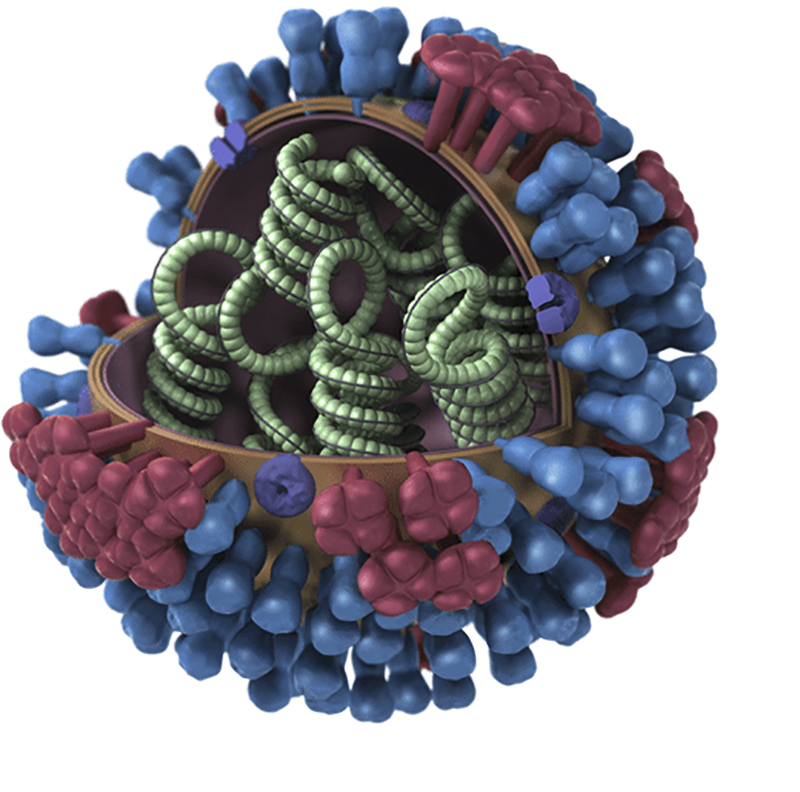
The Influenza A Virus. Courtesy of the CDC

There is a very high probability that at least one of the many COVID-19 vaccine candidates out there will be successful and help humanity achieve the protection it needs from SARS-CoV-2.

It probably will not happen this year then there is still a lot of work to be done by all the teams involved and the 7 months left will probably not be enough.

A lot of doubters look at the fact that RNA viruses are tough to make vaccines for but we have them – yellow fever, measles, and polio are a few examples. Others look at how difficult it is to make a vaccine against the influenza A and B viruses. That is true but a study of the structure and properties of the flu virus explains why. A comparison of the flu virus with the SARS-CoV-2 virus exposes why we all should be hopeful that an effective vaccine for the latter is possible.

Interestingly, I think the technologies and thought processes driving the development of a COVID-19 vaccine might give us a much better flu vaccine.

One fact that needs to be emphasized over and over again is that COVID-19 is not Influenza. They may share symptoms and some pathology but they are caused by different viruses, have different contagiousness, fatality rates, and clinical pictures. 

Both are RNA viruses. Where SARS-CoV-2 is part of the Beta-coronavirus family, the influenza viruses belong to the Orthomyxoviridae family.

The COVID-19 virus is made up of a single strand of RNA. That of the flu is made up of a single strand to but that strand has 8 segments. That is one of the important differences.

Though there are four types of influenza viruses: A, B, C, and D, only Types A and B cause the outbreaks of disease in humans yearly. Flu A is the most dominant and virulent type and the only type that can cause pandemics. 

The viral genome of flu A codes for about 14 proteins. Two of these are hemagglutinin (HA) and neuraminidase (N). Hemagglutinin is more numerous than neuraminidase. The two are very important glycoproteins because they are integral to how the virus enters the cell. HA binds to cells of the nasal epithelium that express sialic acid. Once in the cell, the viral genome replicates. It is at this point that neuraminidase facilitates the release of the virions.

Hemagglutinin and neuraminidase are also used to name the different subtypes of the virus. 

Originating mainly from birds, there are 18 subtypes of hemagglutinin and 11 subtypes of neuraminidase.  Types H1 to H16 and N1 to N9 are found in birds. Types H17 – H18 and N10- N11 were isolated from bats recently. While there are potentially 198 different Influenza A subtype combinations, only 131 subtypes have been detected in nature.

The subtypes currently found in humans are H1N1(the Spanish Flu) and H3N2 (Hong Kong flu). Rarely, H1N2 has been seen. H2N2 was the cause of the Asian flu pandemic in 1957 – 58 and the subtype that caused the Spanish Flu is H1N1.

Flu B is only found in humans. There are 2 subtypes. It also has the hemagglutinin and neuraminidase glycoprotein structures too.

The genome of SARS-CoV-2 is much larger than that of the flu. Where the flu A has 13,588 bases altogether in the 8 segments, SARS-CoV-2 has about 30,000. Both viruses need an RNA polymerase for replication. One hallmark of RNA viruses is how often replication leads to mutations. Whereas the SARS-CoV-2 virus has a proofreader that can excise out mutations in the replicated genome, the flu virus does not have that capability. 

Thus flu viruses show a high incidence of mutations, about 50 a year. None of these are proofread and repaired. Moreover, the virus has the ability to exchange pieces of genome between the 8 segments. Also, when two flu A types are present at the same time in a host, they can switch out gene segments, producing a new type. This phenomenon is known as reassortment and is how H1N2 came to be. It resulted from reassortment event between circulating human seasonal influenza A(H1N1) and influenza A(H3N2) viruses.

Thus the high rate of mutations, the ability to exchange genes between the segments (a process called antigen drift), and reassortment lead to an ever-changing structure of the glycoproteins not only in the virus but more importantly, on the viral envelope. The viral hemagglutinin and neuraminidase do not only allow the virus to bind to and enter the cell but they also are the antigens used for Influenza vaccines. This ability to constantly change its genetic identity leads to the vaccines that have very low efficacy, year after year.

The SARS-CoV-2 virus on the other hand does not mutate as much. The vaccine candidates against the virus target the spike glycoprotein on the envelope that has been stable through different types of the virus. The spike protein, but for some minor changes, has stayed grossly the same through SARS-CoV, MERS-CoV, and now SARS-CoV-2. It is thought that its structure will not change significantly to make vaccines as ineffective as with the flu virus.

As mentioned earlier, due to antigen drift, flu vaccines have low efficacy and must be re-engineered annually. Yearly, a global survey has to be done for the flu A strains circulating as well as the nature of the HA antigens. A projection is then made about which strains of flu A and HA antigen types to include in a vaccine, that also contains flu B. 

It is no wonder flu vaccines are sometimes only about 20% effective.

One way to improve the antibody response is to use a wide collection of influenza viruses that incorporates the most common amino acids found in hemagglutinin. This technique is known as computationally optimized broadly reactive antigen (COBRA).

Now, as mentioned earlier, the dominant glycoprotein on the envelope of the flu virus is Hemagglutinin (HA). HA is structured like a mushroom, with a stalk and head. The head has the binding sites for the virus and is the dominant antigen in the inactivated, live attenuated, and

recombinant HA vaccines. Unfortunately, it is that part of HA that sees the most mutations. However the stalk, like the spike protein of the SARS-CoV-2 virus, has stayed conserved over the decades. In studies where it was used as the preferred antigen, it produced antibodies that are more broadly reactive. 

Instead of presenting it as an inactivated or live version, the genetic material that codes for the stalk could be presented in a vector just like it is being done with COVID-19 vaccine candidates. That will also shorten production time then the present flu vaccines need embryonated eggs for production.

COVID-19 has dealt the world a terrible blow but it does have some silver linings. The use of vectors to present genetic material as a vaccine, the choice of conserved parts of the virus as antigens, and the avoidance of inactivated and attenuated viral products may not only give us more vaccine possibilities but also hasten how vaccines are produced.

One possibility is that we may finally get better and more effective  Influenza vaccines.
Those RNA Viruses

Note: this a really basic discussion of a very complex and ever-evolving topic.

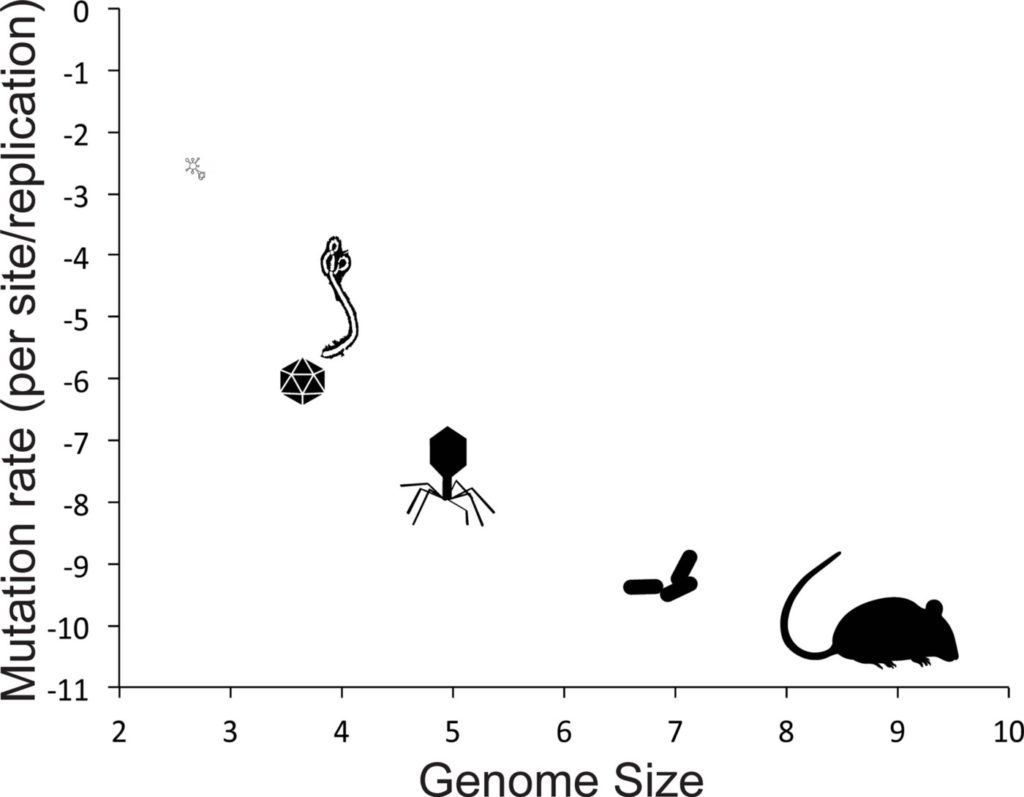
From Duffy S (2018) Why are RNA virus mutation rates so damn high? PLoS Biol 16(8): e3000003. https://doi.org/10.1371/journal.pbio.300000

he genetic information that codes for traits in all living organisms are found in DNA or RNA or a combination of the two. Even viruses, not really seen as living organisms, have genetic material. They either code them in RNA (RNA viruses) eg. Influenza or DNA (DNA viruses) eg. Herpes.

Where DNA viruses are quite big, RNA ones are much smaller. Also, RNA viruses replicate (multiply) way more than DNA viruses.

(Just a reminder, DNA and RNA are made up of bases called nucleotides).

To exert their disease-making effects all viruses have to enter the cells of the organism they are attacking. So they find a receptor that fits them on the membrane of the cell, fuse with that receptor and then worm their way into the cell.

Once in the cell, a DNA virus finds its way into the nucleus of the cell and fuses with the host organism’s DNA. As it divides and multiples, it uses the organism’s enzymes it needs for multiplication — the polymerases. Ensconced in the nucleus, DNA viruses tend to be more stable over time. They multiply and mutate less and therefore may be easier to treat.

The RNA virus on the other hand, stays in the cytoplasm and divides in there, using its own polymerases. Being smaller, using its own polymerase and away from the influence of the host organism, the RNA divides very fast and often. This leads to the RNA virus being able to switch out the nucleotides in its RNA often resulting in a different strain than what entered the organism — a process we commonly term “Mutation”!

It has been calculated that RNA viruses mutate on an average of once every 50,000 base pairs per infection. DNA viruses do that once every 50,000,000 base pairs per infection.

Now DNA viruses have mutations too but one, they are not as frequent and besides, the organisms polymerases can cut out these renegade nucleotides. The RNA’s polymerases lack this repair ability.

Mutations in RNA viruses are often set off when the environment in the cell changes — like when it senses the presence of a new vaccine or antibodies or medications. This ability to multiply fast and often is the reason why we never seem to get a good enough vaccine for the flu. That is why we sometimes need to treat viral infections like HIV and Hepatitis C with more that one medication.

This ability to mutate often also leads to instability of the RNA virus — it can generate a lot of mutants which do not survive or which may even be more virulent. Much more virulent than the organism that entered the cell.

Now in most normal humans, the body is able to mount a level of immunologic reaction to the vast number of viruses that affect humans. However, if the virus is totally new to humans, that ability is not available for months to even a year. Thus when a novel RNA virus spills over from another mammal into a human, those initial months to a year are very unpredictable. We are dealing with a virus that can mutate into a more virulent strain and against which the body still has no defense.

COVID-19 is an RNA virus that spilled over recently!


The Whistleblowers

I have wondered how Li Wenliang, an ophthalmologist, became the face of the group of doctors in Wuhan I call “The Whistleblowers”. These were the doctors whose warnings about the outbreak of a contagious and novel pneumonia-causing virus in Wuhan, China went unheeded by those in authority.

So I decided to do some digging. Reporting in the WSJ, NYT, and other online publications have been very helpful in this effort.

By the second week of December 2019, doctors around Wuhan were seeing patients with symptoms that included fever, coughing, fatigue, and aching limbs. Initially, some doctors thought it was bronchitis but soon most realized the condition was atypical pneumonia. They tried to treat these cases unsuccessfully with antibiotics.

Even though a lot of the patients came from the Huanan Wet Market, the connection was not made until later.

On December 16, an ER doctor named Ai Fen admitted a 65-year-old man to the emergency room at Wuhan Central Hospital whose only symptom was fever. A chest CT showed bilateral lung infections he was given antibiotics and antipyretics. The fever did not break so he was transferred to a tertiary center for advanced care. It was only after the transfer that Dr. Ai learned that the man worked at the wet market.

On December 27, Dr. Ai admitted another patient with similar symptoms. She ordered a chest CT and lab work. By the next day, she had seen 6 more such cases. Four of them worked or were in some way affiliated with the Huanan wet market.

She started to wonder if she was seeing a contagious disease. She notified the hospital leadership, who in turn notified the district CDC office. That office had been getting similar reports from other hospitals and clinics in Wuhan.

On December 30, she got the lab results back from the patient she had seen 3 days earlier. It read “SARS Coronavirus”.

A terrified Dr. Ai notified the hospital leadership of her findings. She also shared a photo of the lab result and a video of a chest CT scan showing pneumonia caused by this new virus with a medical school classmate.

Somehow, this photo and video clip ended up on the phone of an ophthalmologist who also worked at Wuhan Central. His name was Li Wenliang.

That afternoon, he shared it with his group of med-school classmates on WeChat with over 100 members.. (Bear in mind that in China, all social media sites are spied on by the government.) He posted:

“7 SARS cases confirmed at Huanan Seafood Market…Patients quarantined in the Emergency Department of our hospital.”

Another member warned that he could be censored for sharing such information.

He replied:

“Coronavirus confirmed, and type being determined…Don’t leak it. Tell your family and relatives to take care.”

Well, who can avoid sharing such juicy information in this age of social media? By that night, the information was all over WeChat.

The censors showed up shortly thereafter.

The next day he was reprimanded at work. On January 3, he got a visit from the police who warned him and censured him for “making false statements on the internet”. He was made to sign a letter of admonition promising not to do it again.

Reportedly, eight Wuhan doctors in all were admonished by the police for discussing the outbreak on social media in the first week of January 2020.

One of these doctors was Dr. Xie Linka, an oncologist at Wuhan Union Hospital. She learned from her Pulmonology colleagues that the hospital’s respiratory unit was housing many patients with an unknown type of pneumonia. She also later posted on WeChat warning members in her chat groups to wear masks and ventilate areas.

Dr. Liu Wen, a neurologist at Wuhan Red Cross Society Hospital was another doctor who was admonished. He also found out about cases in his hospital and posted about or discussed it on WeChat.

By December 30, doctors who were seeing and treating these patients with the strange new pneumonia knew what the authorities in Wuhan would not accept — that it was contagious and had human-to-human transmit-ability.

On December 31, the Wuhan branch of the National Health Commission issued a statement that confirmed the outbreak of a disease that had so far infected 27 people. It further said:

“The investigation so far has not found any obvious human-to-human transmission or infection of medical staff. The disease is preventable and controllable.”

On January 1st, 2020, Dr. Ai admitted a patient with symptoms of the strange new pneumonia. He ran a clinic near the Huanan market and had been treating a lot of those patients in the preceding weeks. Now he was sick. She alerted the hospital leadership and stressed that she believed the disease was contagious. She asked her staff to put on masks when treating those patients. For that, the hospital leadership admonished her the next day for spreading rumors and destabilizing Wuhan.

Unbeknownst to Dr. Ai, one Dr. Lu Xiaohing, Director of Gastroenterology at the Wuhan Municipal Hospital had received news a week earlier on December 25 2019 of the medical staff at two hospitals in Wuhan who had fallen sick while taking care of patients suffering from new and strange pneumonia. Dr. Lu did share the news but it is unclear if he was also admonished.

These admonishments may have shut up the whistleblowers but not the spread of the virus. With cases mounting not only in Wuhan but in other cities and international concerns increasing, a team led by the SARS expert and renowned epidemiologist, Dr. Zhong Nanshan, was sent to Wuhan. On January 20, 2020, Dr. Zhong would announce what the doctors in Wuhan had known all along — that the virus could be transmitted from human-to-human. At that point, there were 198 cases reported and three deaths.

Sadly, the very group of people who tried to warn the authorities all long that the virus had the ability to be transmitted human-to-human would suffer from this virus because they were not heeded. One of them was one of the whistleblowers — Dr. Li Wenliang.

On January 7, Dr. Li saw a patient with angle-closure glaucoma at Wuhan Central. Unbeknownst to him, the patient was a storekeeper at the Huanan wet market who had the virus. By January 10 he had developed a fever and a cough. On January 12, he had to be admitted because of extreme dyspnea. Dr. Li did not do well. About a month after he contracted the virus from a patient, he succumbed to pneumonia, dying on February 7 at the age of 34. He left behind a pregnant wife and a son.

As of March 4, 2020, China’s National Health Commission reported that more than 3,300 healthcare workers nationwide had been infected and at least 13 have died. Overall, 105, 938 patients have contracted the virus so far worldwide. 3567 people have died and 58,625 have recovered. Whereas the severity in China seems to be waning, the outbreak is on the increase in Iran, South Korea, and, Italy. Also, though the mortality rate looks low, it is very contagious and seems to be still spreading quickly. If millions get infected, even a low mortality rate will still result in lots of deaths.

The outbreak is also having a rather terrible impact on the world’s economies and may lead to a worldwide recession.

This makes me wonder what could have been if only those authorities in Wuhan had listened…listened to those doctors…those whistleblowers.

May Dr. Li Wenliang rest in peace. May all the doctors and nurses all over the world who are caring for patients afflicted by COVID-19 and other infectious diseases be safe.

Not The Last One

“From winter, plague and pestilence, good lord, deliver us!”
– From the play, “Songs from ‘Summer’s Last Will and Testament” by Tom Nashe
Sooner or later, the world will gain control over the COVID-19 outbreak. It will be through containment, effective treatment, a vaccine, or a combination of the three. History teaches that. Even the Black Death ended. Even the incurable HIV/AIDS has been controlled.
History also tells us that sooner or later, human behavior will lead to another epidemic or even pandemic. How is that?
Disease outbreaks occur through uncleanliness, vectors, lack of prevention (Anti-Vaxxers, etc), and zoonotic spillovers.
There are areas of the world that still lack clean drinking water and these areas still have outbreaks of cholera and typhoid.
The mosquito still transmits yellow fever and other viral diseases that are endemic in areas in the Tropics and flare up into epidemics every now and then. Even the bubonic plague broke out not too long ago in Madagascar!
Then is the fact that viruses are spilling over from other mammals to humans causing events like the COVID-19 and SARS outbreaks.
Lastly, refusal by some to get vaccinated means that occasionally, we are going to see diseases like measles and polio break out.
Human behavior does not only lead to the direct breakout of diseases. What we do after these diseases break out will ensure that we will forever see epidemics or even pandemics.
Since time immemorial, the attitude of those in power towards the outbreak of diseases has worsened these events. One can almost predict these reactions and the Chinese authorities epitomized it wonderfully during the initial weeks of the COVID-19 outbreak in December 2019. Instead of appreciating the observations of Li Wenliang and his colleagues that there was a new cluster of patients presenting with SARS-like pneumonia, they censored them.
When a disease breaks out, there are always those, often healthcare workers, who notice the initial cluster of cases and sound the alarm.
Those in power will often deny these reports. Then as the cases mount, they’ll seek to suppress the scientific or observational findings of those who are seeing this cluster swell.
When that does not work, they try to argue that things are not so bad.
By the time leaders realize things are bad, the initial outbreak is beyond containment.
We can forgive the lack of scientific knowledge for the reasons leaders in the Antiquity and Middle Ages gave for the epidemics that afflicted them. The Antonine plaque of 165 AD in the Roman Empire was blamed on an angry Jupiter. It was smallpox. The Church claimed The Black Death was due to bad miasma. Others said it was caused by the Jews and slaughtered them for that. It was bubonic plague.
(Looking at how Copernicus and Galileo were treated, I doubt the Church would have listened.)
However, to deny outbreaks, seek to suppress their reporting or make light of their severity has to be unforgivable in our present times. This is especially egregious since early action can contain disease outbreaks. And yet those in power do it.
We saw President Woodrow Wilson and other allied leaders do it during the Spanish Flu epidemic in 1918 leading to 50 million people dying worldwide. They suppressed information about the epidemic so as not to depress morale during the 1st World War.
It happened during the outbreaks of bubonic plague in San Francisco in the early 1900s. 190 people ended up dying.
We saw President Reagan avoid the issue of HIV/AIDs until 1985.
We saw several African Heads of States, like Thabo Mbeki of South Africa, refuse to accept the fact that HIV/AIDs was killing their people in the 1990s and 2000s.
We have seen the Chinese reactions to SARs and COVID-19.
It is not only leaders who misbehave when diseases break out. Among the general population, denial abounds too. That is often compounded by crazy conspiracy theories. This is followed by a period of panic and hysteria. When these reactions do not work, fear sets in. Deep crippling fear. Finally, people learn to accept the new reality and a rational response ensues.
In that regard, we of the present day are no different than the Flagellants in Europe of the 14th century, who whipped themselves bloody to get God to stop the plague during the Black Death.
Another factor that adds to the possibility is the unwillingness of governments to spend the money necessary to prevent these diseases from breaking out. Preventive programs in the hotspots of the world are often underfunded. Even developed nations are cutting back. The US recently axed its Pandemic Team as well as the PREDICT Program – a program made of scientists working around the world to hunt down the viruses, like COVID-19, that could lead to the next epidemic or pandemic.
So yes, human behavior being what it is plus economic policy that often short changes public health, we will continue to see epidemics and pandemics. Even in spite of all the scientific advancements, yes, we will continue to see these events.

If it Walks Like A Duck

There is a saying that goes, “If it walks like a duck, quacks like a duck, and swims like a duck, it is a duck!!! “
It is not a camel, it is not a cat…it is a duck!
We have a novel respiratory virus breaking out in a part of a country where the people are known for capturing, trafficking in, and eating all manner of wild animals, a country with a huge bat population and responsible for two other recent breakouts of respiratory viruses. The previous epidemics were found to be caused by viruses that spilled over from bats, were incubated in rodents, and then jumped over to humans.
Would it not be smart to suspect that this recent outbreak may have followed the same path since the behaviors in that population have not changed?
Walk like a duck, quack like duck!!!
And thus scientists who know and understand the phenomenon of zoonotic spillovers have sequenced the genome of this virus and found it to have 96% similarity to a coronavirus from a bat. 96%!
To the men reading this, if a DNA test had that level of similarity, that child whose paternity you refute would be yours!!!
Yet, in spite of all the evidence, some insist on calling it a zebra instead of a duck. Instead of looking at the science, some insist on wallowing in mind-boggling conspiracy theories.
Look, the COVD-19 is not a lab construct. It spilled over from a bat, going first through another mammal and the earlier we accept that, the sooner we start finding ways to prevent more zoonotic spillovers.
Learn the term: ZOONOTIC SPILLOVER!!!
A team of researchers has taken an intellectual shot at rumors that COVID-19 was engineered. In a paper posted on Monday on the scientific online forum Virological, the scientists – who include top epidemiologists like W. Ian Lipkin from Columbia University; Edward Holmes from the University of Sydney; and Kristian Andersen of Scripps Research – said very important genetic clues indicate that COVID-19 was not created in a laboratory.
The paper states:
“It is improbable that SARS-CoV-2 emerged through laboratory manipulation of an existing SARS-related coronavirus. As noted above, the RBD of SARS-CoV-2 is optimized for human ACE2 receptor binding with an efficient binding solution different from that which would have been predicted. Further, if genetic manipulation had been performed, one would expect that one of the several reverse genetic systems available for beta coronaviruses would have been used. However, this is not the case as the genetic data shows that SARS-CoV-2 is not derived from any previously used virus backbone.”
In other words, the researchers found that the way the virus binds to humans cells is way more efficient than any computer program would have produced.
Also, the “spikes” the virus uses to attach to human cells is based on a structure yet unseen in any lab. If the virus had been engineered, the makers would have used an available backbone used by scientists.
This means that there are two possibilities for COVD-19 origin:
– natural selection in a non-human animal host prior to zoonotic transfer, or
– natural selection in humans following zoonotic transfer.
So in short, COVID-19 IS HIGHLY LIKELY THE RESULT OF A ZOONOTIC SPILLOVER NOT A LAB-MANUFACTURED ORGANISM!!!
No amount of conspiracy theorizing will change that. No novels written in 1981 with predictive passages about Chinese scientists will change that. No statements by irresponsible politicians, nefarious state agents, and clueless media members will change that.
Thus, instead of wasting our time on hollow theories, the world should bring pressure to bear on China to get its people to change their ways.
Historically, the areas around the world’s rainforests have been seen as the hotspots for zoonotic spillovers and two of the deadliest – Ebola and Marburg – came from Africa. Yet, when a group of people actively hunt and capture wild animals from an area of the world with huge bat populations, traffic, sell, and slaughter them on open markets without any control, is the risk in this area not much greater than round the areas around rainforests?
In fact, all of humanity needs to be wary about encroaching on the habitats of these bats and/or hunting and eating all manner of wild animals nilly-willy.
Imagine the COVID-19 virus had not been a respiratory virus but one that causes hemorrhagic fever like Ebola? Just imagine!
Don’t think it can happen?
Well, we have had SARS, MERS, Ebola, Marburg, Nipah, Hendra spillover in just the last 50 years from bats and they have 60+ other viruses they are willing to share!!!
Let’s wise up!!!

When We Encroach

He is seen as the first patient who got sick but some researchers believe the virus had already started raging earlier than that December 1st when he was admitted to a hospital in Wuhan, China with pneumonia. By December 10, there were 3 more patients and by the end of the month, there were 40 cases.
Soon the world would hear of a virus that was making people sick in Wuhan, China, and was going to spread even beyond China.
Initial work by Chinese virologists soon showed what the causative agent was – a coronavirus not found in humans. Now there are several strains of the coronavirus. Four types are found in humans and they usually cause the common cold. The ones found in other mammals are the ones that cause severe disease in humans. The two known ones are severe acute respiratory syndrome coronavirus (SARS-CoV) and the Middle East respiratory syndrome coronavirus (MERS-CoV). Whereas the coronavirus that caused SARS was isolated from a civet, the source of MERS is thought to be a camel.
The strain causing the people of Wuhan to get cases of pneumonia was named 2019-nCoV (novel coronavirus). Further work showed it shared 79.5% percent of the structure of another non-human coronavirus that had caused an epidemic in 2002-2003 – the SARS-CoV – and was 96% identical at the whole genome level to a bat coronavirus.
So a virus found in bats is causing disease in humans.
Now this phenomenon is not new. Pathogens from vertebrate animals that cause disease in humans are called “Zoonoses”. The process whereby the pathogen (bacteria, prions, protozoa, fungi, worms, viruses) springs over from the animal to the human is termed a “Spillover”.
Roughly 80% of viruses, 50% of bacteria, 40% of fungi, 70% of protozoa, and 95% of worms that infect human beings are zoonotic. Most of the identified reservoirs are mammalian in nature (roughly 80%). More than 60% of the roughly 400 emerging infectious diseases that have been identified since 1940 are zoonotic. Thus zoonoses are of particular public health interests.
We all know the famous ones like HIV-AIDS, Ebola, the flu, SARS, and even rabies. We get these diseases through direct contact with the body fluids of an infected animal, exposure to their habitats, through vectors like mosquitoes, and from eating contaminated meat.
Of all the pathogens, viruses seem to be the most lethal. They are simple creatures that mutate easily and are unaffected by antibiotics.
These diseases that reside in animals and have the ability to infect humans can be the cause of serious epidemics and even pandemics as seen with the Spanish Flu and HIV. They are also more difficult to eradicate than those pathogens whose final reservoir is the human, like smallpox and polio. One mammal that seems to get implicated in all this is the bat. It has been implicated in the spillovers of several zoonoses like Ebola, SARS, Nipah, and the ongoing 2019-nCoV outbreak. With an immune system that makes them able to harbor a lot of viruses without getting sick, they are the reservoirs of about 60 zoonotic viruses. It is estimated that each bat species harbors 1.79 zoonotic viruses. (The coronaviruses that caused both SARS and MERS are thought to have originated from bats, then infected the civet and camel respectively, and then humans).
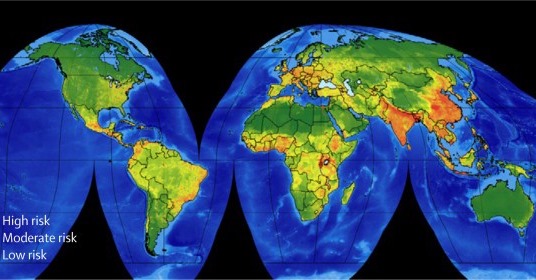
Although it is impossible to predict when the next zoonoses spillover or what even allows certain pathogens to spill over, there are characteristics of these phenomena that allow epidemiologists to predict the areas on the planet which are hot spots for zoonotic spillovers.
In a 2012 paper by Morse et al in the Lancet, they teased out several hallmarks of zoonotic spillovers.
First, the frequency of emergence of new pathogens is on the increase. This increase seems to correlate strongly with increasing population density. Thus the expansion of human habitation, agriculture, travel routes, trade, and general changes in land use may be leading to humans getting exposed to more pathogens. We are encroaching on the habitats of these animals. This also means that areas with more biodiversity will see more of these zoonotic spillovers. So areas in the world with high population densities and biodiversity are more prone to see these events.
Based on these hallmarks of zoonotic spillovers, a few models have been created to depict how a new disease emerges. The 3-stage one by Morse et al really simplifies it. The first stage sees humans encroaching into the habitat of these wild animals through changes in land use or even caving (bats). Through contact, the pathogen spills over causing disease locally. This can range from small clusters of human cases to large outbreaks, some with the limited person-to-person transmission (eg, Ebola virus) and some without (eg, Hendra virus in Australia). The third stage is the large spread leading to a pandemic.
Also based on these same hallmarks, certain areas of the world are seen as hotspots. These are areas around the world’s rain forests – Latin America, West, and Central Africa, Southeast Asia, and the Pacific Islands. This is quite understandable due to the biodiversity of these forests and the fact that they are being encroached on actively for commercial purposes as well as due to population growth. Thus we first saw Zika come from Brazil and Ebola from Sudan and the Congo simultaneously in 1976.
Another important hotspot has spawned the present 2019-nCoV epidemic and also gave us SARS – Southern China.
The area has a huge population of bats. Moreover, it is also famous for the culinary culture of “Yewei” or “Wild Flavor” Cuisine. This involves “such exotic fare as camel hump, dried tiger penises, and bear bladders”.
Like Karl Taro Greenfeld writes in the book “The China Syndrome”, “Yewei” has become the perfect symbol of China’s newfound wealth; the Chinese would even call the period of the economic boom in the South “the Era of Wild Flavor.”
Some also attribute the attainment of sexual prowess and therapeutic effects from eating these exotic meats.
Thus in provinces like Guangdong, where SARS developed and, Hubei, where Wuhan is, there are thousands of wild animal markets or “wet markets” where one can buy all manner of animals including chickens, snakes, raccoons, dogs, civets, cats, monkeys, otters donkeys, sheep, pigs, foxes, badgers, bamboo rats, hedgehogs, and pangolins.
So inasmuch as these “wet markets’ have become symbols of China’s growing affluence, they may also be a vulnerability. They may be breeding grounds for zoonotic spillovers.
Between 2000 and 2003, Lee, Lau, and Chan, researchers from Hong Kong surveyed these markets in Guangdong and Shenzhen. This is an excerpt from their report:
“The animals are packed in tiny spaces and often in close contact with other wild and/or domesticated animals such as dogs and cats.”
Animals are stacked vertically so waste rains from one species to the other and since they are often slaughtered in the markets, blood joins in the fray.
The team further wrote, “The markets also provide a conducive environment for animal diseases to jump hosts and spread to humans”.
Interestingly, it was during this period that SARS broke out. This makes southern China a potent hotspot for zoonotic spillovers. The situation is further complicated by a political system that discourages sharing information and reporting such incidences.
Even as I write, the 2019-nCoV zoonotic spillover is looking more and more like it has the hallmarks of a pandemic. It has spread to 23 countries, sickened over 14,000 people, and killed 299 in China and one person in the Philippines.
It has been shown to be transmitted from human-to-human, even in cases where there are no symptoms, and even may survive on inanimate objects. A vaccine is at least a year away but with all the efforts being made worldwide, there is hope that the outbreak can be brought under control.
It will not be the last zoonotic spillover the world will see. Not as long as we keep encroaching on the habitats of wild animals and keep enjoying wild and exotic meats.

The Report of the Ghana National Reconciliation Commission

The Generals He Executed Without Trial

Thanks to the help of an amazing young Ghanaian activist, the Silent Years Group has gotten hold of a digital copy of the complete NRC report. We are going to start serializing that report so all Ghanaians can read and learn from the past so we do not allow our nation to be hijacked again.

For those who want to read it, the link to download it is below.

Lamentations from the Womb

Mother, dearest mother,
Here I sit in your womb.
Mother, dearest mother,
Yet I wish it was my tomb.
He raped you that night,
And planted his seed.
I am a product of your plight,
Forever a sign of that deed.
Will I not forever be a marker,
Of how he destroyed your soul?
A memento of times darker,
That left you forever un-whole?
That’s why I’d rather not be born,
Into a life unloved, dark and torn.

Mother, dearest mother,
Here I sit in your womb,
And wish I would smother,
Than be born with fake aplomb.
You smoke, sniff and inject,
Poisons day and night.
You are but a reject,
The streets your only right.
What awaits me is an ordeal,
Of cold homes with no love.
A terrible fate with a tight seal,
One that fits like a glove.
That’s why I’d rather not be born,
Into a life unloved, dark and torn.

Mother, dearest mother,
Here I sit in your womb and wait,
Mother, dearest mother,
Do you feel the burden and weight?
Are you really ready,
Ready for me in your life?
Will your love be steady,
Or will I see only rancor and strife?
I sense the unwillingness,
Then you are just fourteen.
I feel the uncertainness,
I was totally unforeseen.
That’s why I’d rather not be born,
Into a life unloved, dark and torn.

Does anybody ever ask us,
Find out if we are so inclined?
We never get to discuss,
The lives into which we are assigned.
We often do not care for this world,
Full of so much strife and hate,
Into which we are hurled,
After that nine-month date.
If you say this life is a gift,
Why fill it with so much pain,
And set us in it adrift,
With no cover for the rain?
That’s why we’d rather not be born,
Into a life unloved, dark and torn.

©️Nana Dadzie Ghansah – May 20, 2019

Into Loneliness and Despondency

I made an observation growing up that has stayed with me till now. I noted how men who had worked their whole lives would go into retirement and suffer precipitous declines in health, that in some cases, led to death. I filed that away.
Working as a physician, I have also made another observation that somehow ties into the first. I have noticed that older patients, being those 70 and older, who were still in relatively good health and looked physically fit, had something in common. They were active. Not just physical activity but most of them still worked regularly. The most impressive are the old farmers.
These physically fit seniors always stand in stark contrast to their compatriots who were not active.

These observations and other anecdotes have always made me wonder about the wisdom behind retirement. Why do we retire?
We spend years keeping a schedule that keeps us regimented only to one day give that all up for one that may not be as controlled and full. Somehow, that dramatic change has effects that are profound.

We did not always have retirement. The concept is actually just a bit over a century old. It is noteworthy that even in the 19th century, the older generation may have been seen as a burden. In his 1882 novel titled “The Fixed Period”, the then 67-year-old Anthony Trollope wrote about a fictitious country called “Britannula” where large numbers of old men were retired to a place where they would be encouraged to enjoy a year of relaxation, followed by a peaceful death – euthanasia – with chlorofom.
It was the German Chancellor, Otto von Bismarck, who in 1883, introduced the concept of paying senior citizens a wage to stay home and not work. He did that to take the wind out of the sail of the Marxists. The set age was 70 and with the life expectancy then, very few took advantage of that age.

In the US, the famous physician, William Osler, in his farewell speech as he left Johns Hopkins for Oxford, made remarks that earned him the ire of the nation. His speech centered on the theme of the energy of youth and the uselessness of old age. Osler, who was 55 at the time, claimed that men were virtually useless after age 40 years and should retire after age 60 years. He then jokingly referred to the Trollope book and wondered if the old should be chloroformed.
By the 1930s, with the Great Depression underway, dwindling job prospects for the youth made it necessary to “get rid” of the elderly workers. Roosevelt would introduce the Social Security Act and the retirement age would be pegged at 65…arbitrarily.

So what do the studies say about retirement? A rash of studies paint a rather grim picture of health after retirement and yet, there have been a few that have shown the opposite. One of the latter was a 2017 Dutch study that showed that men who retired in their 50s were less likely to die in the next 5 years than those who continued to work. Yet noteworthy is not the retirement itself but what the men were able to do in retirement. They were able to lead healthier lifestyles. Similar results have been seen in studies from Israel, England, Germany and other European countries. 
However, the studies that show negative health effects of retirement greatly surpass those that show a benefit to health. Retirement allows one more free time to live healthier, why are there so many studies showing negative health results? 
Boyle et al showed in 2010 that the loss of purpose contributed significantly to the development of Alzheimer’s in the elderly. Hill and his group have shown that the loss of that purpose leads to an increase in all-round mortality. Holt-Lunstad and her group see a correlation between loneliness and death in the elderly and Behncke showed an increase in the incidence of strokes and cancers in retirees. The US Health and Retirement Study showed an increase of 40% of strokes and heart attacks in retirees.

In spite of all these negative findings, the studies that show a benefit may give us a clue why retirement can be so bad for so many. The two big culprits may be loneliness and lack of purpose. Of course, family and friends can help one deal with that but what if one’s work was where one found companionship?
Loneliness can be so crushing that it induces a certain despondency that takes away even the motivation to be active. This lack of activity worsens one’s health. The loneliness in itself is also dangerous. Coupled with the lack of purpose, is it any wonder so many retirees do not do well.
It is important to note that in those studies where retirement led to health benefits, most of those retirees were not lonely, had a sense of purpose and stayed active.
Depending on one’s job, retirement might be finally a time to find some rest or it could be the beginning of a slow decline, physically and cognitively. It is even worse now that life expectancy is much higher than in the 1930s. 
In all, these studies help explain my observations.

So should we retire? Should we put men and women to pasture, who may still live another 20 years and risk having them spend those years alone and without purpose?
I think the institution of retirement is here to stay and so each of us should have a plan on how to deal with it. If possible, one should maybe delay it for as long as possible. One should also try to develop other interests that could fill one’s time in retirement. Retirement communities are sources of companionship. Consideration could also be given to another career, even a part-time job or a volunteer position.

In a recent book titled “Late Bloomers: The Power of Patience in a World Obsessed with Early Achievement”, Rich Karlgaard discusses the ability of the human brain and our capabilities to still keep developing deep into adulthood. If we are ever developing and possess the ability to attain new capabilities, why retire onto loneliness, despondency, and lack of purpose. Maybe the ultimate antidote to the ills of retirement is to never stop learning. Like the writer T. H. White wrote in the novel, “The Once and Future King”:
“The best thing for being sad is to learn something. That is the only thing that never fails. You may grow old and trembling in your anatomies, you may lie awake in the middle of the night listening to the disorder of your veins, you may miss your only love, you may see the world around you devastated by evil lunatics, or know your honor trampled in the sewers of baser minds. There is only one thing for it then — to learn. Learn why the world wags and what wags it. That is the only thing the mind can never exhaust, never alienate, never be tortured by, never fear or distrust, and never dream of regretting.”

Of Collapsing Bodies, Event Horizons, and Singularity

It is rather interesting that in the very year my interest in astronomy was really awakened, the world saw the image of a black hole for the first time. Even though others had postulated about the possible presence of black holes in the 18th century, it was really the work of Einstein that set the ball rolling. It all started with Newton, Einstein, and gravity.

Now Isaac Newton saw gravity as the result of the force between masses. Einstein saw it as the result of the curvature of spacetime.

To help understand the Einstein position without using the really hard-to-understand tensor calculus, let us do an exercise:

Imagine the universe is a large sheet of Spandex stretched and attached to several poles to keep it taut. Now imagine dropping a bowling ball into the sheet. It will dent or warp it, right? Good! Now drop a marble into the sheet with the bowling ball still on it. The marble will roll towards the bowling ball, wouldn’t it? If you drop smaller and lighter balls with different sizes and weights on the sheet, they will all follow the curvature induced by the bowling bowl and rotate around it before finally sinking into the depression it creates.

The curvature induced by the bowling bowl in the sheet of spandex is what causes the smaller bowls to rotate around it. (If one paid attention, one would notice that the path charted by the rotating balls is not a perfect circle but an ellipse).

In the same way, all the other balls will warp the sheet to a degree and cause their own curves. The biggest ball will cause the other balls to rotate around it – in this case, the bowling ball. The phenomenon whereby a body warps the sheet and thus induces other bodies to move along the created curve is what is similar to what happens in the universe. That is what we call gravity.

Whereas Newton saw the universe as being static, with everything having its place, Einstein saw the universe as being more dynamic. In Einstein’s view, space combined with time to form a universal “sheet” called spacetime with three spatial dimensions – backwards-forwards, left-right and up-down – and one-time dimension. Celestial bodies travel through spacetime and in the process, bend, warp or even curve it. The more massive an object is, the greater the warping. The planets orbiting the sun do so not because of a force exerted by the Sun but because they are following its induced curve in the spacetime fabric. 

These bends and curves can even affect the path that light takes as it travels from a star. Newton saw light as a corpuscle with mass. Thus he thought that a star could affect its path through gravitational force. By the time Einstein came around, we knew light was a wave. Its path is bent because of gravity alright but not the Newtonian version but rather the Einstein relativity one – through the curves induced by celestial bodies. This phenomenon is called gravitational lensing and was proven elegantly by Arthur Eddington during a solar eclipse in 1919. 

Thus gravity is not a force but the curvature induced in the spacetime fabric by celestial bodies causing them to move and rotate.

Einstein discussed his concept of gravity under what he termed “the Theory of General Relativity”, in four seminal papers that he published in November of 1915. A year later, a German theoretical physicist named Karl Schwarzschild published a paper that drew on Einstein’s work and made postulations that were at the time even more esoteric than Einstein’s. It would be years before the import of Schwarzschild’s work would be appreciated.

The paper was titled “Über das Gravitationsfeld eines Massenpunktes nach der Einstein’schen Theorie” (On the Field of Gravity of a Point Mass in the Theory of Einstein). In it, he delved into escape velocity – that is the velocity a smaller object needs to have to pull away from the gravitational curvature of a bigger body. This escape velocity is directly proportional to the mass but inversely proportional to the radius of the bigger body. So a rocket headed to the moon from the earth needs an escape velocity of 11.2 km/s.

Now imagine a scenario where a celestial body got smaller but kept its mass. The escape velocity from that body would increase. If the body kept getting smaller, it would reach a point where the escape velocity became equal to the speed of light – 300,000 km/s or 186,000 miles/s. At that point, nothing – matter, radiation, light, nothing – can escape from that body. It also becomes impossible for the body to stay intact and thus it disintegrates into a minuscule point whose only presence in the universe is a dark bottomless, infinitesimal entity called a “singularity”. Since no light escapes this point, it is invisible. However, this “singularity” induces a boundary called the “event horizon”. If another body goes over the event horizon, it vanishes into oblivion. Schwarzschild even presented a formula to calculate the size of an event horizon (the Schwarzschild radius).

At that time, physicists found Schwarzschild’s postulations quite arcane then most did not look beyond our planet. Yet if one considered the stars as the bodies being escaped from, his work made a lot of sense. Remember a star is really a collection of really hot gases or plasma and hot gases can get smaller as they burn out.

It would be years before the scientific community would understand it’s importance. His work joins that of Einstein and others in becoming the buttress for the concept and now the reality of black holes, a name coined disdainfully by the American physicist, John A. Wheeler, in 1967. Earlier this week, the world was treated to the first picture of the event horizon a black hole in M87.

According to theory, there might be three types of black holes: stellar, supermassive, and miniature black holes – depending on their mass. These black holes formed in different ways.

Stellar black holes form when a massive star collapses. 

Supermassive black holes, which can have a mass equivalent to billions of suns, are found in the centers of most galaxies and are likely the byproduct of galaxy formation. 

Miniature black holes could have formed shortly after the “Big Bang,” which is thought to have started the universe 13.7 billion years ago. They may be the result of faster moving matter causing slower ones to contract into black holes.

As noted above black holes may have been instrumental in how our universe formed billions of years ago. As mentioned earlier, stars are just a collection of hot gases fueled by intense radiation. As the universe formed, these massive initial stars burnt out creating massive black holes and pulling in other stars. They also emitted jets of high-velocity radiation that led to the formation of other stellar bodies. In a way, they are like the volcanoes of the universe – creators as well as destroyers. One massive one lies in the center of every galaxy. Like volcanoes, they are dormant most of the time. When they do get active, it is disastrous.

Schwarzschild was not the first person to think of the concept of a back hole.

Interestingly, back in 1783, an English priest, philosopher and scientist called John Michell, a man once described as “a little short man, of black complexion, and fat” would touch on this same claim in a presentation to the Royal Society. A few years later, in 1796, the French scientist, Laplace would make the same claim in his book, “Exposition du Système du Monde.”

In a letter to Einstein from November of 1924, the Austrian physicist wrote:

“Einstein, my upset stomach hates your theory of General Relativity—it almost hates you yourself! How am I to provide for my students? What am I to answer to the philosophers?!!”

I guess for us laymen, trying to understand the theories of Einstein and all it has spawned can lead to upset stomachs and even headaches. However, they definitely help us better understand our universe and our place in it. Moreover, they show how brilliant we humans can be. 

On the other hand, the presence of these black holes points out the fallibility of the universe we live in and by extension the fallibility of us humans. Scattered around us are places where we can vanish into oblivion. Places where the laws we think control our universe and our lives do not work. Maybe the time has come to probe into these black holes and with that, face our very fallibility. How excitingly scary is that!