He Refused to Wear the Scarf

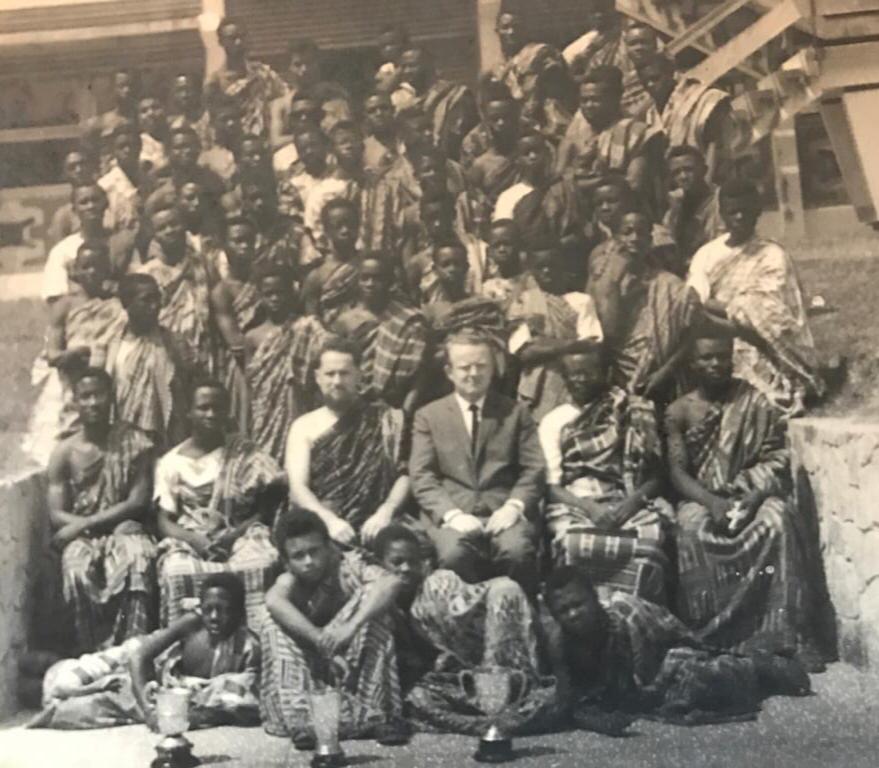
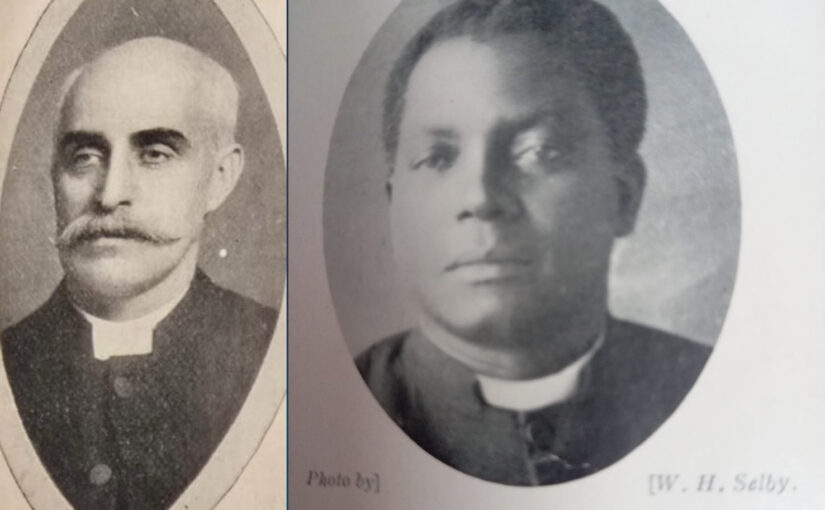
The day was June 28, 1963. On Kwabotwe Hill, that was the day the Ghana Young Pioneers Movement (GYP) was going to be officially inaugurated. Unlike other school clubs like the Drama Club, Christian Union, Chess Club, Debating Club, etc., the inauguration of this movement had to be special and official. Rev. W.G.M. Brandful, the headmaster himself, had to be present. He also had to wear a signature GYP scarf, and it was going to happen at morning assembly.

So who were these Young Pioneers?

The Ghana Young Pioneer Movement (GYP) was a youth movement founded by Kwame Nkrumah in 1960. Modeled after youth movements like the Boys Scouts of the UK, the Kosmosol of the then USSR, the Israeli Gadna, the Red Pioneers of China, and youth groups in Germany and the US, the group sought to raise Ghanaian youth to be patriotic, pan-Africanist, socialist, and anti-imperialist. They were immersed in military drills, classes on Ghanaian culture, and taught lessons on being an upstanding citizen – the 12-point code of discipline. Training also included vocational and technical skills.
They wore crisp khaki uniforms, boots, and an iconic neck scarf.

The kids were taught to chant many patriotic slogans. However, there were also slogans like, “Nkrumah will make you fishers of men, if you follow him”, “Nkrumah is our Messiah”, and “Nkrumah does no wrong”, that rubbed the Churches and some in the Christian community the wrong way. Moreover, there was also the fear that the movement was replacing Christian teaching with political indoctrination, and the subject was mainly Nkrumah.
Added to that were the accusations that the kids in the movement were being trained to spy on their parents and other adults, and you had a section of the population that was against the GYP.

Despite the opposition, the only person to speak up about the use of biblical themes was the Right Reverend Richard Roseveare, the Anglican Bishop of Accra. On Aug 4, 1962, at the Anglican Synod, he condemned the movement as “godless” and accused them of a “gross parody of Christian scripture”. About a week later, he got expelled from Ghana (though due to public outcry, Nkrumah allowed him back two months later).

Interestingly, the man who helped put the movement together, made sure the kids got religious discipline (the spiritual architect), was the primary administrator, and the Rector of the movement’s training center – the Kwame Nkrumah Youth Leadership Training Institute – was a Methodist priest and an Old Boy called Rev. Dr. James Stanley Adama Stephens. He saw these slogans as metaphors. To him, a “messiah” in the political context meant a “liberator” or “political savior” who had freed Ghana from British colonial rule—not a divine being.
Suffice to say there was some disagreement between his position and the Church’s.

So after the expulsion of Roseveare and with the Preventive Detention Act (PDA) of 1958 as a great deterrent, most in the church and civil society kept mum.

Until that Friday morning on June 28, 1963.

Almost everyone at morning assembly that morning probably assumed that Rev. Brandful was just going to wear the scarf, oversee the inauguration, and carry on with the day. But is that what happened?

Now let’s take a step back and examine the school Rev. Brandful headed, its age, and the traditions that made Mfantsipim what it was. In 1963, the school had been in existence for 87 years! The 12-point Code of Discipline of the Young Pioneers was like the air Mfantsipim boys breathed daily.

“Love of Country?” Since Mensah Sarbah and Casely Hayford, loving Ghana is like the birthright of the school. Old Boys started the fight for independence!

“Discipline, Obedience, Honesty, Morality, Punctuality?” Just ask any Botwe boy.
“Comradeship and Forbearance?” Some people think MOBA is a cult!

The things the movement was trying to teach had been Mfantsipim’s tradition for 87 years!

What about the pan-africanism and anti-imperialism? Look, Mensah Sarbah got the school named “Mfantsipim” and gave it a motto in Fante in 1905. Rev. Brandful knew that on that hill, we are more conscious of who we are than a 3-year-old movement could ever teach.

And Mfantsipim as a school had a curriculum that included technical and vocational training. There were no military drills but life on that hill was close to one.

And I am sure the dear headmaster remembered the 1948 riots and their effect on the school. Moreover, he was definitely no fan of the biblical metaphors and indoctrination, and believed that they had no place in a school where the minds of the young were being molded.

And so he walked out that morning and uttered the famous words:

“They want to put the scarf around my neck, and I refuse it”.

A month later, he was fired as headmaster of Mfantsipim School.

Three years later, Nkrumah was gone, and with him, the Young Pioneers, but on Kwabotwe Hill, boys were still being raised according to traditions that were old and enduring. No matter where you stand on the issue of Nkrumah, Rev. Brandful’s action spells bravery. He had the courage to stand by what he believed in, even though he knew it would cost him. He epitomized the lessons he taught as headmaster. When it came to it, he walked the walk. Sadly, it was not the last time the government would meddle in the school’s affairs.

May the brave soul of Rev. Brandful RIP.

Alex Apau Dadey, the Philanthropist and Entrepreneur

In the long and rich history of Mfantsipim are stories of successful entrepreneurs who not only helped found the school but also came to its financial rescue several times in the early decades. Men like Jacob Wilson Sey, John Mensah Sarbah, J.W. DeGraft-Johnsom, and W.E. Sam, among others, placed as much emphasis on philanthropy as they did on the creation of wealth. They gave of themselves and their wealth to improve the nation as a whole and the communities they lived in, locally. They believed in giving back.

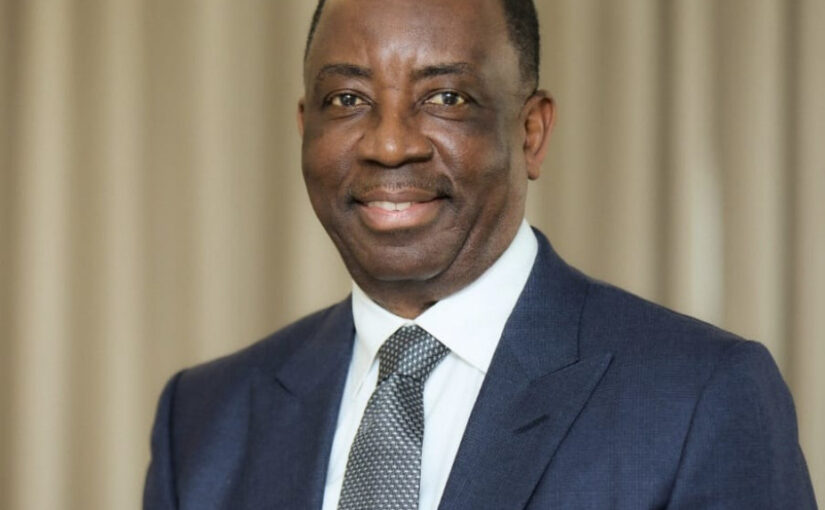
From this long line of entrepreneurs and philanthropists comes Alex Apau Dadey, a distinguished Ghanaian entrepreneur, corporate strategist, and business statesman, and the Executive Chairman of KGL Group, an entity he founded. He is widely recognized as one of the leading voices in the rise of modern indigenous African enterprise.

Alex was in Mfantsipim from 1974 to 1979. He was in Bartels-Sneath. Besides academics, he was a star athlete while on the Hill. In Form One, he won the Giant race. He would go on to represent the school in 100m, 200m, and 400m races.
After 6th form, Alex entered the University of Ghana, Legon. He graduated from their School of Administration (now UG Business School) in 1986, and left for the UK that same year.

Over the first 15 years in the UK, Alex worked for Gordon Richman Textiles Limited. He steadily moved up the ranks from Export Sales Supervisor to Export Sales Director and oversaw important accounts in 10 countries across Europe, the Middle East, and Africa.
Even in those years, Alex kept an eye on the business scene in Ghana. From the example of a mother who traded to supplement household income, and from Ghanaian entrepreneurs of the 1970s like Joshua Kwabena Siaw of Tata Brewery and R.A. Darko of Mechanical Lloyd, he had always dreamt of becoming an entrepreneur and saw himself returning home one day to start a business.
In 2001, he acquired the backing from DCD Finance Group PLC to start Qualitexx Limited. For the next 17 years, he actively financed ventures in Ghana and other African countries as well as in the UK. He also encouraged Ghanaian diasporians to invest in the country.

Ever conscious of the dream of returning home to Ghana to start a business venture, he did just that in 2018. On his return, due to the role he had played in getting diasporans to invest in the country, he was named a member of the Governing Board of the Ghana Investment Promotion Center (GIPC). He was named Chairman of the Board in 2021, a position he held until the end of 2024.
Even as he worked with GIPC to get investments into the country, he founded the KGL Group.

The first and most conspicuous subsidiary he founded was KGL Technology Limited. In its first major deal, the company digitized Ghana’s lottery operations, run by the National Lottery Authority (NLA), by introducing USSD and online platforms that transformed a traditionally manual system and money-losing venture into a modern, technology-driven, and profitable enterprise. The platform he created for NLA is working so well that KGL Tech is being asked to replicate it in Côte d’Ivoire and Nigeria.
Another subsidiary Alex founded was Fuel Automation Ghana Limited. This company received the mandate from the Ministry of Fisheries and Aquaculture Development, Ghana, to design, build, and automate 300 landing beach premix fuel outlets in Ghana — providing purpose-made fuel for fishermen who use outboard motors, and tackling issues of diversion, corruption, adulteration, and hoarding that had afflicted the sector for years. He did this very successfully.

In eight years, Alex has built KGL Group into a wholly owned Ghanaian enterprise comprising eight subsidiaries with interests in technology innovation, FinTech, logistics, trade, property development, gaming, and commerce. (The name “KGL” comes from “Keed Ghana Ltd” – one of the subsidiaries that is into mobile and telecom financial services).

As great an entrepreneur as Alex is, he also ardently believes in giving back. To achieve that, one of his subsidiaries, the KGL Foundation, is tasked with philanthropy.
In partnership with the Eve Medical Foundation, the foundation is building a psychiatric hospital at the Kwame Nkrumah University of Science and Technology (KNUST) in Kumasi. The foundation makes recurring donations of incubators to hospitals across the country, and has a scholarship program for orphans and underprivileged children.
The KGL Group signed a landmark two-year sponsorship deal worth GH¢20 million with the Ghana Football Association (GFA) to support the Black Stars, and the foundation has a five-year sponsorship agreement with the GFA to develop grassroots football, including providing equipment like footballs and organizing events such as the KGL U-17 Champions League.

And Alex has not forgotten his roots.
He is funding a multi-million sports complex that is under construction at Mfantsipim.
In a visit by a MOBA delegation to KGL House in 2025, Alex donated a GH¢100,000 cash prize to support Mfantsipim’s sports initiatives and introduced the “Alex Dadey Sportsman of the Year Award” — an annual GH¢10,000 prize to be awarded to the most deserving sportsman each year at Mfantsipim’s Speech and Prize Giving Day.
He also announced a mentorship scheme in partnership with KGL Group, designed to equip young MOBA professionals with industry-ready skills for the Ghanaian job market.

Alex strongly believes in public-private partnerships and that they are not only for developing Ghana and the whole of the African continent, but also for creating a path towards a unified African market.
He initiated the Ghana Diaspora Homecoming Summit in 2017 and the Ghana Investment and Opportunities Summit UK in 2018, both of which are now held biennially.
He serves on several corporate boards, including Ecom Agro Industrial, Premier Textiles Group in the United Kingdom, Birchfield Investments Limited in Jersey, Channel Islands, and Dubai, KGL Capital (UK) Limited, and Dominion Direct (UK) Limited. He is also a sought-after speaker, having spoken at the University of Ghana, the London School of Economics, and Oxford University.

Is it any surprise that Alex Dadey is one very awarded individual?

In 2017, he was awarded the “Excellence in Organizational Leadership” and the “Diaspora African Forum Excellence Award” by the Ghana Diaspora Homecoming Summit Committee for the successful execution of the Ghana Diaspora Homecoming and for his prominent role in ensuring the summit’s success, respectively.
He was named “Man of the Year” at the 8th EMY Africa Awards in 2023, and as of May 2025, had won “CEO of the Year” three consecutive times.
In 2025, he won the prestigious “Forbes Best of Africa Corporate Leadership and Innovation Award” at a Leadership and Philanthropy Forum held at the House of Lords in London.

For Alex Dadey, business is not only about the profit but about creating a legacy. It is about building a Ghanaian institution that lasts generations. He sees business as integral to community and nation-building. He has the unwavering faith that Africa can build homegrown institutions.
In all he does, Alex epitomizes the powerful lessons that feed the age-old traditions of Mfantsipim. Lessons of excellence, vision, foresight, patience, integrity, hard work, and social consciousness have helped to fuel his success.

Alex Apau Dadey is an illustrious son of Mfantsipim, a Botwe boy.

So What Happened to James Picot, Our First Headmaster?

Dear MOBA Fraternity, have you ever wondered what happened to the young James Picot after he left the school and the then Gold Coast in 1878?

Well, he did not vanish into thin air.

James Picot was born on December 23, 1858, in Alderney, Guernsey, part of the Channel Islands. The Picots were a strong Methodist family. His brother, Rev. Thomas Picot, was Head of the Wesleyan Synod in the Gold Coast and really made the school’s opening happen.

So, as of April 3, 1876, when he started as the first headmaster of the Wesleyan High School, he was still 17. After two years as headmaster, he wanted to return to the UK to complete his education. Remember, he may have been a pupil teacher at Claremont College when his brother dragged him to Cape Coast. Per Bartels, he only had the College of Preceptors certificate, which was equivalent to the “O”-Level certificate. (There may be some research that points to the fact that he was training to be a teacher and so he may have had a much higher level of education than previously thought).

When he returned to the UK, he became a lay preacher. He was subsequently accepted into Richmond College, a seminary, in 1881.

Since he was fluent in both English and French, his first station out of school was in Rouen, France. After 3 years there, he joined his brother, Rev. Thomas Picot, in Haiti, who had moved there to head the mission. He spent three years there, too.

Back home, he would serve the Church for the next 43 years, working in missions in the Channel Islands and the western part of the UK.

James Picot was married three times and had a total of nine children.

His first wife was Ann Le Brocq, and they married around 1890. They had four children before she passed away in 1900. He then married Laure Ahier in 1903. They had three children. She died two days after delivering their third child in 1906. With seven children on his hands, he remarried for the third time later that year. Her name was Edith Gliddon. They had two children together.

His last wife, Edith, outlived him, then James Picot passed on August 12, 1930 in Letchworth, Hertfordshire in England. She passed eight years later.

In his obituary, Rev. James Picot was described as “ a wide reader and original thinker”. His sermons were described as being “…clear and thoughtful expositions of the truth of Christian life and experience.” His last words were reportedly, “I am happy in the love of my Father.”

One of the children of James and Laure, was born in 1904 and named Caroline. In 1989, when the Mfantsipim Foundation UK & Ireland officially launched, Ms Caroline Picot was a guest.

The last of their three children was also named James. Unfortunately, Laura died 2 days after delivering him. James Picot Jr. would, as a young man, migrate to Australia, where he became a famous poet. He joined the Australian Imperial Force during WWII and was posted to Singapore, where he was captured by the Japanese. Forced to work on the Burma-Thailand Railway, he died of beriberi on 11 April 1944.

It is truly impressive that James Picot spent his life serving others, and the school he helped start at the age of 17 still stands today. I wonder what he would say if he were to see the school now. May he truly rest in peace.

PS: Thanks to Daniel Adu-Gyamfi for his research on the Picot Family.

References:

1. Wikitree-dot-com

2. Genealogy-dot -com

3. Minutes of the 188th Conference of the Wesleyan Methodist Church, in Birmingham, July 1931

4. F.L. Bartel’s “The Roots of Ghana Methodism”, 1965

Why did John Mensah Sarbah name the school “Mfantsipim”?

At first glance, it breaks down into “Mfantsi”, an allusion to the Fantes, and “-pim”, meaning “thousand”. Thus, most argue that the school’s name means “Thousands of Fantes”.

However, it is more than that.

The Fante nationalists, who founded the Fanti Public School Ltd and the Mfantsipim of 1905, were all members of the “Mfantse Amanbuhu Fekuw”, a Fante Nationalist Society. This is the same group from which the Aborigines Rights Protection Society emerged. This was a time of great nationalist fervor – the group had gotten the Lands Bill of 1897 quashed. Education became their next priority.

Moreover, there was a massive push to abandon the European habits most had learned from the colonialists and to return to Fante ways and traditions. This was known as the “Gone Fante” movement.

So, these nationalists wanted to revive Fante beliefs and foster growth through education. They needed a center where change could grow and a name that expressed these beliefs.

As Bartels notes in his memoirs titled “The Persistence of Paradox,” the new name aimed to express the Fante people’s spirit.

Bartels cites two Fante proverbs that help to explain the thought process behind the creation of the name. The first is “Ɔman si hɔ a na posuban si mu”. That means “it is only a viable nation that has its own fetish grove”. The second is, “Ɔman Biara hia posuban” to wit, “every nation needs a fetish grove where the spirit or soul of the nation resides”.

The name ‘Mfantsipim’ was chosen to represent this dream. While ‘Mfantsipim’ literally translates to ‘a thousand Fantes’, in context it means ‘many’ or ‘masses.’ The name was meant to symbolize a ‘posuban’—a sacred place—where these masses would gather, enabling the spirit of the Fante people to flourish. Not through spookism but through discipline, sacrifice, service and above all, education.

Thus, the foundation of Mfantsipim was seen not simply as a school for the Fantes but as the starting point of a wider cultural renaissance for the Gold Coast.

And so, when Rev. Bartrop asked Mensah Sarbah to merge Mfantsipim with the Collegiate School in 1905 and thus continue the traditions set forth by the founders in 1876, even though the latter agreed to the merger, it was done on his terms. The amalgamated institutions were to carry the name “Mfantsipim”, adopt the motto “Dwen Hwɛ Kan”, and retain the crest designed by Johnson B. Essuman Gwira.

The school may have had its origins in the Wesleyan tradition and a Wesleyan Mission House, but in becoming “Mfantsipim,” it became a sacred place where the spirit of the people of the Gold Coast would reside. A spirit of thoughtfulness, foresight, leadership, education, sacrifice, and service.

Rev. Albert Ocran – A Life Devoted to Serving People

Mfantsipim School has its foundation in the Methodist Church, and for decades, every single headmaster was an ordained priest. The leadership and guidance of the clergy have played a significant role in the education of thousands of boys who attended the school. And so it also makes sense that the school would produce impactful men of the cloth, like the late great Rev Gaddiel Acquaah. And from that line of impressive clergy men comes Rev. Albert Ocran.

Albert entered Mfantsipim in 1979 and was in Sarbah-Picot. He graduated in 1986 and entered the University of Ghana at Legon. He graduated with a degree in Economics with Sociology in 1990. He later obtained an MBA from the Ghana Institute of Management and Public Administration (GIMPA) in 2002.

Shortly after graduating from Legon, Albert, together with his wife Comfort, founded a printing and publishing business called Combert Impressions. After a decade of running this business, their shared passion for human capital development began to redefine their interests.

The couple initiated a personal development Road Show to mentor young people in January 2007. This had them traveling across the country with a contingent of accomplished Ghanaians speaking to young people and encouraging them to reach for their dreams and aspirations. The sessions included free workshops where participants were trained in skills like CV writing, business planning, talent development, public speaking and preparing for interviews. This roadshow is still held annually. Within four years, the Road Show had gone nationwide and been extended to Gambia and Nigeria. In 2011, the couple set up the Springboard Road Show Foundation to enable more young people to freely benefit from their diverse initiatives.

For the past 18 years, Albert has hosted “Springboard, Your Virtual University” on Joy FM, Joy News and other digital platforms. This educational and empowering show educates its audience and helps them improve their leadership and professional skills.

In 2013, Albert responded to the call to be ordained as a Reverend Minister. He first served as Executive pastor at the ICGC Christ Temple for ten years. In March 2023, he became Senior Pastor at the ICGC The New Wine Temple at East Legon, Accra, a position from which he has an even greater opportunity to win souls and shape the human development of the nation’s youth.

By combing his pastoral duties with his love for human capital development, he is not only developing souls for the afterlife but helping them to live better lives in this one, too. He has continued writing, publishing about 26 books with his wife, Comfort.

With books like “Snakes and Ladders: Entrapments and enablers on the complex journey of life, 2019”, “Sheba – Ancient Customer Service Secrets Repackaged In A Social-Media Driven Era (Biblical Economics Series Book 5), 2013”, and “The Lord, Madiba & The Eagle“ by Albert & Comfort Ocran, 2010”, Albert showed his penchant to find wisdom not only in the Bible but in the lives of courageous and accomplished leaders. And this penchant reflects in his sermons, speeches, and workshops.

During the COVID pandemic, Albert and Comfort managed the CoRe Program in partnership with the Mastercard Foundation and Solidaridad. The program used an integrated e-learning, e-mentoring and e-counselling approach to equip over 23 million young Ghanaians with resilience to cope with the effects of the COVID-19 pandemic. Springboard’s most recent intervention is the Ghana Grows Program, a partnership with the Mastercard Foundation that has helped over half a million young people to explore opportunities in the Agricultural and related Vocational Sectors.

Albert is a Fellow of the respected Aspen Global Leaders Network based in Colorado, USA, and the Africa Leadership Initiative West Africa (ALIWA). He was voted as Ghana’s 7th Most Respected CEO for 2009 and also received the Millennium Excellence Award for Motivation in 2010. For four consecutive years, he has appeared on ETV Ghana’s list of the 100 most influential Ghanaians. He also won the Exclusive Man of the Year Africa Award for 2018 in the Mentorship Category, among other awards.

On any day, Albert will be found serving people through mentoring, counselling or speaking sessions. After three decades, he doesn’t seem to have lost steam on this mission. If anything, he always seems to find a way of reinventing it. The thousands of testimonies from lives touched and volumes of impact stories published are a testament to the spirit of sacrifice, humility and service to humanity.

In all he does, that spirit of excellence, duty, and service that is taught on the Kwabotwe Hill is evident. Albert more than embodies the thoughtfulness and foresight preached by Mensah Sarbah.

Rev. Albert Ocran is an illustrious son of Mfantsipim, a Botwe boy.

Kwabena “Buster” Boahen, the Neuromorph

The son of Mfantsipim I present in this piece works in a field that is not easy to understand. I did not trust myself to do justice to his efforts but hoped to do my best, so here we go.

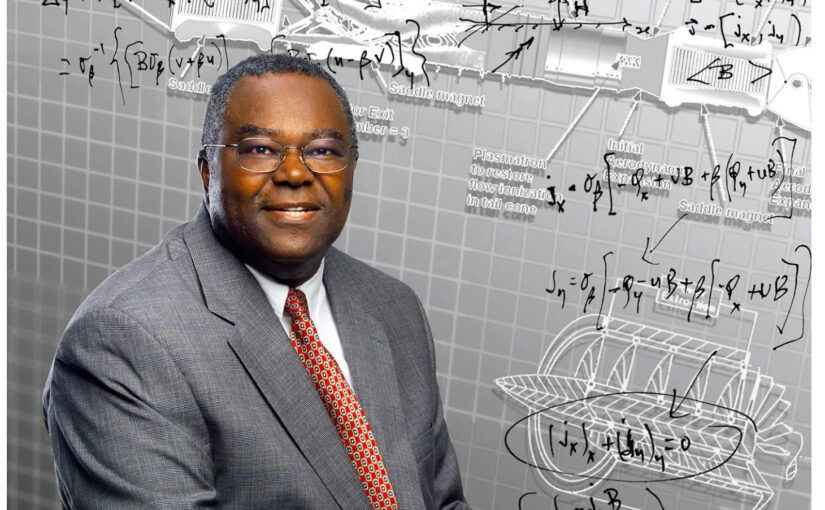
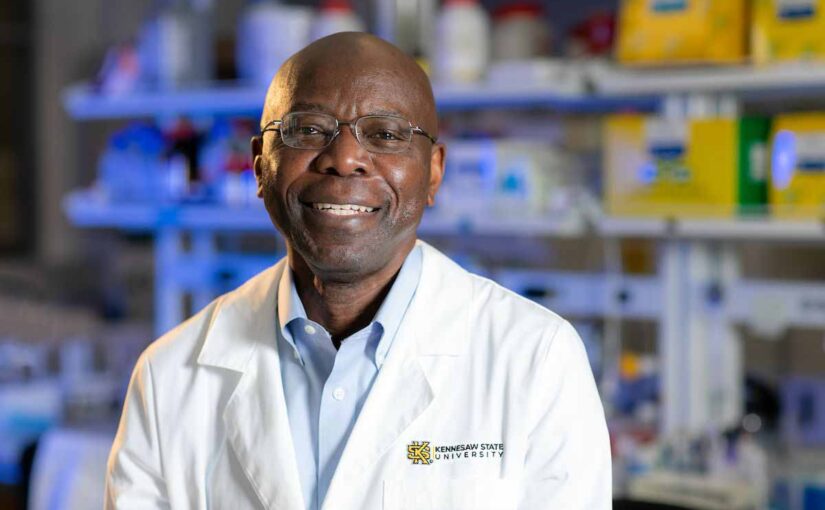
Kwabena Boahen was born on Sept 22, 1964. Affectionately called “Buster,” a nickname he got from a nanny, he was the second child of the late great historian Prof Albert Adu Boahen. He entered Mfantsipim in 1976, so he was a “centenary greenhorn”.
Ever the tinkerer, he invented a corn planting machine while in Form 3, together with a classmate, Michael Banson. The machine would win the National Science Fair and be later presented at the West African one in Lagos.

At age 16, he got his first personal computer – a BBC Micro. After reading about how it was put together and worked, he took it apart and was not awed by its simplicity. That experience might have planted the seed for his life’s direction – an elegant and more efficient way of computing.

At age 21, he won a scholarship to study Electrical Engineering at Johns Hopkins. During his time there, he heard a lecture by the computational neuroscientist, Terry Sejnowski. It was about using a neural network to turn text into speech. That experience lit a bulb. There could be a more elegant way to build computers!

Around that time, a computer scientist named Carver Meade at Caltech was working on building computer chips that were structured like neurons in the human brain. He believed that the most efficient computers should combine both analog and digital processing like the brain. The new field would come to be known as “Neuromorphic Computing.”
Not too long after hearing Sejnowski’s speech, Kwabena’s TA challenged him and a classmate to replicate the work Carver Meade was doing at Caltech. The work they did resulted in two successful papers, and brought him to Carver Meade’s attention.

After finishing his bachelor’s and master’s at Johns Hopkins, he worked for a year and then started his PhD at Caltech under Carver Meade in 1990, graduating in 1997. His interest in building chips based on the brain’s architecture meant he had to do some neurobiology coursework. The organ he picked for his research was the retina of the eye. His thesis would be the creation of a silicon retina.

After completing his PhD, he moved to the University of Pennsylvania, where he was the first occupant of the Skirkanich Term Junior Chair. He was there until 2005. He published further work on the silicon retina and a silicon tectum, several papers, gave many talks, and even graced the cover of Scientific America.

In 2005, he moved to Stanford, where he founded the Brains in Silicon Lab. His aim was to create a team that would work towards linking “neuronal biophysics to cognitive behavior through computational modeling”. He sought to “emulate the brain with silicon chips through neuromorphic engineering.” In that regard, he has been quite successful.
His team has created the “Neurogrid.” This is an iPad-size platform that emulates the cerebral cortex of the brain. It was built using neuromorphic chips, which allow it to be a supercomputer. In 2022, he and a colleague, Philip Wong, created a dendrite-like structure using chips. Kwabena has also published even more papers.

So, what are the advantages of neuromorphic chips? Structured like the neurons of the brain, they are more efficient. As Kwabena says, “the brain computes analogically and communicates digitally.” This, among other things, allows it to use much less energy than computers. So, using neuromorphic chips, AI processes will not need as many chips and as much energy.

If Carver Meade is the father of neuromorphic computing, Kwabena may be the preeminent disciple. His output and awards are impressive. I counted 144 papers on Google Scholar. His honors include a Packard Fellowship for Science and Engineering (1999) and a National Institutes of Health Director’s Pioneer Award (2006). He was elected a fellow of the American Institute for Medical and Biological Engineering (2016) and of the Institute of Electrical and Electronic Engineers (2016) in recognition of his lab’s work on “Neurogrid.”

Presently, Kwabena Boahen, aka Buster, is a Professor of Bioengineering and Electrical Engineering at Stanford University, with a courtesy appointment in Computer Science. He is also an investigator in the Bio-X Institute, the System X Alliance, and the Wu Tsai Neurosciences Institute. Further, he founded and runs the Brains in Silicon Lab at Stanford.

Kwabena is an illustrious son of Mfantsipim, a Botwe boy.

The Courageous Professor Albert Adu Boahen

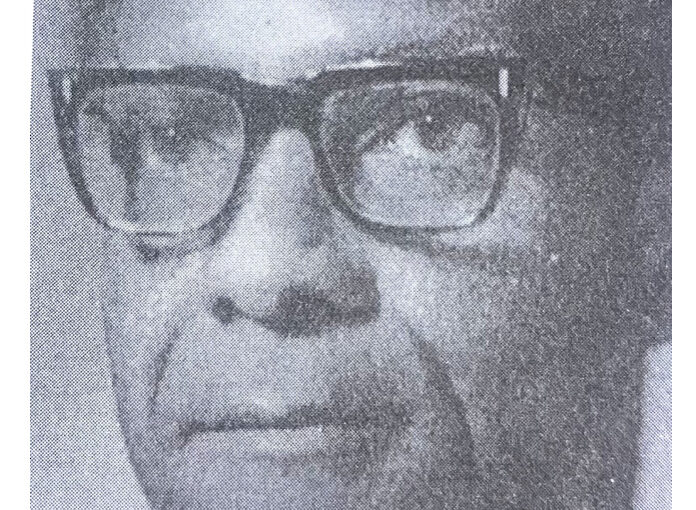
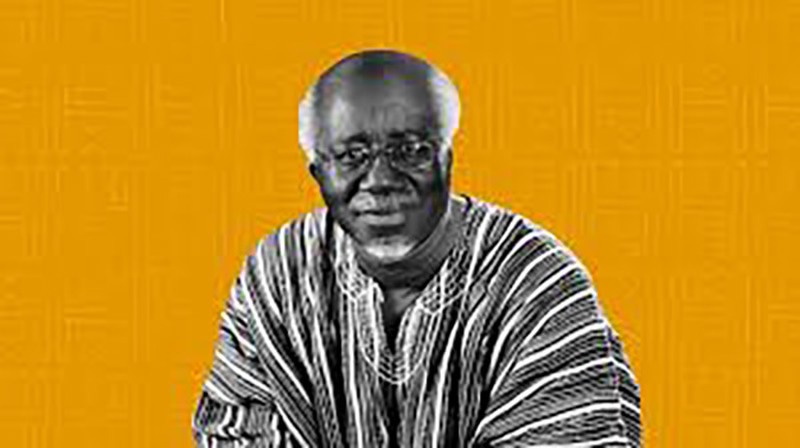
The late Albert Kwadwo Adu Boahen was born on May 24, 1932 in Oseim in then Gold Coast. He entered Mfantsipim in 1947, graduating in 1950. He would later study history at the University of Ghana, where he got his BA, and then at the University of London, where he got his PhD in African history in 1959.
An illustrious career in teaching and scholarship would follow. Besides becoming a professor emeritus in history at the University of Ghana, a department he headed for many years, he was also a visiting professor at several universities around the world. He also had a publishing career that spanned over 40 years with books that became authoritative texts on African history like:
– Topics in West African History (1966),
– African Perspectives on Colonialism (1987),
– Mfantsipim and the Making of Ghana : A Centenary History, 1876–1976 (1996), and
– Yaa Asantewaa and the Asante–British War of 1900–1 (2003).
He was president and consultant of the UNESCO committee that the published of the multi-volume “General History of Africa” between 1983 and 1999.

As impressive as his scholarship was his political activism that was built on courage and fearlessness. Even as a student at Mfantsipim, he participated in a students’ protest in 1948 against the detention of the “Big Six”. In the 1970s, he fought against Kutu Acheampong’s UNIGOV.
This courage would shine brightest in 1987-88, during Rawlings and the PNDC’s reign of terror. At a time when no one dared to criticize Rawlings, he did. At a time when critics just vanished, fled the country or were jailed, he spoke up.

The events that led to the professor speaking out started with a column by Rawlings. After 6 years of brutalities, Rawlings suddenly noticed that there were no critics anymore, and Ghanaians seemed apathetic. In the Daily Graphic of April 6, 1987, the then ‘Chairman Rawlings’ lamented a ‘Culture of Silence’ that he saw pervading the country. He wrote that “.. people at various levels of authority are using the chain of command to subjugate and demand a subservient state of interrelationships with subordinates….. that this situation was leading to the return of the ‘Culture of Silence’….. between high government officials and the public, District Secretaries and the people; chiefs and their subjects; bishops, priests and church members; managers and workers.”

No one responded then. How could they? Everyone was terrified. However, one man soon found his voice. About a year later, Professor Adu Boahen, spoke up. The dear professor gave three lectures as part of the Danquah Memorial Lectures organized by the Ghana Academy of Arts and Sciences at the British Council in February, 1988. His lectures were titled “The Ghanaian Sphinx: Reflections on the Contemporary History of Ghana, 1972 – 1987”.

During one of those lectures he had this to say to the then Chairman Rawlings:
“I am afraid that I do not agree with Rawlings’ explanation of the sedulity of Ghanaians. We have not protested or staged riots because we cannot but because we fear the PNDC. We are afraid of being defamed, liquidated or dragged before the CVC or NIC or being subjected to all kinds of molestations. And in this case have Ghanaians not been protesting at all as the Head of State thinks? They have been but in a very subtle and great way – hence the Culture of Silence.”

He would go on to be the flag bearer for the NPP in the 1992 elections. He unfortunately lost to Rawlings’ NDC. He would lose the NPP flagbearer position to Kuffour for the subsequent elections 1996 and 2000 but stayed active in the party.

On the evening of his 74th birthday, May 24, 2006, he died at the 37 Military Hospital after suffering strokes in 2001 and 2002.

Albert Kwadwo Adu Boahen is an illustrious and courageous son of Mfantsipim, a Botwe boy.

The Amazing Raphael Armattoe

Over the decades, Mfantsipim School has produced some illustrious men. One of my all time favorites and someone I really, really admire is Dr. Ralph Armattoe. Following is but a brief synopsis of his impressive life.

An anthropologist, physician, scientist, poet, and Nobel Prize nominee, he was born in Denu on August 12, 1913. He studied at Mfantsipim from 1925-29.

Already fluent in French, German, and English, he would leave for Germany in 1930 to study but had to flee the country because of the Nazis. So he finished his studies in anthropology and medicine in France, and Scotland. He later settled in Ireland, where he had a medical practice.

Beside his practice in Ireland, he also spent time in Ghana, then the Gold Coast, doing medical research and running a clinic in Kumasi. Armattoe’s research led him to create a drug called “Abochi” that was based on herbs and was a potent treatment for water-borne diseases along the Volta. He would be nominated for the Nobel Prize for Peace and Physiology in 1949 but did not win.

He was also politically active, fighting for the unification all Ewes under an “Ewe Nation”. He even addressed the UN in 1953 regarding Togoland and the “Eweland Question”.
He rubbed shoulders with Nkrumah and though both agreed on independence for African countries, Armattoe favored a federalist approach whereas Nkrumah was centrist. He was also very good friends with W.E.B. DuBois.

He became best friends with the Nobelist and physicist, Erwin Schrödinger. He accompanied Schrödinger to the Nobel ceremony in 1947. The latter would later write the foreword to Armattoe’s book, “The Golden Age of West African Civilization”.

Interestingly, in his poem titled “The Way I Want To Die”, he expressed the wish to die young so as to avoid the scourges of old age, and sadly, he would die at the young age of 40 in Hamburg, Germany. It is believed he was poisoned. On his gravestone are the words “Africa’s Greatest Nationalist”.