
Kwabena “Buster” Boahen, the Neuromorph

The son of Mfantsipim I present in this piece works in a field that is not easy to understand. I did not trust myself to do justice to his efforts but hoped to do my best, so here we go.

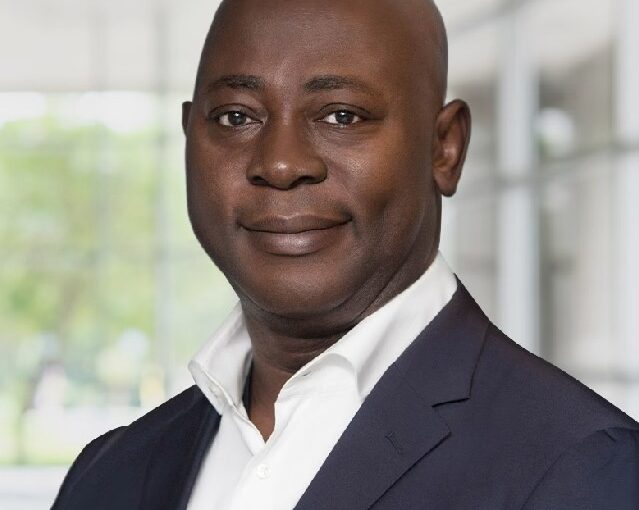
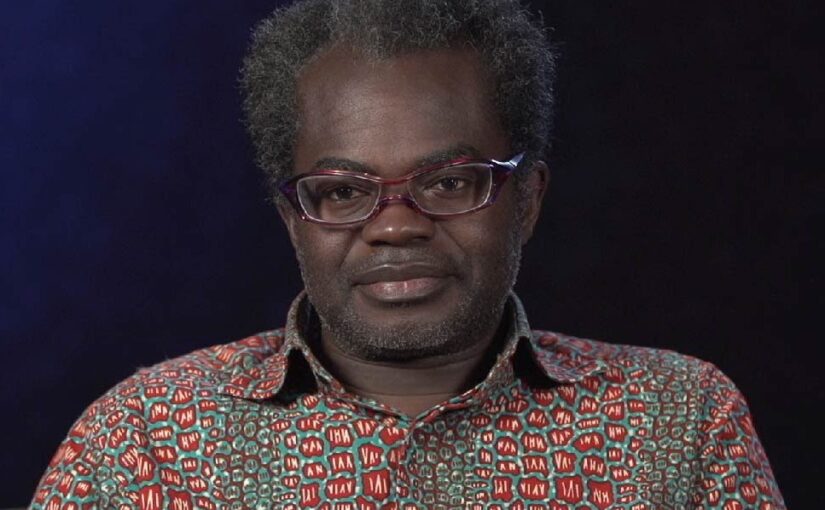
Kwabena Boahen was born on Sept 22, 1964. Affectionately called “Buster,” a nickname he got from a nanny, he was the second child of the late great historian Prof Albert Adu Boahen. He entered Mfantsipim in 1976, so he was a “centenary greenhorn”.
Ever the tinkerer, he invented a corn planting machine while in Form 3, together with a classmate, Michael Banson. The machine would win the National Science Fair and be later presented at the West African one in Lagos.

At age 16, he got his first personal computer – a BBC Micro. After reading about how it was put together and worked, he took it apart and was not awed by its simplicity. That experience might have planted the seed for his life’s direction – an elegant and more efficient way of computing.

At age 21, he won a scholarship to study Electrical Engineering at Johns Hopkins. During his time there, he heard a lecture by the computational neuroscientist, Terry Sejnowski. It was about using a neural network to turn text into speech. That experience lit a bulb. There could be a more elegant way to build computers!

Around that time, a computer scientist named Carver Meade at Caltech was working on building computer chips that were structured like neurons in the human brain. He believed that the most efficient computers should combine both analog and digital processing like the brain. The new field would come to be known as “Neuromorphic Computing.”
Not too long after hearing Sejnowski’s speech, Kwabena’s TA challenged him and a classmate to replicate the work Carver Meade was doing at Caltech. The work they did resulted in two successful papers, and brought him to Carver Meade’s attention.

After finishing his bachelor’s and master’s at Johns Hopkins, he worked for a year and then started his PhD at Caltech under Carver Meade in 1990, graduating in 1997. His interest in building chips based on the brain’s architecture meant he had to do some neurobiology coursework. The organ he picked for his research was the retina of the eye. His thesis would be the creation of a silicon retina.

After completing his PhD, he moved to the University of Pennsylvania, where he was the first occupant of the Skirkanich Term Junior Chair. He was there until 2005. He published further work on the silicon retina and a silicon tectum, several papers, gave many talks, and even graced the cover of Scientific America.

In 2005, he moved to Stanford, where he founded the Brains in Silicon Lab. His aim was to create a team that would work towards linking “neuronal biophysics to cognitive behavior through computational modeling”. He sought to “emulate the brain with silicon chips through neuromorphic engineering.” In that regard, he has been quite successful.
His team has created the “Neurogrid.” This is an iPad-size platform that emulates the cerebral cortex of the brain. It was built using neuromorphic chips, which allow it to be a supercomputer. In 2022, he and a colleague, Philip Wong, created a dendrite-like structure using chips. Kwabena has also published even more papers.

So, what are the advantages of neuromorphic chips? Structured like the neurons of the brain, they are more efficient. As Kwabena says, “the brain computes analogically and communicates digitally.” This, among other things, allows it to use much less energy than computers. So, using neuromorphic chips, AI processes will not need as many chips and as much energy.

If Carver Meade is the father of neuromorphic computing, Kwabena may be the preeminent disciple. His output and awards are impressive. I counted 144 papers on Google Scholar. His honors include a Packard Fellowship for Science and Engineering (1999) and a National Institutes of Health Director’s Pioneer Award (2006). He was elected a fellow of the American Institute for Medical and Biological Engineering (2016) and of the Institute of Electrical and Electronic Engineers (2016) in recognition of his lab’s work on “Neurogrid.”

Presently, Kwabena Boahen, aka Buster, is a Professor of Bioengineering and Electrical Engineering at Stanford University, with a courtesy appointment in Computer Science. He is also an investigator in the Bio-X Institute, the System X Alliance, and the Wu Tsai Neurosciences Institute. Further, he founded and runs the Brains in Silicon Lab at Stanford.

Kwabena is an illustrious son of Mfantsipim, a Botwe boy.
The Courageous Professor Albert Adu Boahen

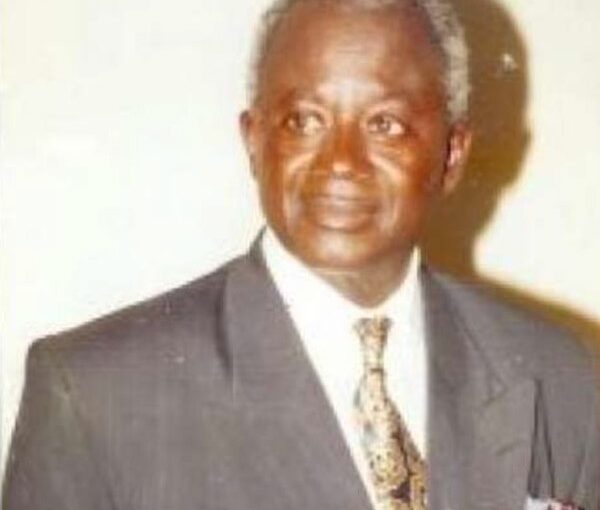
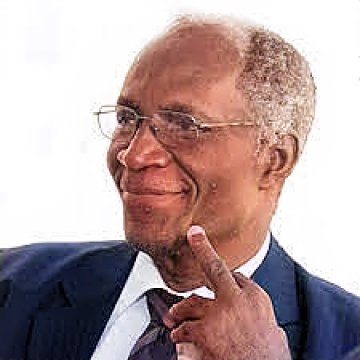
The late Albert Kwadwo Adu Boahen was born on May 24, 1932 in Oseim in then Gold Coast. He entered Mfantsipim in 1947, graduating in 1950. He would later study history at the University of Ghana, where he got his BA, and then at the University of London, where he got his PhD in African history in 1959.
An illustrious career in teaching and scholarship would follow. Besides becoming a professor emeritus in history at the University of Ghana, a department he headed for many years, he was also a visiting professor at several universities around the world. He also had a publishing career that spanned over 40 years with books that became authoritative texts on African history like:
– Topics in West African History (1966),
– African Perspectives on Colonialism (1987),
– Mfantsipim and the Making of Ghana : A Centenary History, 1876–1976 (1996), and
– Yaa Asantewaa and the Asante–British War of 1900–1 (2003).
He was president and consultant of the UNESCO committee that the published of the multi-volume “General History of Africa” between 1983 and 1999.

As impressive as his scholarship was his political activism that was built on courage and fearlessness. Even as a student at Mfantsipim, he participated in a students’ protest in 1948 against the detention of the “Big Six”. In the 1970s, he fought against Kutu Acheampong’s UNIGOV.
This courage would shine brightest in 1987-88, during Rawlings and the PNDC’s reign of terror. At a time when no one dared to criticize Rawlings, he did. At a time when critics just vanished, fled the country or were jailed, he spoke up.

The events that led to the professor speaking out started with a column by Rawlings. After 6 years of brutalities, Rawlings suddenly noticed that there were no critics anymore, and Ghanaians seemed apathetic. In the Daily Graphic of April 6, 1987, the then ‘Chairman Rawlings’ lamented a ‘Culture of Silence’ that he saw pervading the country. He wrote that “.. people at various levels of authority are using the chain of command to subjugate and demand a subservient state of interrelationships with subordinates….. that this situation was leading to the return of the ‘Culture of Silence’….. between high government officials and the public, District Secretaries and the people; chiefs and their subjects; bishops, priests and church members; managers and workers.”

No one responded then. How could they? Everyone was terrified. However, one man soon found his voice. About a year later, Professor Adu Boahen, spoke up. The dear professor gave three lectures as part of the Danquah Memorial Lectures organized by the Ghana Academy of Arts and Sciences at the British Council in February, 1988. His lectures were titled “The Ghanaian Sphinx: Reflections on the Contemporary History of Ghana, 1972 – 1987”.

During one of those lectures he had this to say to the then Chairman Rawlings:
“I am afraid that I do not agree with Rawlings’ explanation of the sedulity of Ghanaians. We have not protested or staged riots because we cannot but because we fear the PNDC. We are afraid of being defamed, liquidated or dragged before the CVC or NIC or being subjected to all kinds of molestations. And in this case have Ghanaians not been protesting at all as the Head of State thinks? They have been but in a very subtle and great way – hence the Culture of Silence.”

He would go on to be the flag bearer for the NPP in the 1992 elections. He unfortunately lost to Rawlings’ NDC. He would lose the NPP flagbearer position to Kuffour for the subsequent elections 1996 and 2000 but stayed active in the party.

On the evening of his 74th birthday, May 24, 2006, he died at the 37 Military Hospital after suffering strokes in 2001 and 2002.

Albert Kwadwo Adu Boahen is an illustrious and courageous son of Mfantsipim, a Botwe boy.
The Principled Kobina Sekyi

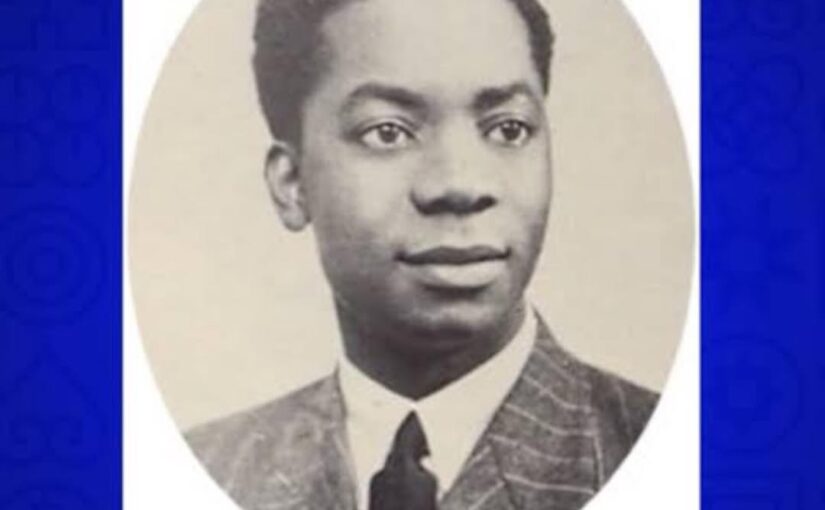
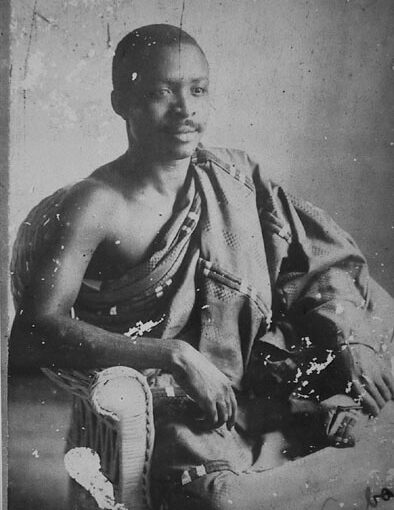
Kobina Sekyi was born on Nov 1, 1892 in Cape Coast. He attended Mfantsipim School and became not only a lawyer, but also a philosopher, sociologist, political activist, and writer.

Growing up in the then Gold Coast, he witnessed how the people of the Gold Coast were shunning indigenous culture and traditions for European ones. Names were being europeanized (Danso became Dawson, Andah turned into Anderson), the cloth was giving way to suits, and even diets were changing.
His years studying philosophy and law in England confirmed in him the deep conviction that what is African is worth maintaining and there was no need to drop those values, traditions and culture for European ones.
He went to write and direct the play “The Blinkards” in 1916 in Cape Coast.
The play satirized this tendency to see all things African as backward and savage and embrace all that was European as good. It also ridiculed some Euro-Christina beliefs and colonial laws. The play has stood the test of time and expertly captures how colonialism also stole who we really are, and his role as a playwright has never been celebrated enough.
This desire to be as African as can be led him to insist on wearing out traditional cloth to court.

This paragraph from a piece he wrote in 1920 captures his beliefs expertly:

“I would submit that the individual who, in spite of the many burdens which he must bear in the matter of assisting relatives under the Akan-Fanti social system, nevertheless thrives, becomes a better man, and is better fitted to look after other human beings: my point is that the person who goes through the Akan-Fanti system of growing up becomes a fuller man, and has all that is good in him brought out, and all that is bad restrained or suppressed by the discipline which in a well-set-up family is exerted on the thriftless individual through the disapproval of the family.”
– Kobina Sekyi, Cape Coast Observer, 1920

He was also very active in the Aborigines Rights Protection Society and a member of the Coussey Committee, that drafted a constitution for the Gold Coast in 1949. It is sad that he died in 1956, a year before Ghana attained independence

Kobina Sekyi is an illustrious son of Mfantsipim, a Botwe boy and one of the Faithful Eight..

The Amazing Raphael Armattoe

Over the decades, Mfantsipim School has produced some illustrious men. One of my all time favorites and someone I really, really admire is Dr. Ralph Armattoe. Following is but a brief synopsis of his impressive life.

An anthropologist, physician, scientist, poet, and Nobel Prize nominee, he was born in Denu on August 12, 1913. He studied at Mfantsipim from 1925-29.

Already fluent in French, German, and English, he would leave for Germany in 1930 to study but had to flee the country because of the Nazis. So he finished his studies in anthropology and medicine in France, and Scotland. He later settled in Ireland, where he had a medical practice.

Beside his practice in Ireland, he also spent time in Ghana, then the Gold Coast, doing medical research and running a clinic in Kumasi. Armattoe’s research led him to create a drug called “Abochi” that was based on herbs and was a potent treatment for water-borne diseases along the Volta. He would be nominated for the Nobel Prize for Peace and Physiology in 1949 but did not win.

He was also politically active, fighting for the unification all Ewes under an “Ewe Nation”. He even addressed the UN in 1953 regarding Togoland and the “Eweland Question”.
He rubbed shoulders with Nkrumah and though both agreed on independence for African countries, Armattoe favored a federalist approach whereas Nkrumah was centrist. He was also very good friends with W.E.B. DuBois.

He became best friends with the Nobelist and physicist, Erwin Schrödinger. He accompanied Schrödinger to the Nobel ceremony in 1947. The latter would later write the foreword to Armattoe’s book, “The Golden Age of West African Civilization”.

Interestingly, in his poem titled “The Way I Want To Die”, he expressed the wish to die young so as to avoid the scourges of old age, and sadly, he would die at the young age of 40 in Hamburg, Germany. It is believed he was poisoned. On his gravestone are the words “Africa’s Greatest Nationalist”.