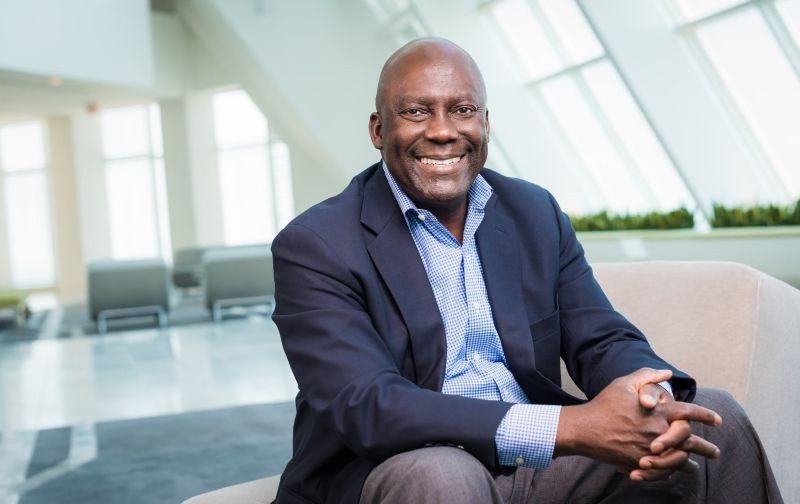
Some are born to lead, and Kodwo Ghartey-Tagoe is one of them. Kodwo entered Mfantsipim in 1975 and graduated in 1982. Even then, his character, demeanor, smarts, and ability to relate to everyone made him stand out. It was no wonder he was named the 55th Headboy in 1981 when he was in 6th Form. Most of us who were in the school in those years remember him as one of the best Headboys of that era.
After Mfantsipim, he earned a BA in Economics and Finance from McGill University in Canada. Initially aiming to attend business school, the challenges many immigrant students face led him to reconsider his plans. The chance to study law at Duke University came up, and he seized it. In 1988, he graduated with a JD in Law from Duke.
For the next 10+ years, he worked in private practice, handling regulatory and commercial litigation. In 2002, he joined Duke Energy as a part of the legal department.
For those who don’t know, Duke Energy is one of the largest energy holding companies in the US. It supplies electricity to 8.6 million customers in the Southeast and Midwest and natural gas to 5 states. Its market cap is $96 billion.
Over the years, Kodwo will rise to become the Chief Legal Counsel, thus serving as the primary legal advisor to Duke Energy’s board of directors and senior management. Soon, his responsibilities went beyond the legal realm when he was asked in 2017 to run Duke Energy’s utility operations in South Carolina. After his stint in South Carolina, he was pulled back to Charlotte, NC, in 2019 to become the Executive Vice President, Chief Legal Officer, and Corporate Secretary.
Then, this past July, he was named Executive Vice President and Chief Executive Officer of Duke Energy Carolinas and Head of the Natural Gas Business Unit.
Besides his work with Duke Energy, he sits on various boards, including the board of directors of Energy Insurance Mutual, Ltd., the board of visitors of Duke University Law School, and the President’s Advisory Board of Clemson University. Savoy Magazine named him one of the Most Influential Executives in Corporate America in 2024.
Talking to Kodwo, I was struck by his calm yet confident demeanor—a presence he carried even back then in school. He remarked how each stage in his life seemed to prepare him for the next. He reminisced about his time as Headboy at Mfantsipim and the leadership lessons he learnt from it. He mentioned how degrees in Economics and Finance really inform his work running a Utilities company.
He shared lessons he had learnt in leadership, including putting a premium on actionable advice and treating people well. Like he stated once in an interview, one of his favorite quotes is from Maya Angelou: “I’ve learned that people will forget what you said, people will forget what you did, but people will never forget how you made them feel.”
Kodwo Ghartey-Tagoe, an epitome of excellence, is an illustrious son of Mfantsipim, a Botwe boy.