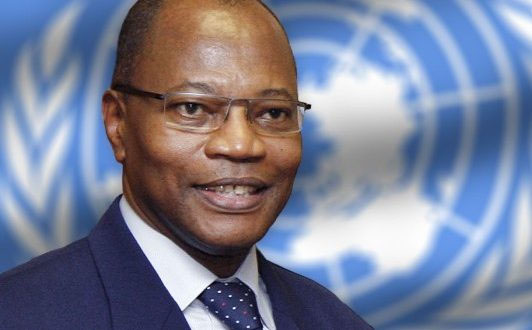
J. Kweku Bedu-Addo, the International Banker

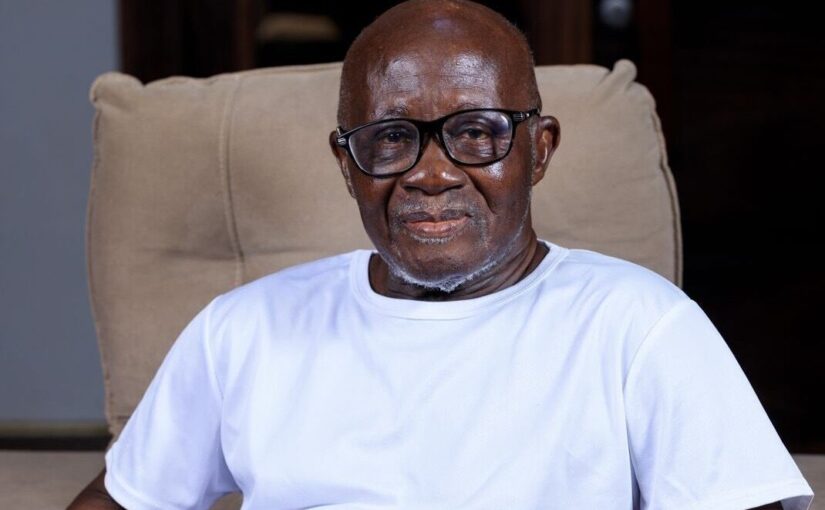
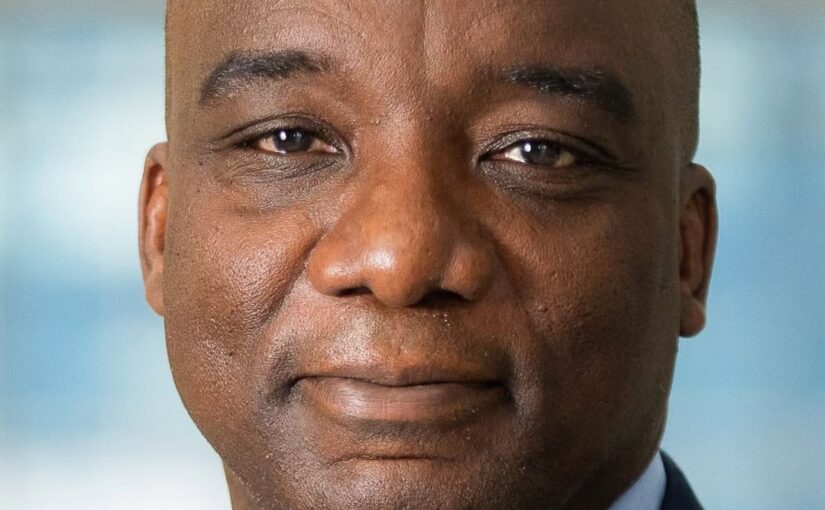
Kweku is an impact-driven financial services leader with a distinguished career spanning economic policy, development finance, and international banking across Africa (11 markets) and in Asia. He became the first Ghanaian CEO of Standard Chartered Bank Ghana after 115 years of operation.

Kweku Bedu-Addo (MOBA-84) entered Mfantsipim School in 1979. He was in Balmer-Acquaah House. After finishing 6th Form in 1986, where he studied science, he entered the University of Ghana at Legon, resolved by then to switch to the arts. Looking for a good confluence of the business/economics and the sciences, he graduated with a degree in Agricultural Economics.

After graduating in 1990, he joined the wonky Policy Analysis Division of the Ministry of Finance of Ghana as an Assistant Economics Officer, working under Dr. Kwesi Botchway, one of Ghana’s famed Finance ministers. At the Ministry of Finance, he was exposed to public policy at the highest level. He was also exposed to budgetary institutions and policy dialogue with the IMF/The World Bank, and other bilateral and multilateral funding agencies during Ghana’s structural economic reforms in the 1990s.

In 1995, he headed to Columbia University in New York City to pursue a Master’s in Economic Policy Management, followed immediately by a 6-month stint with the Eastern Africa Department of The World Bank in Washington, D.C. In 1997, he returned to the Ministry of Finance in Ghana, where he worked until 1998 before moving to the private sector.

His first job in the private sector was as a Financial Analyst at General Leasing & Finance Company Ltd, where he worked for two years.

Towards the end of 1999, he made a cold call to the corporate head office of Standard Chartered Bank in Accra. The cold call landed him a job as a corporate relationship manager in 2000. Due to his impressive output at the bank, he was promoted rapidly over 4 years, culminating in his first senior leadership appointment as Head of Corporate and Institutional Banking at Standard Chartered Bank’s Zambia subsidiary in 2004. His time there saw a total transformation of the unit. Under his leadership, the department’s financing balance sheet exceeded $500 million for the agriculture, mining, manufacturing, and commodities sectors. His team won the Best Corporate Bank Business in Africa in 2006.

In 2007, he was moved to Wholesale Bank’s head office in Singapore to oversee the implementation of a global technology project. He returned to Ghana in 2009 as a Managing Director and Head of Corporate Banking with regional responsibility for Ghana, Côte d’Ivoire, Cameroon, Sierra Leone, and The Gambia. In that time, he led a unit that managed a portfolio of over $2 billion in business assets across the energy, oil & gas, and public infrastructure sectors, among others. He joined the Standard Group Business Leadership Team (top 300 leaders globally) on this appointment.

In 2010, he was appointed as the CEO of Standard Chartered Ghana, becoming the first Ghanaian to hold that role since the bank was established in the then Gold Coast in 1897. Standard Chartered’s subsidiaries in Sierra Leone and Gambia were later added to his portfolio.

He held this position until 2017, when he moved to South Africa as CEO of Standard Chartered South Africa and the Area General Manager for Southern Africa, comprising Angola, Botswana, Mauritius, South Africa, Zambia, and Zimbabwe. He managed a balance sheet of $8 billion plus and held this position until 2024.

Deciding to scale back and explore other career interests and opportunities, Kweku left Standard Chartered Bank in 2025 and now has a portfolio career as Chairman and Non-Executive Director of Standard Chartered Bank Mauritius Ltd, as well as a Non-Executive Director on the boards of Standard Chartered Botswana and, the Development Bank, Ghana.
Just recently, his nomination as a member of the newly constituted five-person Fiscal Council of Ghana was announced.

Kweku is a true corporate leader who has led multi-billion-dollar businesses in different jurisdictions. He has advised and financed ventures for corporations, financial institutions, and sovereigns. His insights go beyond Ghana to Africa and the global markets.

His board experience is impressive, with stints on boards in Zambia, Ghana, Botswana, Mauritius, and South Africa. He is a former Chairman of the Ghana Stock Exchange, a founding Vice Chairman of the Ghana Fixed Income Market, and a former Chairman of the International Banks Association in South Africa.

Believing in the importance of social justice, Kweku has previously served on the global and Africa investment committees of Acumen Fund, a New York-based impact financing entity. He is a big believer in the role of media in creating and shaping ideas and started a podcast titled “It’s Morning in Africa” in 2021. It is a platform for him to discuss working toward reimagining a better, brighter future for our continent.

Kweku sees his foundational experience at the Ministry of Finance in Ghana as a catalyst for his meteoric rise in the corporate world. His interest in public policy never waned over the years that he worked in the private sector. He expects to be involved in shaping public policy in one way or another, bringing his experience and network to influence policy and to shape Africa’s economic development.

A very good public speaker, he includes insightful anecdotes from his professional life in his speeches. One of my favorites is how, when he was a few weeks in the Bank in 2000, he walked into the then-CEO’s office for an interview and asked him what it took to become a successful CEO. The CEO at that time, Vishnu Mohan, willingly shared key insights which Kweku wrote down in a notebook. Ten years later, Kweku was named CEO of Standard Chartered, Ghana, and sat at Vishnu’s desk. He still has the notebook and remembers all those lessons.

He also loves astronomy and appreciates the creative arts immensely.

Kweku Bedu-Addo epitomizes the Mfantsipim spirit of knowing what you want and going for it by learning the steps those before you took. He is a true picture of letting your actions do the talking. In that he lives the very motto and spirit of the school – “Dwen Hwɛ Kan.”

J. Kweku Bedu-Addo is an illustrious son of Mfantsipim, a Botwe boy.

Abe Ankumah, the Entrepreneurial Technologist

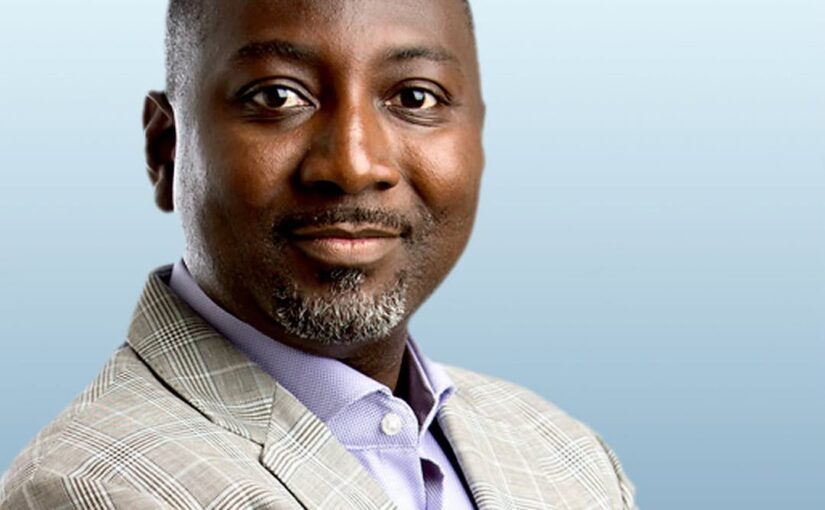
The ability to marry smarts with entrepreneurship is a strength not many possess. However, Abe Ankumah, a son of Mfantsipim School, belongs to this great cohort.

Born in Accra, Ghana, in 1978, he entered Mfantsipim in 1992. While at the school, he was on the team that represented Mfantsipim at the 1995 Brilliant Science and Maths Quiz, the precursor of the present National Science and Maths Quiz. He would later achieve the second-highest score in the Senior Secondary School Certificate Examination (SSSCE) nationwide.

He left Ghana after that to study electrical engineering and computer science at the California Institute of Technology (Caltech). While studying for his bachelor’s, he interned at NASA Jet Propulsion Lab. He worked on the team that developed software to annotate satellite images of Earth and other planets. This was before Google Earth was created.

He graduated from Caltech in 2001. His thesis was titled “Designing an Energy Efficient 80C51 Microcontroller.” Microcontrollers are used in various devices and are programmable integrated circuit (ICs) that consist of a small CPU, RAM, and I/O pins.
After graduation, he worked at a semiconductor startup called “Fulcrum Microsystems”. He was one of the founding engineers. Fulcrum would later be acquired by Intel. In 2006, wanting to be not only a great engineer but also a manager and business leader, he enrolled in the MBA program at Harvard.

Instead of taking the consultant route after his MBA, he opted to return to the technology sector. He took a job as chief of staff of the CEO of Aruba Networks. Over that almost 4-year period at Aruba, he also served as the lead on various new business and strategic initiatives for Aruba.

With a growing reputation as a great manager and technologist, he was soon poached by a cloud-managed networking startup, Meraki, in 2012. Soon, Meraki was acquired by Cisco.

Around this time period, he had been thinking of starting his own company in the enterprise networking space. In late 2013, together with two brilliant engineers , Anand Srinivas and Daniel Kan, “Nyansa” was founded. He was not only one of the founding members but also became the CEO. “Nyansa” means “wisdom” in the Akan language of Ghana, and the company sought to be the brainchild of enterprise networking. The name also played on the wisdom of striking out on his own.

In the six-and-a-half years Nyansa existed, Abe and his team raised over $27 million from venture capital firms, including 8VC (formerly Formation 8) and Intel Capital. Their clients included behemoths like Tesla, Home Depot, Mayo Clinic, and GE. In late 2019, the company VMware reached out to the Nyansa team to collaborate on projects. However, the more the folks at VMware studied the company, the more they liked what they saw. In February 2020, VMware acquired Nyansa.

Abe went on to VMware with the acquisition to help with integration. Interestingly, VMware was acquired by Broadcom in 2023. He stayed on with VMware and then Broadcom till 2024, when he took a sabbatical to unwind and think about the future.
He is a member of the board of directors of Ashesi University in Ghana and served as an angel investor and advisor to various startups in the US and Ghana.

In March 2025, he returned to the industry as Chief Product Officer at 1Password, a company in the Identity Security and Access Management space.

Abe is not only a brilliant and great technologist – he is listed on several patents in the network and analytics space – but a seasoned entrepreneur too. His ability to navigate the world of venture capital firms to build a multi-million-dollar company in Silicon Valley is a testament to that. He attributed those latter skills to parents who opened the first travel agency in Ghana back in the 1970s. He is also driven to be the best at whatever he does and to constantly push and rediscover himself, qualities that are preached on the Kwabotwe Hill. At 47, the sky is the limit for him.

Abe Ankumah is an illustrious son of Mfantsipim, a Botwe boy

Kodwo Ghartey-Tagoe, the Leader

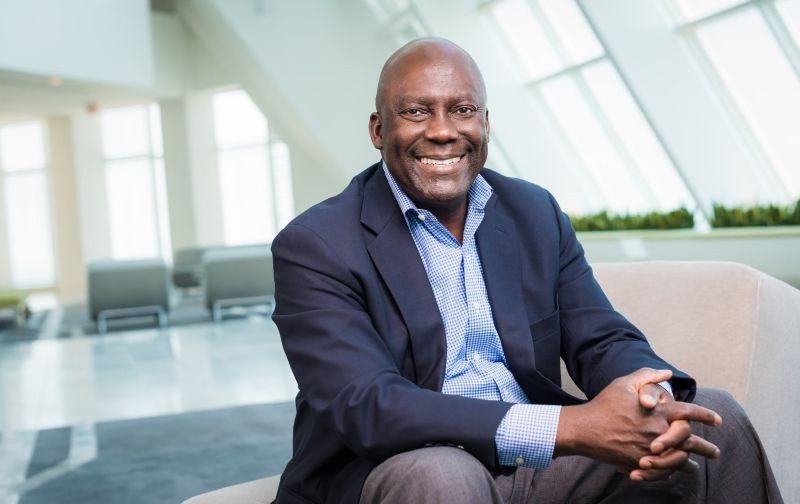
Some are born to lead, and Kodwo Ghartey-Tagoe is one of them. Kodwo entered Mfantsipim in 1975 and graduated in 1982. Even then, his character, demeanor, smarts, and ability to relate to everyone made him stand out. It was no wonder he was named the 55th Headboy in 1981 when he was in 6th Form. Most of us who were in the school in those years remember him as one of the best Headboys of that era.

After Mfantsipim, he earned a BA in Economics and Finance from McGill University in Canada. Initially aiming to attend business school, the challenges many immigrant students face led him to reconsider his plans. The chance to study law at Duke University came up, and he seized it. In 1988, he graduated with a JD in Law from Duke.

For the next 10+ years, he worked in private practice, handling regulatory and commercial litigation. In 2002, he joined Duke Energy as a part of the legal department.
For those who don’t know, Duke Energy is one of the largest energy holding companies in the US. It supplies electricity to 8.6 million customers in the Southeast and Midwest and natural gas to 5 states. Its market cap is $96 billion.

Over the years, Kodwo will rise to become the Chief Legal Counsel, thus serving as the primary legal advisor to Duke Energy’s board of directors and senior management. Soon, his responsibilities went beyond the legal realm when he was asked in 2017 to run Duke Energy’s utility operations in South Carolina. After his stint in South Carolina, he was pulled back to Charlotte, NC, in 2019 to become the Executive Vice President, Chief Legal Officer, and Corporate Secretary.
Then, this past July, he was named Executive Vice President and Chief Executive Officer of Duke Energy Carolinas and Head of the Natural Gas Business Unit.

Besides his work with Duke Energy, he sits on various boards, including the board of directors of Energy Insurance Mutual, Ltd., the board of visitors of Duke University Law School, and the President’s Advisory Board of Clemson University. Savoy Magazine named him one of the Most Influential Executives in Corporate America in 2024.

Talking to Kodwo, I was struck by his calm yet confident demeanor—a presence he carried even back then in school. He remarked how each stage in his life seemed to prepare him for the next. He reminisced about his time as Headboy at Mfantsipim and the leadership lessons he learnt from it. He mentioned how degrees in Economics and Finance really inform his work running a Utilities company.
He shared lessons he had learnt in leadership, including putting a premium on actionable advice and treating people well. Like he stated once in an interview, one of his favorite quotes is from Maya Angelou: “I’ve learned that people will forget what you said, people will forget what you did, but people will never forget how you made them feel.”

Kodwo Ghartey-Tagoe, an epitome of excellence, is an illustrious son of Mfantsipim, a Botwe boy.

The Principled Kobina Sekyi

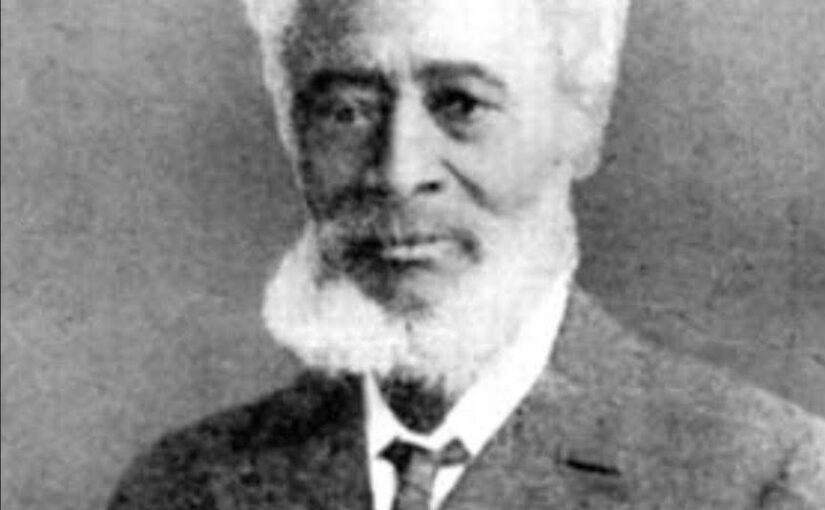
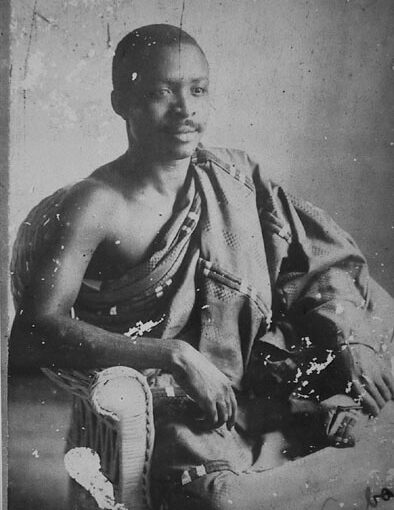
Kobina Sekyi was born on Nov 1, 1892 in Cape Coast. He attended Mfantsipim School and became not only a lawyer, but also a philosopher, sociologist, political activist, and writer.

Growing up in the then Gold Coast, he witnessed how the people of the Gold Coast were shunning indigenous culture and traditions for European ones. Names were being europeanized (Danso became Dawson, Andah turned into Anderson), the cloth was giving way to suits, and even diets were changing.
His years studying philosophy and law in England confirmed in him the deep conviction that what is African is worth maintaining and there was no need to drop those values, traditions and culture for European ones.
He went to write and direct the play “The Blinkards” in 1916 in Cape Coast.
The play satirized this tendency to see all things African as backward and savage and embrace all that was European as good. It also ridiculed some Euro-Christina beliefs and colonial laws. The play has stood the test of time and expertly captures how colonialism also stole who we really are, and his role as a playwright has never been celebrated enough.
This desire to be as African as can be led him to insist on wearing out traditional cloth to court.

This paragraph from a piece he wrote in 1920 captures his beliefs expertly:

“I would submit that the individual who, in spite of the many burdens which he must bear in the matter of assisting relatives under the Akan-Fanti social system, nevertheless thrives, becomes a better man, and is better fitted to look after other human beings: my point is that the person who goes through the Akan-Fanti system of growing up becomes a fuller man, and has all that is good in him brought out, and all that is bad restrained or suppressed by the discipline which in a well-set-up family is exerted on the thriftless individual through the disapproval of the family.”
– Kobina Sekyi, Cape Coast Observer, 1920

He was also very active in the Aborigines Rights Protection Society and a member of the Coussey Committee, that drafted a constitution for the Gold Coast in 1949. It is sad that he died in 1956, a year before Ghana attained independence

Kobina Sekyi is an illustrious son of Mfantsipim, a Botwe boy and one of the Faithful Eight..