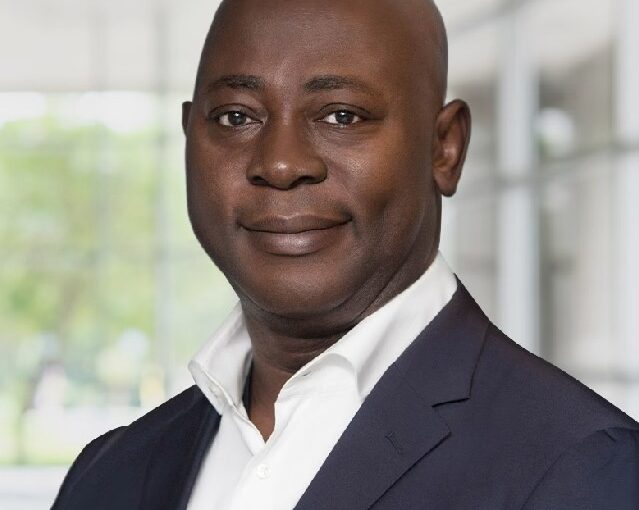
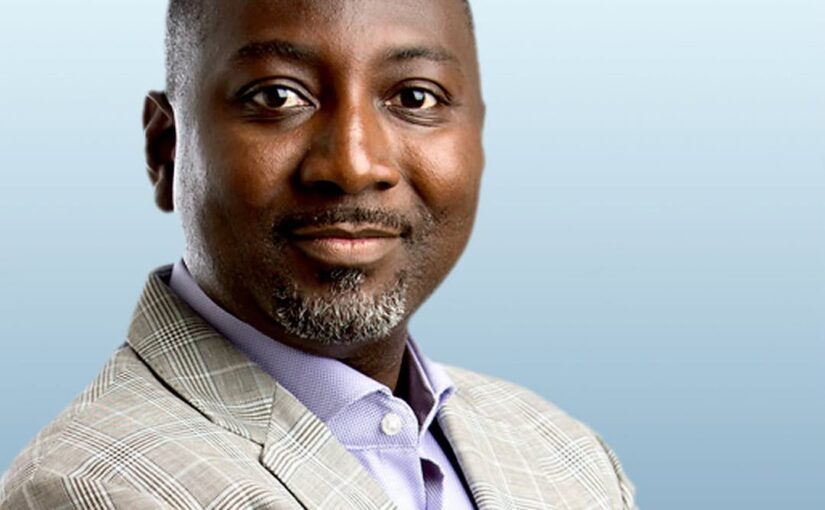
The ability to marry smarts with entrepreneurship is a strength not many possess. However, Abe Ankumah, a son of Mfantsipim School, belongs to this great cohort.
Born in Accra, Ghana, in 1978, he entered Mfantsipim in 1992. While at the school, he was on the team that represented Mfantsipim at the 1995 Brilliant Science and Maths Quiz, the precursor of the present National Science and Maths Quiz. He would later achieve the second-highest score in the Senior Secondary School Certificate Examination (SSSCE) nationwide.
He left Ghana after that to study electrical engineering and computer science at the California Institute of Technology (Caltech). While studying for his bachelor’s, he interned at NASA Jet Propulsion Lab. He worked on the team that developed software to annotate satellite images of Earth and other planets. This was before Google Earth was created.
He graduated from Caltech in 2001. His thesis was titled “Designing an Energy Efficient 80C51 Microcontroller.” Microcontrollers are used in various devices and are programmable integrated circuit (ICs) that consist of a small CPU, RAM, and I/O pins.
After graduation, he worked at a semiconductor startup called “Fulcrum Microsystems”. He was one of the founding engineers. Fulcrum would later be acquired by Intel. In 2006, wanting to be not only a great engineer but also a manager and business leader, he enrolled in the MBA program at Harvard.
Instead of taking the consultant route after his MBA, he opted to return to the technology sector. He took a job as chief of staff of the CEO of Aruba Networks. Over that almost 4-year period at Aruba, he also served as the lead on various new business and strategic initiatives for Aruba.
With a growing reputation as a great manager and technologist, he was soon poached by a cloud-managed networking startup, Meraki, in 2012. Soon, Meraki was acquired by Cisco.
Around this time period, he had been thinking of starting his own company in the enterprise networking space. In late 2013, together with two brilliant engineers , Anand Srinivas and Daniel Kan, “Nyansa” was founded. He was not only one of the founding members but also became the CEO. “Nyansa” means “wisdom” in the Akan language of Ghana, and the company sought to be the brainchild of enterprise networking. The name also played on the wisdom of striking out on his own.
In the six-and-a-half years Nyansa existed, Abe and his team raised over $27 million from venture capital firms, including 8VC (formerly Formation 8) and Intel Capital. Their clients included behemoths like Tesla, Home Depot, Mayo Clinic, and GE. In late 2019, the company VMware reached out to the Nyansa team to collaborate on projects. However, the more the folks at VMware studied the company, the more they liked what they saw. In February 2020, VMware acquired Nyansa.
Abe went on to VMware with the acquisition to help with integration. Interestingly, VMware was acquired by Broadcom in 2023. He stayed on with VMware and then Broadcom till 2024, when he took a sabbatical to unwind and think about the future.
He is a member of the board of directors of Ashesi University in Ghana and served as an angel investor and advisor to various startups in the US and Ghana.
In March 2025, he returned to the industry as Chief Product Officer at 1Password, a company in the Identity Security and Access Management space.
Abe is not only a brilliant and great technologist – he is listed on several patents in the network and analytics space – but a seasoned entrepreneur too. His ability to navigate the world of venture capital firms to build a multi-million-dollar company in Silicon Valley is a testament to that. He attributed those latter skills to parents who opened the first travel agency in Ghana back in the 1970s. He is also driven to be the best at whatever he does and to constantly push and rediscover himself, qualities that are preached on the Kwabotwe Hill. At 47, the sky is the limit for him.
Abe Ankumah is an illustrious son of Mfantsipim, a Botwe boy