He Refused to Wear the Scarf

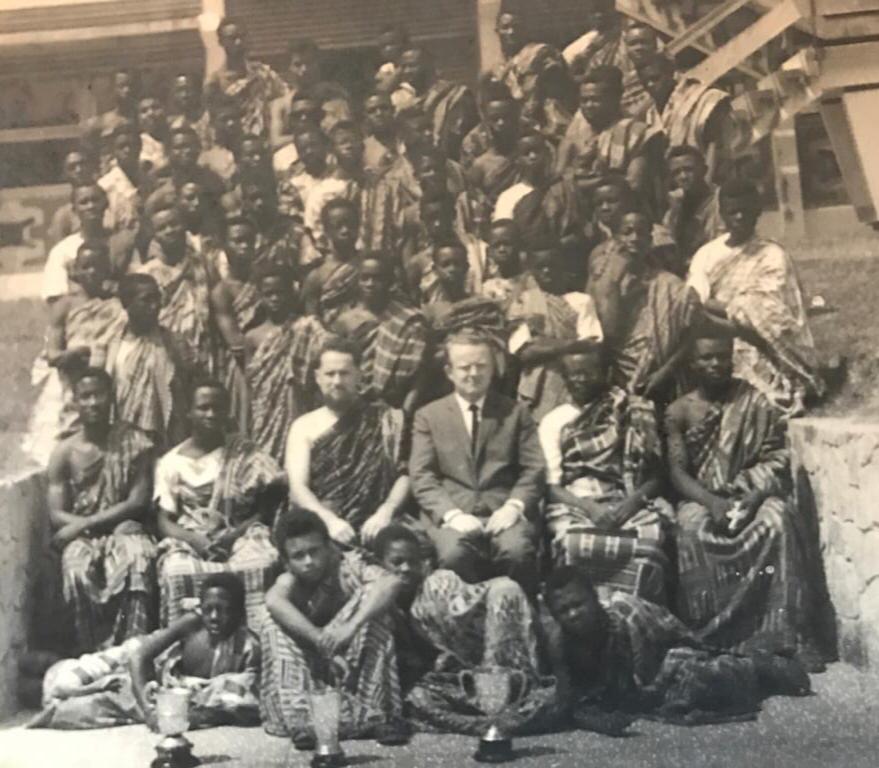
The day was June 28, 1963. On Kwabotwe Hill, that was the day the Ghana Young Pioneers Movement (GYP) was going to be officially inaugurated. Unlike other school clubs like the Drama Club, Christian Union, Chess Club, Debating Club, etc., the inauguration of this movement had to be special and official. Rev. W.G.M. Brandful, the headmaster himself, had to be present. He also had to wear a signature GYP scarf, and it was going to happen at morning assembly.

So who were these Young Pioneers?

The Ghana Young Pioneer Movement (GYP) was a youth movement founded by Kwame Nkrumah in 1960. Modeled after youth movements like the Boys Scouts of the UK, the Kosmosol of the then USSR, the Israeli Gadna, the Red Pioneers of China, and youth groups in Germany and the US, the group sought to raise Ghanaian youth to be patriotic, pan-Africanist, socialist, and anti-imperialist. They were immersed in military drills, classes on Ghanaian culture, and taught lessons on being an upstanding citizen – the 12-point code of discipline. Training also included vocational and technical skills.
They wore crisp khaki uniforms, boots, and an iconic neck scarf.

The kids were taught to chant many patriotic slogans. However, there were also slogans like, “Nkrumah will make you fishers of men, if you follow him”, “Nkrumah is our Messiah”, and “Nkrumah does no wrong”, that rubbed the Churches and some in the Christian community the wrong way. Moreover, there was also the fear that the movement was replacing Christian teaching with political indoctrination, and the subject was mainly Nkrumah.
Added to that were the accusations that the kids in the movement were being trained to spy on their parents and other adults, and you had a section of the population that was against the GYP.

Despite the opposition, the only person to speak up about the use of biblical themes was the Right Reverend Richard Roseveare, the Anglican Bishop of Accra. On Aug 4, 1962, at the Anglican Synod, he condemned the movement as “godless” and accused them of a “gross parody of Christian scripture”. About a week later, he got expelled from Ghana (though due to public outcry, Nkrumah allowed him back two months later).

Interestingly, the man who helped put the movement together, made sure the kids got religious discipline (the spiritual architect), was the primary administrator, and the Rector of the movement’s training center – the Kwame Nkrumah Youth Leadership Training Institute – was a Methodist priest and an Old Boy called Rev. Dr. James Stanley Adama Stephens. He saw these slogans as metaphors. To him, a “messiah” in the political context meant a “liberator” or “political savior” who had freed Ghana from British colonial rule—not a divine being.
Suffice to say there was some disagreement between his position and the Church’s.

So after the expulsion of Roseveare and with the Preventive Detention Act (PDA) of 1958 as a great deterrent, most in the church and civil society kept mum.

Until that Friday morning on June 28, 1963.

Almost everyone at morning assembly that morning probably assumed that Rev. Brandful was just going to wear the scarf, oversee the inauguration, and carry on with the day. But is that what happened?

Now let’s take a step back and examine the school Rev. Brandful headed, its age, and the traditions that made Mfantsipim what it was. In 1963, the school had been in existence for 87 years! The 12-point Code of Discipline of the Young Pioneers was like the air Mfantsipim boys breathed daily.

“Love of Country?” Since Mensah Sarbah and Casely Hayford, loving Ghana is like the birthright of the school. Old Boys started the fight for independence!

“Discipline, Obedience, Honesty, Morality, Punctuality?” Just ask any Botwe boy.
“Comradeship and Forbearance?” Some people think MOBA is a cult!

The things the movement was trying to teach had been Mfantsipim’s tradition for 87 years!

What about the pan-africanism and anti-imperialism? Look, Mensah Sarbah got the school named “Mfantsipim” and gave it a motto in Fante in 1905. Rev. Brandful knew that on that hill, we are more conscious of who we are than a 3-year-old movement could ever teach.

And Mfantsipim as a school had a curriculum that included technical and vocational training. There were no military drills but life on that hill was close to one.

And I am sure the dear headmaster remembered the 1948 riots and their effect on the school. Moreover, he was definitely no fan of the biblical metaphors and indoctrination, and believed that they had no place in a school where the minds of the young were being molded.

And so he walked out that morning and uttered the famous words:

“They want to put the scarf around my neck, and I refuse it”.

A month later, he was fired as headmaster of Mfantsipim School.

Three years later, Nkrumah was gone, and with him, the Young Pioneers, but on Kwabotwe Hill, boys were still being raised according to traditions that were old and enduring. No matter where you stand on the issue of Nkrumah, Rev. Brandful’s action spells bravery. He had the courage to stand by what he believed in, even though he knew it would cost him. He epitomized the lessons he taught as headmaster. When it came to it, he walked the walk. Sadly, it was not the last time the government would meddle in the school’s affairs.

May the brave soul of Rev. Brandful RIP.

The Headboy who Punished the Whole Student Body

The late Ghanaian theologian, Kwame Bediako, was an amazing person, and a total force of nature. When he left the shores of Ghana in 1969 to go do his doctorate in existential literature at the University of Bordeaux in France, he was an avowed atheist.

However, in August 1970, he had a “Saul-Paul moment” in the shower, converted to Christianity, and went on to become one of the most influential theologians the African continent has produced. Over the next decades, until his death in 2008, his work “sought to reposition Africa — its languages, cultures, and religious heritage — as a legitimate and rich source of Christian theological reflection, rather than merely a recipient of Western missionary Christianity”. It is said that what Luther and Calvin are for evangelical Christians globally, Kwame Bediako is for many African evangelicals. He also founded and led the Akrofi-Christaller Institute.

Years before all that, he was an Mfantsipim boy. The Old Boys who shared his story describe him as a brilliant student, with a rebellious streak, absolutely fearless, and the consummate leader. It is said that the staff admired him greatly. Due to the much darker hue of his complexion, his nickname was “Joe Noir”.

In 1963-64 or so, he became the headboy. At that time, Mfantsipim had a renowned Math teacher, Mr. Snell. He was the author of the Maths book the school used. He was also elderly then.

One Sunday, Mr. Snell did the preaching during evening service, and during his sermon, the boys made some “unwelcome noise”, as Botwe boys are wont to do during evening service sometimes.

Kwame Bediako found that disrespectful to the venerable teacher and decided to punish the entire student body.

It has been a custom at Mfantsipim for as long as anyone can remember that the boys are allowed to go into Cape Coast town after morning inspection on Saturdays. The next Saturday after the evening service incident, Kwame assembled the whole student body at the academic site and kept them there all morning. No one got to go to town. And that was the punishment he meted out for their disrespecting Mr. Snell. And no one dared to disobey him! Not even the other prefects!

The lessons inherent in that story are many, and they all feed into the excellence that is preached and practiced on the hill. It is a story that teaches respect for authority and the elderly, as well as discipline, leadership, bravery, and conviction.

Alex Apau Dadey, the Philanthropist and Entrepreneur

In the long and rich history of Mfantsipim are stories of successful entrepreneurs who not only helped found the school but also came to its financial rescue several times in the early decades. Men like Jacob Wilson Sey, John Mensah Sarbah, J.W. DeGraft-Johnsom, and W.E. Sam, among others, placed as much emphasis on philanthropy as they did on the creation of wealth. They gave of themselves and their wealth to improve the nation as a whole and the communities they lived in, locally. They believed in giving back.

From this long line of entrepreneurs and philanthropists comes Alex Apau Dadey, a distinguished Ghanaian entrepreneur, corporate strategist, and business statesman, and the Executive Chairman of KGL Group, an entity he founded. He is widely recognized as one of the leading voices in the rise of modern indigenous African enterprise.

Alex was in Mfantsipim from 1974 to 1979. He was in Bartels-Sneath. Besides academics, he was a star athlete while on the Hill. In Form One, he won the Giant race. He would go on to represent the school in 100m, 200m, and 400m races.
After 6th form, Alex entered the University of Ghana, Legon. He graduated from their School of Administration (now UG Business School) in 1986, and left for the UK that same year.

Over the first 15 years in the UK, Alex worked for Gordon Richman Textiles Limited. He steadily moved up the ranks from Export Sales Supervisor to Export Sales Director and oversaw important accounts in 10 countries across Europe, the Middle East, and Africa.
Even in those years, Alex kept an eye on the business scene in Ghana. From the example of a mother who traded to supplement household income, and from Ghanaian entrepreneurs of the 1970s like Joshua Kwabena Siaw of Tata Brewery and R.A. Darko of Mechanical Lloyd, he had always dreamt of becoming an entrepreneur and saw himself returning home one day to start a business.
In 2001, he acquired the backing from DCD Finance Group PLC to start Qualitexx Limited. For the next 17 years, he actively financed ventures in Ghana and other African countries as well as in the UK. He also encouraged Ghanaian diasporians to invest in the country.

Ever conscious of the dream of returning home to Ghana to start a business venture, he did just that in 2018. On his return, due to the role he had played in getting diasporans to invest in the country, he was named a member of the Governing Board of the Ghana Investment Promotion Center (GIPC). He was named Chairman of the Board in 2021, a position he held until the end of 2024.
Even as he worked with GIPC to get investments into the country, he founded the KGL Group.

The first and most conspicuous subsidiary he founded was KGL Technology Limited. In its first major deal, the company digitized Ghana’s lottery operations, run by the National Lottery Authority (NLA), by introducing USSD and online platforms that transformed a traditionally manual system and money-losing venture into a modern, technology-driven, and profitable enterprise. The platform he created for NLA is working so well that KGL Tech is being asked to replicate it in Côte d’Ivoire and Nigeria.
Another subsidiary Alex founded was Fuel Automation Ghana Limited. This company received the mandate from the Ministry of Fisheries and Aquaculture Development, Ghana, to design, build, and automate 300 landing beach premix fuel outlets in Ghana — providing purpose-made fuel for fishermen who use outboard motors, and tackling issues of diversion, corruption, adulteration, and hoarding that had afflicted the sector for years. He did this very successfully.

In eight years, Alex has built KGL Group into a wholly owned Ghanaian enterprise comprising eight subsidiaries with interests in technology innovation, FinTech, logistics, trade, property development, gaming, and commerce. (The name “KGL” comes from “Keed Ghana Ltd” – one of the subsidiaries that is into mobile and telecom financial services).

As great an entrepreneur as Alex is, he also ardently believes in giving back. To achieve that, one of his subsidiaries, the KGL Foundation, is tasked with philanthropy.
In partnership with the Eve Medical Foundation, the foundation is building a psychiatric hospital at the Kwame Nkrumah University of Science and Technology (KNUST) in Kumasi. The foundation makes recurring donations of incubators to hospitals across the country, and has a scholarship program for orphans and underprivileged children.
The KGL Group signed a landmark two-year sponsorship deal worth GH¢20 million with the Ghana Football Association (GFA) to support the Black Stars, and the foundation has a five-year sponsorship agreement with the GFA to develop grassroots football, including providing equipment like footballs and organizing events such as the KGL U-17 Champions League.

And Alex has not forgotten his roots.
He is funding a multi-million sports complex that is under construction at Mfantsipim.
In a visit by a MOBA delegation to KGL House in 2025, Alex donated a GH¢100,000 cash prize to support Mfantsipim’s sports initiatives and introduced the “Alex Dadey Sportsman of the Year Award” — an annual GH¢10,000 prize to be awarded to the most deserving sportsman each year at Mfantsipim’s Speech and Prize Giving Day.
He also announced a mentorship scheme in partnership with KGL Group, designed to equip young MOBA professionals with industry-ready skills for the Ghanaian job market.

Alex strongly believes in public-private partnerships and that they are not only for developing Ghana and the whole of the African continent, but also for creating a path towards a unified African market.
He initiated the Ghana Diaspora Homecoming Summit in 2017 and the Ghana Investment and Opportunities Summit UK in 2018, both of which are now held biennially.
He serves on several corporate boards, including Ecom Agro Industrial, Premier Textiles Group in the United Kingdom, Birchfield Investments Limited in Jersey, Channel Islands, and Dubai, KGL Capital (UK) Limited, and Dominion Direct (UK) Limited. He is also a sought-after speaker, having spoken at the University of Ghana, the London School of Economics, and Oxford University.

Is it any surprise that Alex Dadey is one very awarded individual?

In 2017, he was awarded the “Excellence in Organizational Leadership” and the “Diaspora African Forum Excellence Award” by the Ghana Diaspora Homecoming Summit Committee for the successful execution of the Ghana Diaspora Homecoming and for his prominent role in ensuring the summit’s success, respectively.
He was named “Man of the Year” at the 8th EMY Africa Awards in 2023, and as of May 2025, had won “CEO of the Year” three consecutive times.
In 2025, he won the prestigious “Forbes Best of Africa Corporate Leadership and Innovation Award” at a Leadership and Philanthropy Forum held at the House of Lords in London.

For Alex Dadey, business is not only about the profit but about creating a legacy. It is about building a Ghanaian institution that lasts generations. He sees business as integral to community and nation-building. He has the unwavering faith that Africa can build homegrown institutions.
In all he does, Alex epitomizes the powerful lessons that feed the age-old traditions of Mfantsipim. Lessons of excellence, vision, foresight, patience, integrity, hard work, and social consciousness have helped to fuel his success.

Alex Apau Dadey is an illustrious son of Mfantsipim, a Botwe boy.

Why did John Mensah Sarbah name the school “Mfantsipim”?

At first glance, it breaks down into “Mfantsi”, an allusion to the Fantes, and “-pim”, meaning “thousand”. Thus, most argue that the school’s name means “Thousands of Fantes”.

However, it is more than that.

The Fante nationalists, who founded the Fanti Public School Ltd and the Mfantsipim of 1905, were all members of the “Mfantse Amanbuhu Fekuw”, a Fante Nationalist Society. This is the same group from which the Aborigines Rights Protection Society emerged. This was a time of great nationalist fervor – the group had gotten the Lands Bill of 1897 quashed. Education became their next priority.

Moreover, there was a massive push to abandon the European habits most had learned from the colonialists and to return to Fante ways and traditions. This was known as the “Gone Fante” movement.

So, these nationalists wanted to revive Fante beliefs and foster growth through education. They needed a center where change could grow and a name that expressed these beliefs.

As Bartels notes in his memoirs titled “The Persistence of Paradox,” the new name aimed to express the Fante people’s spirit.

Bartels cites two Fante proverbs that help to explain the thought process behind the creation of the name. The first is “Ɔman si hɔ a na posuban si mu”. That means “it is only a viable nation that has its own fetish grove”. The second is, “Ɔman Biara hia posuban” to wit, “every nation needs a fetish grove where the spirit or soul of the nation resides”.

The name ‘Mfantsipim’ was chosen to represent this dream. While ‘Mfantsipim’ literally translates to ‘a thousand Fantes’, in context it means ‘many’ or ‘masses.’ The name was meant to symbolize a ‘posuban’—a sacred place—where these masses would gather, enabling the spirit of the Fante people to flourish. Not through spookism but through discipline, sacrifice, service and above all, education.

Thus, the foundation of Mfantsipim was seen not simply as a school for the Fantes but as the starting point of a wider cultural renaissance for the Gold Coast.

And so, when Rev. Bartrop asked Mensah Sarbah to merge Mfantsipim with the Collegiate School in 1905 and thus continue the traditions set forth by the founders in 1876, even though the latter agreed to the merger, it was done on his terms. The amalgamated institutions were to carry the name “Mfantsipim”, adopt the motto “Dwen Hwɛ Kan”, and retain the crest designed by Johnson B. Essuman Gwira.

The school may have had its origins in the Wesleyan tradition and a Wesleyan Mission House, but in becoming “Mfantsipim,” it became a sacred place where the spirit of the people of the Gold Coast would reside. A spirit of thoughtfulness, foresight, leadership, education, sacrifice, and service.

Rev. Albert Ocran – A Life Devoted to Serving People

Mfantsipim School has its foundation in the Methodist Church, and for decades, every single headmaster was an ordained priest. The leadership and guidance of the clergy have played a significant role in the education of thousands of boys who attended the school. And so it also makes sense that the school would produce impactful men of the cloth, like the late great Rev Gaddiel Acquaah. And from that line of impressive clergy men comes Rev. Albert Ocran.

Albert entered Mfantsipim in 1979 and was in Sarbah-Picot. He graduated in 1986 and entered the University of Ghana at Legon. He graduated with a degree in Economics with Sociology in 1990. He later obtained an MBA from the Ghana Institute of Management and Public Administration (GIMPA) in 2002.

Shortly after graduating from Legon, Albert, together with his wife Comfort, founded a printing and publishing business called Combert Impressions. After a decade of running this business, their shared passion for human capital development began to redefine their interests.

The couple initiated a personal development Road Show to mentor young people in January 2007. This had them traveling across the country with a contingent of accomplished Ghanaians speaking to young people and encouraging them to reach for their dreams and aspirations. The sessions included free workshops where participants were trained in skills like CV writing, business planning, talent development, public speaking and preparing for interviews. This roadshow is still held annually. Within four years, the Road Show had gone nationwide and been extended to Gambia and Nigeria. In 2011, the couple set up the Springboard Road Show Foundation to enable more young people to freely benefit from their diverse initiatives.

For the past 18 years, Albert has hosted “Springboard, Your Virtual University” on Joy FM, Joy News and other digital platforms. This educational and empowering show educates its audience and helps them improve their leadership and professional skills.

In 2013, Albert responded to the call to be ordained as a Reverend Minister. He first served as Executive pastor at the ICGC Christ Temple for ten years. In March 2023, he became Senior Pastor at the ICGC The New Wine Temple at East Legon, Accra, a position from which he has an even greater opportunity to win souls and shape the human development of the nation’s youth.

By combing his pastoral duties with his love for human capital development, he is not only developing souls for the afterlife but helping them to live better lives in this one, too. He has continued writing, publishing about 26 books with his wife, Comfort.

With books like “Snakes and Ladders: Entrapments and enablers on the complex journey of life, 2019”, “Sheba – Ancient Customer Service Secrets Repackaged In A Social-Media Driven Era (Biblical Economics Series Book 5), 2013”, and “The Lord, Madiba & The Eagle“ by Albert & Comfort Ocran, 2010”, Albert showed his penchant to find wisdom not only in the Bible but in the lives of courageous and accomplished leaders. And this penchant reflects in his sermons, speeches, and workshops.

During the COVID pandemic, Albert and Comfort managed the CoRe Program in partnership with the Mastercard Foundation and Solidaridad. The program used an integrated e-learning, e-mentoring and e-counselling approach to equip over 23 million young Ghanaians with resilience to cope with the effects of the COVID-19 pandemic. Springboard’s most recent intervention is the Ghana Grows Program, a partnership with the Mastercard Foundation that has helped over half a million young people to explore opportunities in the Agricultural and related Vocational Sectors.

Albert is a Fellow of the respected Aspen Global Leaders Network based in Colorado, USA, and the Africa Leadership Initiative West Africa (ALIWA). He was voted as Ghana’s 7th Most Respected CEO for 2009 and also received the Millennium Excellence Award for Motivation in 2010. For four consecutive years, he has appeared on ETV Ghana’s list of the 100 most influential Ghanaians. He also won the Exclusive Man of the Year Africa Award for 2018 in the Mentorship Category, among other awards.

On any day, Albert will be found serving people through mentoring, counselling or speaking sessions. After three decades, he doesn’t seem to have lost steam on this mission. If anything, he always seems to find a way of reinventing it. The thousands of testimonies from lives touched and volumes of impact stories published are a testament to the spirit of sacrifice, humility and service to humanity.

In all he does, that spirit of excellence, duty, and service that is taught on the Kwabotwe Hill is evident. Albert more than embodies the thoughtfulness and foresight preached by Mensah Sarbah.

Rev. Albert Ocran is an illustrious son of Mfantsipim, a Botwe boy.

Ace Kojo Anan Ankomah, the Litigator

Starting with the likes of John Mensah Sarbah and Henry Van Hein, Mfantsipim School has produced an impressive line of lawyers. Ace Anan Ankomah is a member of this prestigious lineage.

Ace entered Mfantsipim in 1979 and graduated after Sixth Form in 1986. He was the Senior Scholar of that graduating class. He was in Sarbah-Picot House from Form 1 to 5, and in Balmer-Acquaah for the sixth form.

After leaving Mfantsipim, he entered the University of Ghana, where he obtained his Bachelor of Laws (LL.B in 1990, followed by his Qualification Certificate in Law from the Ghana Law School in 1992. He followed that with a Master’s of Laws in International Taxation from Queen’s University, Canada.

He returned home to Ghana after his master’s and in 1995 joined a young law firm founded five years earlier by the lawyers Kojo Bentsi-Enchill and Divine Letsa – Bentsi-Enchill & Letsa. Ace has worked at this law firm till today. In 2000, he became a partner of the group, and in 2004, the firm changed its name to Bentsi-Enchill, Letsa & Ankomah. Six years later, he became the firm’s managing partner, a role he held until 2021, when he transitioned to Senior Partner, a position he still holds.

Ace started at the firm by helping build its now-formidable legal-technology subsidiary, “DataCenta”. Among other things, this entity houses an impressive compendium of legal cases for reference. He soon transitioned to what would become his forte – litigation. He has run the Disputes group at the firm for a long time. He is responsible for preparing and handling trials and arbitrations of contentious cases in Ghana and internationally. In that he has represented clients as varied as Achimota School, International Finance Corporation, Bank of Ghana, Abosso Goldfields, Exim Bank, NML Capital Limited, Vitol, Ecobank, Deloitte & Touche, AngloGold Ashanti, Vodafone, Volta Aluminum Company/Kaiser, Western Telesystems, Deloitte, Fortiz, and Balkan Energy.

One famous case he was involved in had him seize an Argentinian warship in Ghana for military exercises in 2012 on behalf of the hedge fund NML Capital for unpaid Argentine sovereign debt. The case played out before the International Tribunal on the Law of the Sea (ITLOS) and the Supreme Court in Ghana. Ultimately, a $2.4 billion settlement was reached.

In 2014, he was part of the legal team that secured a $50 million award for Bankswitch Ghana in a breach-of-contract case.

He was also Instrumental in the Supreme Court of Ghana overturning a $16 million judgment in a land dispute between Vodafone Ghana and Chief Ogyeedom Obranu Kwasi Atta IV of Gomoa Afransie in 2023.

Ace has built a formidable reputation as an expert in dispute resolution, corporate law, taxation, and civil litigation and procedure.

Beyond his work on trials and arbitrations, he taught at the Ghana Law School from 2005 to 2012. In 2015, the University of Ghana instituted the Ace Anan Ankomah Prize in Constitutional Law in his honor.

An ardent advocate of social justice and good governance, he helped found the pressure group “OccupyGhana” in 2014. One significant achievement of the group is seen in the case “OccupyGhana V. Attorney-General (2017)” that went before the Ghana Supreme Court. The justices ruled that it is the Auditor-General’s mandatory duty to issue disallowances and surcharges to recover public funds lost to negligence or illegal expenditure.

His legal expertise and experience as a litigator led him to serve on the International Court of Arbitration of the International Chamber of Commerce. Also, besides serving on the board of Lex Mundi (the world’s leading network of independent law firms), he has served and sits on various boards and advisory boards in Ghana. He is a member of the Ghana Bar Association and the ICSID Panel of Arbitrators.

He is also a Fellow of the Aspen Global Leadership Network (AGLN), Africa Leadership Initiative, West Africa (ALIWA), and the Ghana Academy of Arts and Sciences. Among the many awards he has won include being named to Africa’s 20 Arbitration Powerlist in 2022 and elected to the Legal 500 “Hall of Fame” for Dispute Resolution in 2025.

Outside of work, Ace is a prolific writer (law books and non-law books), a speaker, and an accomplished musician, producer, and multi-instrumentalist. He plays the piano, saxophone, and guitar. A member of Joyful Way since his time in Mfantsipim, the group has allowed him to hone his skills. His latest work in music includes co-writing and producing the “Jama song” for Mfantsipim’s 150th anniversary and producing the anniversary anthem.

In all he does, Ace embodies the Mfantsipim can-do spirit. He surmounted challenges like a stutter to become a great speaker and an aversion to math to graduate from Mfantsipim with flying colors. His hard work, patience, perseverance, and faith are qualities that are beaten into the boys on the hill, and he imbued and now epitomizes all of them.

Ace Ankomah is an illustrious son of Mfantsipim, a Botwe boy.

Kofi Annan, the Diplomat

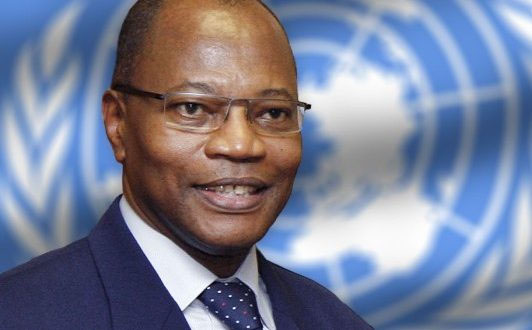
Seen in his lifetime as Africa’s foremost diplomat, Kofi Annan, the seventh Secretary-General of the United Nations, was born on April 8, 1938, in Kumasi in the then Gold Coast. He attended Mfantsipim School from 1954 to 1957.

In 1958, he started studying economics at the Kumasi College of Science and Technology (later KNUST), a degree he completed in 1961 at Macalester College in St. Paul, MN, thanks to a Ford Foundation scholarship. He would go on to earn a degree in International Relations in Geneva, Switzerland, in 1962, and a Master’s in Management from MIT in Boston, MA, from 1971 to 1972.

His diplomatic career started as a budget officer in the World Health Organization. After stints at various positions in the UN, he was appointed Under-Secretary-General for Peacekeeping in 1993. In this position, he oversaw peacekeeping efforts in Rwanda in 1994 and Bosnia in 1995. He became the UN Secretary-General in 1997.

His time at the UN was marked by his work to revitalize and reform the organization to make it more effective. He also advocated for human rights, and the rule of law, the Millennium Development Goals, for Africa, and forged ties with civil society and the private sector. He played a central role in the creation of the Global Fund to fight AIDS, Tuberculosis, and Malaria, the adoption of the UN’s first-ever counter-terrorism strategy, and the acceptance by Member States of the “responsibility to protect” people from genocide, war crimes, ethnic cleansing, and crimes against humanity. The “Global Compact” program he launched in 1999 has become the largest worldwide effort to promote corporate social responsibility.

He was quite active as a diplomat, too. He mediated in conflicts between Timor-Leste and Indonesia, Lebanon and Israel, Hizbollah and Israel, and Cameroon and Nigeria.

For having revitalized the UN, given priority to human rights, supporting the fight to stop the spread of HIV in Africa, and his declared opposition to international terrorism, the Nobel Committee decided to split the Nobel Peace Prize between Kofi Annan and the United Nations in 2001.

After retiring from the UN in December 2006, he founded the Kofi Annan Foundation the next year. The foundation was an independent, not-for-profit organization that aimed to “work to promote better global governance and strengthen the capacities of people and countries to achieve a fairer, more secure world”.

Even after retirement, his diplomatic efforts continued either under the umbrella of his foundation, as a member of “the Elders” (a group of independent global leaders who work together on peace and human rights issues), or on behalf of governments or international organizations. He would mediate in conflicts in Kenya, Zimbabwe, Syria, and Myanmar.

He also served on several corporate boards and was active in the affairs of many non-profit organizations, both in Africa and around the world. In Ghana, he served as Chancellor of the University of Ghana, a position he held until his death.

After a short illness, Kofi Annan passed away at the age of 80 on August 18, 2018, in Bern, Switzerland. His body was returned to Ghana for a state funeral on September 13, 2018. He is buried at the new Military Cemetery at Burma Camp in Accra.

Besides the Nobel Peace Prize, he was honored with many other awards during his life and even posthumously, like the “Four Freedoms Awards” in 2004 and the Max Schmidheiny Foundation Freedom Prize” in 2006.

He was also honored with the enstoolment as the “Busumuru” of the Asantes in Ghana by the Asantehene, Otumfuo Nana Osei Tutu II, in 2002.

The UN released a stamp in his honor in 2019.

Institutions named in his honor include the Kofi Annan International Peacekeeping Training Center and the Ghana-India Kofi Annan Center of Excellence in ICT, both in Accra, Ghana; the Kofi Annan University of Guinea in Conakry, Guinea; and the Kofi Annan Institute for Global Citizenship at Macalester College in St. Paul, MN.

Kofi Annan’s impact on the UN and attempts to make the world a peaceful place cannot be denied. His education and upbringing at Mfantsipim not only laid the foundation for the leader he was going to be – he organized a successful strike for better food while at the school – but, like he is reported to have said, the school taught him that “suffering anywhere, concerns people everywhere”. It is no wonder he spent his life trying to alleviate suffering through diplomacy and mediation.

Kofi Annan is an illustrious son of Mfantsipim, a Botwe boy.

J. Kweku Bedu-Addo, the International Banker

Kweku is an impact-driven financial services leader with a distinguished career spanning economic policy, development finance, and international banking across Africa (11 markets) and in Asia. He became the first Ghanaian CEO of Standard Chartered Bank Ghana after 115 years of operation.

Kweku Bedu-Addo (MOBA-84) entered Mfantsipim School in 1979. He was in Balmer-Acquaah House. After finishing 6th Form in 1986, where he studied science, he entered the University of Ghana at Legon, resolved by then to switch to the arts. Looking for a good confluence of the business/economics and the sciences, he graduated with a degree in Agricultural Economics.

After graduating in 1990, he joined the wonky Policy Analysis Division of the Ministry of Finance of Ghana as an Assistant Economics Officer, working under Dr. Kwesi Botchway, one of Ghana’s famed Finance ministers. At the Ministry of Finance, he was exposed to public policy at the highest level. He was also exposed to budgetary institutions and policy dialogue with the IMF/The World Bank, and other bilateral and multilateral funding agencies during Ghana’s structural economic reforms in the 1990s.

In 1995, he headed to Columbia University in New York City to pursue a Master’s in Economic Policy Management, followed immediately by a 6-month stint with the Eastern Africa Department of The World Bank in Washington, D.C. In 1997, he returned to the Ministry of Finance in Ghana, where he worked until 1998 before moving to the private sector.

His first job in the private sector was as a Financial Analyst at General Leasing & Finance Company Ltd, where he worked for two years.

Towards the end of 1999, he made a cold call to the corporate head office of Standard Chartered Bank in Accra. The cold call landed him a job as a corporate relationship manager in 2000. Due to his impressive output at the bank, he was promoted rapidly over 4 years, culminating in his first senior leadership appointment as Head of Corporate and Institutional Banking at Standard Chartered Bank’s Zambia subsidiary in 2004. His time there saw a total transformation of the unit. Under his leadership, the department’s financing balance sheet exceeded $500 million for the agriculture, mining, manufacturing, and commodities sectors. His team won the Best Corporate Bank Business in Africa in 2006.

In 2007, he was moved to Wholesale Bank’s head office in Singapore to oversee the implementation of a global technology project. He returned to Ghana in 2009 as a Managing Director and Head of Corporate Banking with regional responsibility for Ghana, Côte d’Ivoire, Cameroon, Sierra Leone, and The Gambia. In that time, he led a unit that managed a portfolio of over $2 billion in business assets across the energy, oil & gas, and public infrastructure sectors, among others. He joined the Standard Group Business Leadership Team (top 300 leaders globally) on this appointment.

In 2010, he was appointed as the CEO of Standard Chartered Ghana, becoming the first Ghanaian to hold that role since the bank was established in the then Gold Coast in 1897. Standard Chartered’s subsidiaries in Sierra Leone and Gambia were later added to his portfolio.

He held this position until 2017, when he moved to South Africa as CEO of Standard Chartered South Africa and the Area General Manager for Southern Africa, comprising Angola, Botswana, Mauritius, South Africa, Zambia, and Zimbabwe. He managed a balance sheet of $8 billion plus and held this position until 2024.

Deciding to scale back and explore other career interests and opportunities, Kweku left Standard Chartered Bank in 2025 and now has a portfolio career as Chairman and Non-Executive Director of Standard Chartered Bank Mauritius Ltd, as well as a Non-Executive Director on the boards of Standard Chartered Botswana and, the Development Bank, Ghana.
Just recently, his nomination as a member of the newly constituted five-person Fiscal Council of Ghana was announced.

Kweku is a true corporate leader who has led multi-billion-dollar businesses in different jurisdictions. He has advised and financed ventures for corporations, financial institutions, and sovereigns. His insights go beyond Ghana to Africa and the global markets.

His board experience is impressive, with stints on boards in Zambia, Ghana, Botswana, Mauritius, and South Africa. He is a former Chairman of the Ghana Stock Exchange, a founding Vice Chairman of the Ghana Fixed Income Market, and a former Chairman of the International Banks Association in South Africa.

Believing in the importance of social justice, Kweku has previously served on the global and Africa investment committees of Acumen Fund, a New York-based impact financing entity. He is a big believer in the role of media in creating and shaping ideas and started a podcast titled “It’s Morning in Africa” in 2021. It is a platform for him to discuss working toward reimagining a better, brighter future for our continent.

Kweku sees his foundational experience at the Ministry of Finance in Ghana as a catalyst for his meteoric rise in the corporate world. His interest in public policy never waned over the years that he worked in the private sector. He expects to be involved in shaping public policy in one way or another, bringing his experience and network to influence policy and to shape Africa’s economic development.

A very good public speaker, he includes insightful anecdotes from his professional life in his speeches. One of my favorites is how, when he was a few weeks in the Bank in 2000, he walked into the then-CEO’s office for an interview and asked him what it took to become a successful CEO. The CEO at that time, Vishnu Mohan, willingly shared key insights which Kweku wrote down in a notebook. Ten years later, Kweku was named CEO of Standard Chartered, Ghana, and sat at Vishnu’s desk. He still has the notebook and remembers all those lessons.

He also loves astronomy and appreciates the creative arts immensely.

Kweku Bedu-Addo epitomizes the Mfantsipim spirit of knowing what you want and going for it by learning the steps those before you took. He is a true picture of letting your actions do the talking. In that he lives the very motto and spirit of the school – “Dwen Hwɛ Kan.”

J. Kweku Bedu-Addo is an illustrious son of Mfantsipim, a Botwe boy.

Kodwo Ghartey-Tagoe, the Leader

Some are born to lead, and Kodwo Ghartey-Tagoe is one of them. Kodwo entered Mfantsipim in 1975 and graduated in 1982. Even then, his character, demeanor, smarts, and ability to relate to everyone made him stand out. It was no wonder he was named the 55th Headboy in 1981 when he was in 6th Form. Most of us who were in the school in those years remember him as one of the best Headboys of that era.

After Mfantsipim, he earned a BA in Economics and Finance from McGill University in Canada. Initially aiming to attend business school, the challenges many immigrant students face led him to reconsider his plans. The chance to study law at Duke University came up, and he seized it. In 1988, he graduated with a JD in Law from Duke.

For the next 10+ years, he worked in private practice, handling regulatory and commercial litigation. In 2002, he joined Duke Energy as a part of the legal department.
For those who don’t know, Duke Energy is one of the largest energy holding companies in the US. It supplies electricity to 8.6 million customers in the Southeast and Midwest and natural gas to 5 states. Its market cap is $96 billion.

Over the years, Kodwo will rise to become the Chief Legal Counsel, thus serving as the primary legal advisor to Duke Energy’s board of directors and senior management. Soon, his responsibilities went beyond the legal realm when he was asked in 2017 to run Duke Energy’s utility operations in South Carolina. After his stint in South Carolina, he was pulled back to Charlotte, NC, in 2019 to become the Executive Vice President, Chief Legal Officer, and Corporate Secretary.
Then, this past July, he was named Executive Vice President and Chief Executive Officer of Duke Energy Carolinas and Head of the Natural Gas Business Unit.

Besides his work with Duke Energy, he sits on various boards, including the board of directors of Energy Insurance Mutual, Ltd., the board of visitors of Duke University Law School, and the President’s Advisory Board of Clemson University. Savoy Magazine named him one of the Most Influential Executives in Corporate America in 2024.

Talking to Kodwo, I was struck by his calm yet confident demeanor—a presence he carried even back then in school. He remarked how each stage in his life seemed to prepare him for the next. He reminisced about his time as Headboy at Mfantsipim and the leadership lessons he learnt from it. He mentioned how degrees in Economics and Finance really inform his work running a Utilities company.
He shared lessons he had learnt in leadership, including putting a premium on actionable advice and treating people well. Like he stated once in an interview, one of his favorite quotes is from Maya Angelou: “I’ve learned that people will forget what you said, people will forget what you did, but people will never forget how you made them feel.”

Kodwo Ghartey-Tagoe, an epitome of excellence, is an illustrious son of Mfantsipim, a Botwe boy.

Moses Baiden Jr, the Visionary Entepreneur

He grew up watching his entrepreneur father create one successful business after another. He witnessed firsthand the work it took to create value and learned the laws of money. Above all, his father did not allow him to develop that feeling of entitlement that kills the hunger to dream and achieve.

Another contribution to his growth as a future entrepreneur was his athleticism. It has been proven that athletes develop qualities like resilience and perseverance, a strong work ethic, focus, teamwork, and collaboration, among many others.
In secondary school, besides his academic work, Moses explored his athletic abilities. By age 17, he was the Ghana National Martial Arts champion. (His fight with a group of men who attacked him one evening while outside the school’s campus is still the stuff of legend). He also did track and field and was the goalkeeper for the soccer team.

A further attribute of people who create is a thirst for knowledge. However, it is not just any knowledge. In all they read, hear and observe, be it by reading “Othello” or listening to a powerful speech, they pick lessons that feed into their purpose, passions and values. Listen to Moses speak, and one picks up on this thrist for knowledge,

And so, though he would go on to study law, it was only a matter of time before that spirit of entrepreneurship would take hold and dominate. He started his first business while working as a teaching assistant at the Ghana Law School at age 23. A love for computers drew him to technology. Due to entry costs, he decided to concentrate on consumables. With a loan of $100 and a team of classmates, he founded a lamination, binding, and consumables supply business in 1990 and named it Margins Supplies Company Limited.
Why Margins? Because in life and business, isn’t it all about the margins?
By 1995, Margins had over 2000 clients and made about $1000 per client per year.

However, that success did not dim his hunger. Driven by purpose, passion, and a desire to acquire knowledge that solves Ghanaian and African problems, he looked into the future of digitalization and saw the importance of identity on the horizon. He decided to learn all he could about bringing Margins into the business of identity. Margins ID systems was born. Undaunted by the lack of financial support in Ghana, he looked abroad and found backers in Denmark, and as they say, the rest is history.

Today, Moses Baiden Jr.’s dream is a multi-million dollar conglomeration of companies called “The Margins Group” with a presence in seven countries.
It is made up of five subsidiaries in two groups: the Margins ID Group and the Margins Supply Group. He won the bid to design and manufacture the Ghana ID card called the “Ghana Card.”
He has built the first and largest full-service certified card and secure document manufacturing facility in sub-Saharan Africa. The facility, Intelligent Card Production Systems (ICPS), is one of the subs of the Margins ID group.
He loves to say that he did it all in Ghana by finding solutions to Ghanaian problems.

He has received myriad awards. He has won “CEO of the Year” several times, Entrepreneur of the Year, and Man of the Year.
He also gives back through groups like the Margins Youth Empowerment Initiative or by constructing a lecture hall for the Law School.

Of all the honors he has received, I would wager $100 that the one he most appreciates is being named “Ebusapayin” (President) of the Mfantsipim Old Boys Association (MOBA) in 2023—the youngest Ebusuapayin to date.

You see, Moses Kwesi Baiden Junior is an illustrious son of Mfantsipim, a Botwe boy.