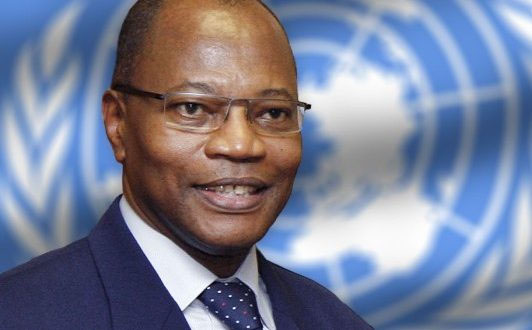
Dr. Mohamed Ibn Chambas – the Story of How I Ended Up at Mfantsipim

Dr. Mohamed Ibn Chambas is a Ghanaian lawyer, diplomat, politician, and academic. He is a respected peace and security mediator and has been involved in mediating conflicts in Liberia, Côte d’Ivoire, and Sudan.
He has not only served his country as a public servant, starting as a Member of Parliament and Deputy Minister, but has also been active on the international scene, leading ECOWAS and the ACP, and working for the UN and the AU.
At the moment, he serves as the African Union High Representative for Silencing the Guns. He also chairs the mediation efforts of the Quintet, a group made up of the African Union (AU), the Intergovernmental Authority on Development (IGAD), the League of Arab States, the European Union (EU), and the United Nations (UN) to bring peace to Sudan.

Before all these great achievements, Dr. Chambas attended Mfantsipim School, where the foundations of his illustrious career were laid.

Mohamed Ibn Chambas was born on Dec 7th, 1950, in Bimbilla in the Northern Region of Ghana. Most of the schools in the North at that time were local authority (L.A.) schools and a good number of teachers were not from the North. Mohamed thus attended an L.A. primary school in Bimbilla where the headteacher, a Presbyterian from Santrokofi in the Oti Region, changed his first name from “Mohamed” to “David”. It would be years later at the University of Ghana in Legon before he would change it back to “Mohamed”.

The story of how he entered Mfantsipim in 1963 – a school that was 578 km away school and at the time had only one other student from the North, and maybe 10 of the Muslim faith – shows the brilliance and promise that young Mohamed exuded even at that age. It also showed his ability to face and take on challenges with courage, a trait that would be made more evident with his later career as a mediator.

Back then, one took the Common Entrance Exam to get into a secondary school. Students in Forms 2 – 4 in middle school were allowed to take the exam. The exam was administered by the West African Examinations Council (WAEC). It consisted of four subject papers written in a single day: English Composition, English Comprehension/Grammar, Mathematics, and General Paper. The exam was graded out of a maximum of 400 marks, and to get into the top schools of the day, like Mfantsipim, Wesley Girls, St. Augustines, Adisadel, and Achimota, one needed a score above 290, preferably 300.
On registering for the Common Entrance, students had to pick three secondary schools they wanted their scores sent to. These schools were ranked in order of preference, with the 1st choice being the most preferred. Excellent students would pick the top schools of the day as the first choice.

Mohamed took the Common Entrance exam in 1963 when he was in Form 2 at the Bimbilla L.A. Middle School. On the day the students in Forms 2 – 4 at the school were filling out the registration forms for the exam, the headteacher, Mr. Daniel K. Puni, went from class to class listing all the top Schools on the left side of the blackboard in each classroom. He advised the students not to pick any of those schools as their chances of getting in were slim. On the right, he listed the schools they had higher chances of getting accepted to.
When he got to Mohamed’s Form 2 class, after writing out the lists, he walked over to the desk where Mohamed sat and said, “But you should select Mfantsipim as your first choice school”.
Mohamed stared at him, totally surprised. Mr. Puni assured him he would get in, and so Mohamed picked Mfantsipim as his first choice. What made it even more remarkable was that the headteacher, Mr. Puni, a Catholic, was an Old Student of St. Augustine’s College.

A few months after the exams, he got a letter of invitation to the Mfantsipim interview. Back then, student interviews were part of the admission process.
Mfantsipim held the interviews for the southern sector of the country at the school in Cape Coast and for the northern sector in Kumasi. He had his interview with the headmaster, Rev. Brandful, in August 1963.

He was accepted and entered Mfantsipim in September 1963, where he would earn the nickname “Chambo”. He was in Schweitzer House, which was later merged with Lockhart House to form what is now Lockhart-Schweitzer.

About his time in Mfantsipim, he said it instilled a lot of self-confidence in him. However, one was also constantly reminded by the headmaster and the staff that it is not where you are but what you do with the opportunities there, and so one always had to think and look ahead. And he did. His life epitomized that.

Dr. Mohamed Ibn Chambas is an illustrious son of Mfantsipim School, a Botwe boy and an active member of MOBA 1968.
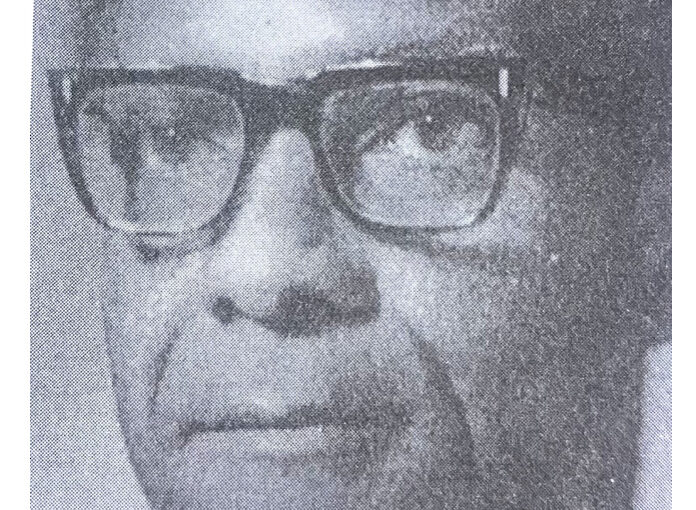
He Refused to Wear the Scarf

The day was June 28, 1963. On Kwabotwe Hill, that was the day the Ghana Young Pioneers Movement (GYP) was going to be officially inaugurated. Unlike other school clubs like the Drama Club, Christian Union, Chess Club, Debating Club, etc., the inauguration of this movement had to be special and official. Rev. W.G.M. Brandful, the headmaster himself, had to be present. He also had to wear a signature GYP scarf, and it was going to happen at morning assembly.

So who were these Young Pioneers?

The Ghana Young Pioneer Movement (GYP) was a youth movement founded by Kwame Nkrumah in 1960. Modeled after youth movements like the Boys Scouts of the UK, the Kosmosol of the then USSR, the Israeli Gadna, the Red Pioneers of China, and youth groups in Germany and the US, the group sought to raise Ghanaian youth to be patriotic, pan-Africanist, socialist, and anti-imperialist. They were immersed in military drills, classes on Ghanaian culture, and taught lessons on being an upstanding citizen – the 12-point code of discipline. Training also included vocational and technical skills.
They wore crisp khaki uniforms, boots, and an iconic neck scarf.

The kids were taught to chant many patriotic slogans. However, there were also slogans like, “Nkrumah will make you fishers of men, if you follow him”, “Nkrumah is our Messiah”, and “Nkrumah does no wrong”, that rubbed the Churches and some in the Christian community the wrong way. Moreover, there was also the fear that the movement was replacing Christian teaching with political indoctrination, and the subject was mainly Nkrumah.
Added to that were the accusations that the kids in the movement were being trained to spy on their parents and other adults, and you had a section of the population that was against the GYP.

Despite the opposition, the only person to speak up about the use of biblical themes was the Right Reverend Richard Roseveare, the Anglican Bishop of Accra. On Aug 4, 1962, at the Anglican Synod, he condemned the movement as “godless” and accused them of a “gross parody of Christian scripture”. About a week later, he got expelled from Ghana (though due to public outcry, Nkrumah allowed him back two months later).

Interestingly, the man who helped put the movement together, made sure the kids got religious discipline (the spiritual architect), was the primary administrator, and the Rector of the movement’s training center – the Kwame Nkrumah Youth Leadership Training Institute – was a Methodist priest and an Old Boy called Rev. Dr. James Stanley Adama Stephens. He saw these slogans as metaphors. To him, a “messiah” in the political context meant a “liberator” or “political savior” who had freed Ghana from British colonial rule—not a divine being.
Suffice to say there was some disagreement between his position and the Church’s.

So after the expulsion of Roseveare and with the Preventive Detention Act (PDA) of 1958 as a great deterrent, most in the church and civil society kept mum.

Until that Friday morning on June 28, 1963.

Almost everyone at morning assembly that morning probably assumed that Rev. Brandful was just going to wear the scarf, oversee the inauguration, and carry on with the day. But is that what happened?

Now let’s take a step back and examine the school Rev. Brandful headed, its age, and the traditions that made Mfantsipim what it was. In 1963, the school had been in existence for 87 years! The 12-point Code of Discipline of the Young Pioneers was like the air Mfantsipim boys breathed daily.

“Love of Country?” Since Mensah Sarbah and Casely Hayford, loving Ghana is like the birthright of the school. Old Boys started the fight for independence!

“Discipline, Obedience, Honesty, Morality, Punctuality?” Just ask any Botwe boy.
“Comradeship and Forbearance?” Some people think MOBA is a cult!

The things the movement was trying to teach had been Mfantsipim’s tradition for 87 years!

What about the pan-africanism and anti-imperialism? Look, Mensah Sarbah got the school named “Mfantsipim” and gave it a motto in Fante in 1905. Rev. Brandful knew that on that hill, we are more conscious of who we are than a 3-year-old movement could ever teach.

And Mfantsipim as a school had a curriculum that included technical and vocational training. There were no military drills but life on that hill was close to one.

And I am sure the dear headmaster remembered the 1948 riots and their effect on the school. Moreover, he was definitely no fan of the biblical metaphors and indoctrination, and believed that they had no place in a school where the minds of the young were being molded.

And so he walked out that morning and uttered the famous words:

“They want to put the scarf around my neck, and I refuse it”.

A month later, he was fired as headmaster of Mfantsipim School.

Three years later, Nkrumah was gone, and with him, the Young Pioneers, but on Kwabotwe Hill, boys were still being raised according to traditions that were old and enduring. No matter where you stand on the issue of Nkrumah, Rev. Brandful’s action spells bravery. He had the courage to stand by what he believed in, even though he knew it would cost him. He epitomized the lessons he taught as headmaster. When it came to it, he walked the walk. Sadly, it was not the last time the government would meddle in the school’s affairs.

May the brave soul of Rev. Brandful RIP.