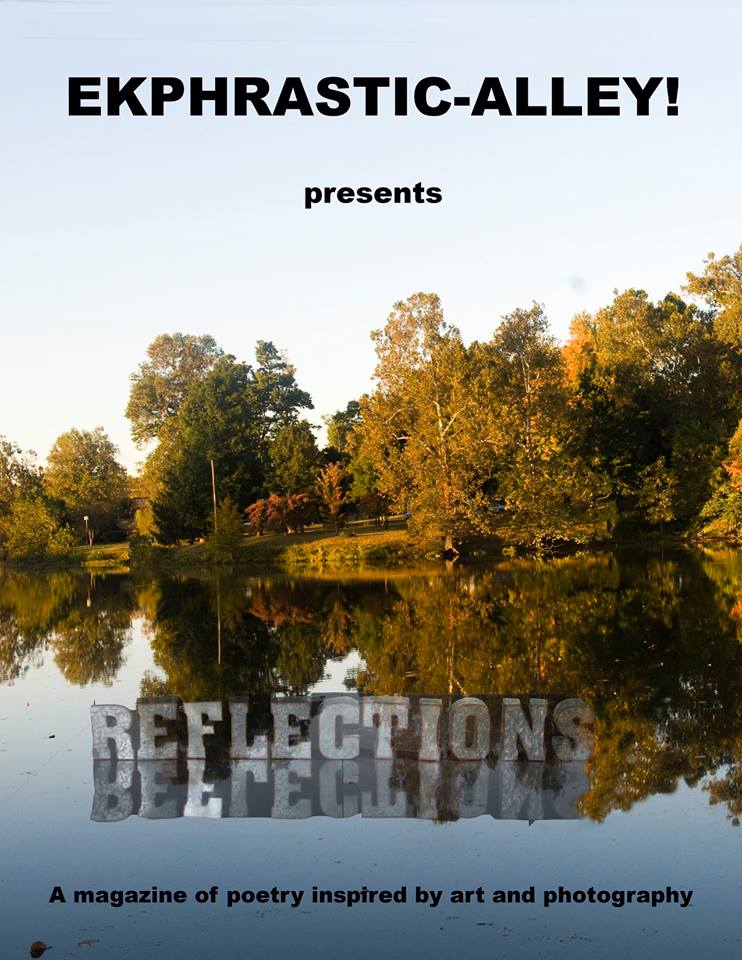
Ekphrastic-Alley presents “Reflections”

Welcome to the launch edition of Ekphrastic-Alley!, a digital magazine that will feature poetry inspired by art and photography. It will be an “alley” in which all the poetry is ekphrastic!

This edition is titled “Reflections” and seeks to explore how we reflect who we are into the world around us and how the world around us reflects lessons for life and the wisdom of nature.
Below is the link:

Ekphrastic-Alley presents “Reflections”

Hope you like it!
Enjoy!

Let Them Ride in the Buses

“At length, I remembered the last resort of a great princess who, when told that the peasants had no bread, replied: ‘Then let them eat brioches’.”
— Jean-Jacques Rousseau’s in Confessions, Book 6
 
As Queen of France in the 18th century, Marie Antoinette is said to have heard the peasants rioting one day. When told that they were up in arms because they had no bread and were hungry, she is alleged to have said, “Qu’ils mangent de la brioche” or “Let them eat brioche!’
That statement has morphed into “Let them eat cake” over the centuries”.
However, all evidence points to the fact that Marie Antoinette never said those words and that they were mischievously attributed to her during the French Revolution to further reinforce the image of her as an uncaring, extravagant, out-of-touch aristocrat.
 
The phrase has stood the test of time and has come to signify insensitivity and a lack of understanding on the part of the ruling class for the suffering and realities of life of those less fortunate.
 
Recently, Ghanaians witnessed such a “Let them eat cake” moment.
 
Just over a week ago, the then acting Chairman (and now Chairman) of the ruling National Patriotic Party (NPP), Mr. Freddie Blay, took delivery of 275 mini-buses that he had ordered for all 275 constituencies of the party. The buses arrived just before the National Delegate’s Congress on Saturday, July 7. Mr. Blay was one of the men contesting for the chairmanship position.
The purchase and delivery of the buses to the party shortly before the election of a party chairman reeked of vote buying. Further, it was ill-timed and much worse, demonstrated a degree of insensitivity to the plight of most Ghanaians that is breath-taking.
 
Since the death of one Mr. Acheampong in his car last month due to the “No Beds” phenomenon, there has been a raging national conversation about the need for an Emergency Response Service that is well equipped with things like ambulances. The pitch of the conversation went a notch higher when a few weeks ago, the former Vice-President collapsed in a gym and had to be transported to 37 Military Hospital in the bucket of a pick-up truck.
 
It is into this contentious national milieu that Mr. Blay took delivery of 275 mini-buses for his party. It is worth noting that the whole country of 30 million people is served by 54 ambulances.
Sure, the buses were ordered probably months before this debate about ambulances gained center stage and by all accounts, it was purchased with private funds.
However, when the whole country is up in arms about the lack of ambulances, taking delivery of 275 buses that seek to serve the interests of a party is a classic “Let them eat cake” moment.
It was insensitive and cruel. It depicted a party that does not listen and does not hear what the people are crying out for.
 
Those mini-buses should have been sold and the proceeds used to get ambulances for all the country. I do not care how it could have been done but for the sake of wisdom and good governance, that is what the NPP should have done. A wise party, looking at the outcry about ambulances and the death of Amissah-Arthur in the bucket of a pick-up truck, would not have taken delivery of those buses. Not when they did!
 
Lord Acton once wrote that all power corrupts. He was right. When you are power-drunk, you feel invincible, always right and everyone else is a fool and needs not be heard.
It is not too long ago that Ghanaians voted Nana Addo and the NPP into power. Expectations were so high. Optimism flowed in the streets and most looked towards a new beginning.
Alas events like this “bus faux pas” makes one wonder if Ghanaians made a mistake and they have been had.
 
Shakespeare writes this quote for Brutus in “Julius Caesar”, Act 4, Scene 3:
“There is a tide in the affairs of men,
Which, taken at the flood, leads on to fortune;
Omitted, all the voyage of their life
Is bound in shallows and in miseries.
On such a full sea are we now afloat,
And we must take the current when it serves,
Or lose our ventures.
 
The NPP was afloat on a sea of opportunity, riding a current that allowed them to serve this country and its people. Alas, I fear they lost their venture among mini-buses.
 
Unlike the French of the 18th century, Ghanaians do not need to attribute false statements to our leaders to paint that as uncaring and insensitive. They do that to themselves with their actions.
Then even as Ghanaians cry out for ambulances, all they hear from Nana Addo, Freddie Blay, and the NPP is, “Laissez-les monter dans les bus” – “Let them ride in the buses!”

In an alternative Universe

CG had been the former Vice-President’s bodyguard and driver for a long time. He had been assigned to him when he started his term and stayed with him when he left office. CG drove everywhere with the former VP.
 
A few times every week, he drove him to the gym for a workout. CG usually used the time to get a work-out in too.
So he was in the gym that day the former VP collapsed. CG rushed over. He was certified in Basic Life Support (BLS) and Cardiopulmonary Resuscitation (CPR).
He called out the VP’s name. There was no response.
He felt for a pulse. There was none. His breathing was fast and shallow.
He immediately turned the VP on his back, knelt beside him and started pumping on his chest and called out, “Someone, please get the AED and another person should call 999!”
A man standing close by said he was a doctor, got out his phone and called 999.
One of the gym instructors got an AED, a Code Box, and an oxygen tank and brought them over.
The doctor attached the AED even as he talked into the phone. The screen of the AED lit up. The rhythm looked erratic. The AED said it was not shockable. CG restarted CPR.
 
The doctor was on the phone.
“The former VP collapsed at the gym. He is pulseless but the rhythm is not shockable. We are still doing CPR. I think it is cardiac and he needs to get to Cardio ASAP. Send an ambulance.”
At that point, CG called out, “Traffic at this time will be crazy. Let’s have him airlifted!”
The gym instructor took over CPR so CG could take a break. He was certified in CPR too. All the gym instructors were.
The doctor was still on the phone.
“Can we get him airlifted?….yes, there is a field the copter can land right next to the gym…ok, holding on”.
 
He turned his attention back to the VP.
“Let’s check his rhythm again”, he ordered.
The gym instructor turned back the AED on. The rhythm was clearly V-fib.
The AED asked all to step back as it shocked.
“Zapp!”
The body of the VP was convulsed by 150 J.
The rhythm stayed erratic.
“Zapp!”
The body convulsed again.
A straight line appeared on the screen….and then a rhythm! 30, 40, 50, 60…rhythmic.
They were all staring at the screen panting.
The doctor was back on the phone.
“We got a rhythm. He has a pulse. Great!”
He hung up and informed everyone in the gym:
“The helicopter is on its way. Cardio is aware. The cardiac catheterization lab team is ready. An ICU bed is available. the heart surgery and stroke teams are on standby.”
 
In the distance, one could hear the rotor blades of the helicopter tearing through the warm air of an Accra morning.
CG and the doctor are kneeling beside the former VP watching him like a hawk. He still had a pulse. His breathing fast and shallow.
The doctor wondered if he should intubate the VP. The helicopter has landed. He decided against it. Instead, he got the oxygen mask, placed it over the VP’s face, hooked it to the oxygen tank and turned the oxygen up.
 
The paramedics burst into the gym like Green Berets, dragging a gurney with a monitor behind them.
One got an IV. in the left arm in no time and hooked up a lactated Ringer’s infusion The other hooked the VP to the transport monitor. All the time, they watched his rhythm like hawks. Then they moved him onto their gurney.
Just after they moved him, the VP went into V-fib again.
“Zapp!” 150J! “Zapp!” 200J! Zapp! 250J
He converted.
They raced for the helicopter, the doctor and CG in tow.
The helicopter took off heading towards Cardio.
 
Would the former VP have made it in this alternative universe? Who knows?
We all would have rejoiced if he had made it!
And if he hadn’t?
We would all mourn him like we are doing now but with a clear difference. We would mourn knowing that all efforts were made to save him and that if any one of us ever found himself or herself in such a situation, we would have the same resources at our disposal…
….in that alternative universe.

It’s Stealing, Stupid!

By Nana Dadzie Ghansah
 
A thief is a thief whether he steals a diamond or a cucumber.
— An Indian Proverb
 
The noun ‘Corruption’ comes from the word ‘corrupt’. The latter is derived from the amalgamation of two Latin words – ‘cor-‘ meaning ‘altogether’ + ‘rumpere’ meaning ‘to break’. From the two words came ‘corrumpere’ meaning ‘mar, bribe, destroy’.
The past participle of the word ‘corrumpere’ is corruptus. It is from the latter that we got the word ‘corrupt’ and by extension, ‘corruption’.
 
So if we deem any society corrupt, then something about that society is broken or the whole society is broken. More often than not, it is the sense of right and wrong that is defective. It is the very moral code that is broken. It could be the legal system. These defects express themselves in acts that ultimately merit the description of “corrupt”.
 
Ask most Ghanaians what ails the nation and the majority will point to corruption as the greatest ill.
So how does Ghana exhibit its brokenness?
Well, we plunder. We pillage. We pilfer. WE STEAL.
We take that, that does not belong to us. WE STEAL.
You can seek to sugarcoat it any way you want but what we do when we play the Game of Corruption is nothing but good old thievery.
The shenanigans with procurement, the inflated contracts, the hand-go-hand-come, the unnecessary trips for per diem, the bribes, backroom deals….those are all nothing but stealing.
We are a bunch of petty thieves and that is the hard and uncomfortable truth.
There are not many Ghanaians who have not indulged in this dastardly act and I must admit ashamedly that many years ago, I did too.
 
Unless we stop stealing, nothing will become of our nation.
Unless we stop pilfering from the public purse as well as the private ones, nothing of substance will grow in this land of ours.
 
We have stolen so much that it has become a habit and a way of life. It is so bad that one looks like an idiot if one does not loot as well. This bad habit has eaten its way into the very fabric of our society. So much so that we do not punish the flagrant ones anymore. We just throw the book at the petty thieves who may steal a goat or pick a pocket. However, the ones who steal millions garner our respect and admiration. They may just get fired. Most of the time, the “Fa ma Nyame” mentality kicks in or respected ones in society plead for leniency on behalf of these thieves.
Like the French economist and author, Frédéric Bastiat wrote in his 1848 work titled “The Physiology of Plunder”:
“When plunder becomes a way of life for a group of men in a society, over the course of time they create for themselves a legal system that authorizes it and a moral code that glorifies it.”
That does sound familiar?
Don’t we all look like a bunch of pirates plundering?
 
In a country with more than 10,000 churches, why do we forget the 8th Commandment? It says:
THOU SHALL NOT STEAL
What are the pastors preaching about? Or are they also busy stealing from their congregants?
 
Maybe, when life is so harsh for the majority and survival is the most important task at hand, the ability to steal might be the most important quality in the jungle where only the fittest survive. We could debate that endlessly.
However, what about those who have and still steal? Well, somewhere along the line, greed sets in and the limits get blurry. That is wrong and not debatable.
 
Until we impress upon ourselves the values of honesty, truth, patience, and discipline; until the greedy become temperate and the thief the protector of the 

public purse, we will wander the fields of this world aimlessly like a ship without a rudder.
 
In 2015, the Filipino politician, Miriam Defensor-Santiago, told her political opponents to stop worrying about the fact that she had lung cancer but rather to worry about a cancer that was afflicting their society. She said:
“The cancer that demands our urgent attention is corruption and poverty.”
Ghana has the same cancer and interestingly, they are more intertwined than most people realize. You see, if those at the helm of things stop playing the corruption game by not stealing, there might just be enough money to take care of the poor.
 
Now is that not an idea worth stealing?

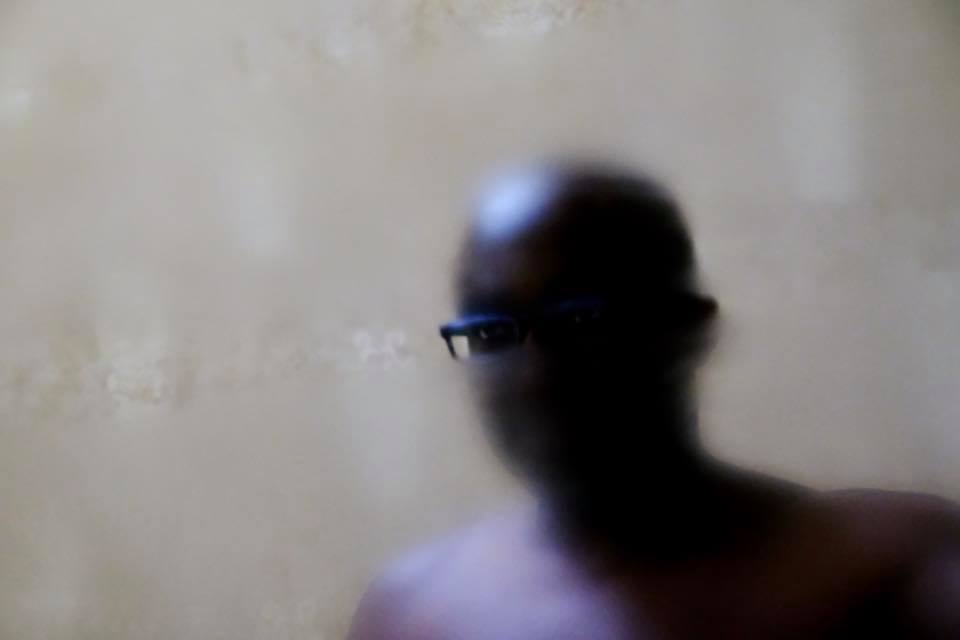
The Face in the Fog

The fire that occasionally baptizes us during life’s challenges brings our sweat and tears to boil……the steam that emanates, is filled with our doubts and fears and covers the great mirror of our short existence, clouding our view of who we are and making us question our very being…..yet if we allow patience to temper the urge of time, believing in what we know lies within, soon we start to see through the fog of the steam……we start to see who we are, recognize our very essence……we start to see….

“A Face in the Fog”

Those Fridays at the Bus Stop

Dad was out of the country at that time. Mum left us with our grandparents in the village and moved to the city for a better teaching job. I was maybe 6 or 7. My brother Paakow was 3 or 4.
My brother and I missed her so much.
She promised she would come down on as many weekends as possible and as kids, we expected her to keep her promise.
Each Friday, my brother and I would go to the bus stop near our grandparents’ house and wait for her. We would wait till it turned dark. Sometimes, we were lucky and she got off the bus. Most times though, she could not make it. Those were the times we would go back home crying, me literally dragging my brother along. He always wanted to wait a little longer.
Mum was away for about a year or so but to my childhood mind, that felt like an eternity.
 
These last few weeks, as reports came in about South American children being separated from their parents who sought asylum at the southern US border, memories of this period in my life came roaring back.
As I saw pictures of these kids locked up in cages, away from their parents, all I could think of was me and Paakow at the bus stop.
For those who have never experienced a long separation from a mother especially as a child, let me tell you – IT IS FUCKING TRAUMATIC!!!
I am 52 years old, happily married, with 2 kids and a career and when I think of that period, I get extremely sad. It is one of the worst things that can happen to a child. At least, we had our grandparents but what do these kids have? Unsmiling guards, who cannot even touch them?
 
The US is a sovereign nation and has every right to take appropriate measures to stem or even stop the inflow of illegal immigrants. These measures can even be termed “A War”. That’s this nation’s prerogative. However, even in real war, there are conventions on how to treat prisoners-of-war. They are accorded some humaneness.
Shouldn’t these immigrants, some of whom are asylum-seekers, like prisoners-of-war, be treated humanely? Is this how the US treats the less fortunate? Is it something about this country that makes it hard for it to temper justice with mercy?
 
I keep hearing that the US is better than this. Really?
This country has used the separation of children from their families to torture, punish and dehumanize minorities in this country for centuries. Maybe it is par for the course.
 
Slave children were torn away from their African-American mothers and sold off. If anyone is interested, there is an account by a Charles Ball in the “Maryland State Archives” about the day he was sold off as a child and the anguish of his mother who was then beaten for holding on to him.
 
From about 1870 till the 1970s, Native American children were taken away forcibly from their families and stuck in boarding schools run by churches and local authorities to turn them into civilized Americans. They had to give up their Native names and take English ones. They were taught to speak English and were punished for speaking their own languages. They were taught that their cultures were inferior and were forced to become Christians. Abuse was rampant and a majority of those children never saw their families again.
When the boarding schools become unpopular in the early 1900s, they were replaced by forced adoptions.
 
Starting also in the early 1900s, a lot of children were ripped from the homes of the poor and stuck in orphanages and later foster homes. The great Malcolm X was such a victim.
 
During the Great Depression, thousands of Mexicans were chased out of the US on the pretext that they caused the hardship. A lot of those families got separated from their children.
 
Last but not the least was the internment of the Japanese during the Second World War.
 
Maybe, this too – the separation of children from their asylum-seeking families – is supposed to dehumanize, punish and even send a message.
A message to all potential illegal immigrants and asylum seekers – that “the US will not be a migrant camp”. Maybe it helps to remove the moral hazard created by treating these families with kids humanely and thus attracting more such immigrants. Maybe it forces the approval of billions for a wall.
 
Whatever the case is, separating children from their parents is one mean thing to do to achieve any aim. It reveals a darkness in the soul that not even the sun can illuminate. It shows a depravity that not even all the mythical blood of Jesus can wash away.
 
One day when I was 8, my brother and I moved in with our parents and those Fridays at the bus stop ended.
However, for these 2000+ children who were ripped from their parents, the ending might be very different.
I fear that, like the African-American and Native American children from a century or more ago, they might be lost to their parents forever. I fear that these children are forever going to live with the trauma of separation for the rest of their lives.
 
Can the US be better than this?
Even though history is not reassuring, this same history tells of men and women who always fought to help right those wrongs. They were always in the minority but sooner or later, the power inherent in the good of their cause swung the pendulum around.
Like John Stuart Mill, said in 1867: “Bad men need nothing more to compass their ends than that good men should look on and do nothing.”
It is only when the good trumps the ugly in a society that we as American can boldly say, “We are better than this”.
 
Until then, I’ll say a prayer for those children and hope that if there is really a God up there, He will take care of them and make this nation “better than this”.
Maybe I’ll even shed a tear for their plight like I used to do those Fridays at the bus stop many years ago.
The Lonely Zulu Girl – Thoughts on International Albinism Awareness Day

Oliviero Toscani is an Italian photographer. From 1982 to 2000, he ran the ad department of the Italian clothier, Benetton. Starting in 1989, his ads for the company took on an edgy and controversial tone. With images as stark as that of a dying AIDS patient or the bloody uniform of a dead Bosnian soldier or controversial as colored condoms or a black woman breastfeeding a white baby, he sought not only to sell clothing but also to spur conversations about social issues of the day and encourage activism.
In 2000, his “Death Row” campaign incited the ire of victims families in Missouri, led to lawsuits and Sears pulling the Benetton line. He would leave the company due to that.
Although critics accused Mr. Toscani of cheapening and exploiting social issues during his tenure at Benetton, supporters of his work pointed to his bravery and social consciousness in raising awareness about issues such as racism, the AIDs epidemic, wars, and famine.

This past Saturday, events that followed my reading of a piece titled, “The Albino Community in Ghana: ‘I’m Motivated to Believe That I Can Survive’”, led me to think of one of Oliviero Toscani’s Benetton ad campaigns from 1992.
The piece was in the New York Times, was written by Walter Thompson-Hernández and delved into the challenges faced by albinos in Ghana.
One of the people he interviewed while preparing the column was a good friend and colleague, the dermatologist Dr. Jeannette Aryee-boi.
I was excited to see Jeanette’s face all over a page in the Times. I called her.
You see, besides facing a lot of discrimination, albinos also have to deal with very early-onset skin cancer and that is where Jeanette comes in. She has dedicated part of her practice to supporting albinos with skin cancer.
We talked about the difficulties albinos faced. She informed me that June 13 had been designated by the UN as International Albinism Awareness Day and that she would be giving a lecture on skin cancer in albinos as part of the events scheduled for the day.

Immediately after I hung up, I remembered one of Oliviero Toscani’s Benetton ad campaigns from 1992. The picture for the ad was shot in South Africa. It showed a group of young Zulu girls standing together. One of them seemed to stand alone, shunned by the others. The Zulu girl standing alone was different. She was an albino.
From the first time I saw that ad in Berlin in 1992, it has stayed with me. Even though it incited all sort of backlash back then, it did carry and still carries a very poignant message of exclusion and discrimination.

So as the International Albinism Awareness Day rolls around, I cannot help but share this image to raise awareness about a problem albinos face all over the world – discrimination. There are even parts of Africa where being an albino can be a death sentence. Luckily, albinos in Ghana do not have to worry about that.
On Wednesday, as the problems that face albinos get placed front and center, let us all learn to have more tolerance for those who are different and may not look like us. Let us learn to accept people for who they are. Let us not even hide behind our respective faiths to ostracize and exclude but with open arms, let’s accept all into the fold of humanity.

Lastly, for all who have felt the sting of discrimination in their lives, I pray that the experience does not make you angry and bitter or even withdrawn and apathetic. I pray rather that those ordeals you have faced or even still face will let deep wells of empathy spring up in you. Wells of empathy that would allow you to seek out and support those marginalized because of who they are, where they may come from, who they worship or even have sex with.

Let us try to create a world where the Albino Zulu girl does not stand alone, shunned by her peers.

Mirror, Mirror In His Hand

“Our job is only to hold up the mirror — to tell and show the public what has happened.”
— Walter Cronkite

One thing that is noteworthy about all humans is that the longer we look at an object, a scene or even another human, the more our perception dulls. The object, scene or other person becomes familiar and we run the risk of not seeing changes.
Painters face this problem when doing a representation piece. If an artist steps away from a representational piece for a few days, he or she will often come back and notice glaring mistakes. To help alleviate this, the great painter and polymath Leonardo da Vinci had this suggestion written down in one of his many notebooks:

“When you wish to see whether the general effect of your picture corresponds with that of the object represented after nature, take a mirror and set it so that it reflects the actual thing, and then compare the reflection with your picture, and consider carefully whether the subject of the two images is in conformity with both, studying especially the mirror.”

Thus by holding a mirror up to a representational painting, an artist is able to see it for what it really is. The mirror becomes an instrument of reality.

Even though I could not find the exact origin, the term “holding up a mirror to something or someone” shows up throughout history. It shows up in Shakespeare’s Hamlet, Act 3, Scene 2: “…as ’twere, the mirror up to nature, to show virtue her own feature, scorn her own image, and the very age and body of the time his form and pressure.”
More interestingly, the phrase is captured as the symbol for the virtue Prudence. Prudence is depicted as a woman holding a mirror (into which she stares) with one hand and a snake with the other. The mirror symbolizes self-awareness whereas the snake represents wisdom and caution.
So we see that even in antiquity, it was wise to be reminded of reality constantly, then that is a mark of prudence and prudence is a great virtue to live by. By prudence, I do not mean the modern meaning of caution but the ancient meaning of wisdom, foresight, and knowledge.
It is not only important to hold up a mirror to ourselves to remind us of who we are like Prudence does. It is also important to hold up a mirror to society to remind all of who we are as a people.

One person who seems to do this quite well is the attorney turned investigative journalist, private investigator and sting operator par excellence, Anas Arameyaw Anas.
Like some, I have been critical of his methods. I even penned a piece titled “Who Will Watch Anas” in 2015. However, regardless of what you think of the man, his investigative style and his mode of publicizing his findings, he always succeeds in holding up a mirror to our society.
And anytime he holds up that mirror, the Ghanaian society recoils at what it sees.
Whether it is about his investigations into ritual killings of disabled children, the Chinese sex cartel in Accra, the Madhouse story, the crooked judges or now even the corrupt Ghana Football Association, his findings act as a shiny surface from which the ills of the Ghanaian society are starkly reflected.

Of all the ills that we see, there is one that seems to always be present — an unbelievable ease with which Ghanaians can be corrupted to do the wrong thing, even break the law, with money and/or even livestock. This ability to be easily corrupted seems to spin its way through all of Anas’ findings and many are those who think it may be the biggest ill afflicting this nation.

So why are we so corrupt as a nation and a people?
The answer may well lie in philosophy – philosophy, not as an art of reasoning but the art of living.
Every culture has a belief system that guides the lives of its people. This is often wisdom collected and passed on over centuries. It informs how the people think, behave and interact with each other. It shows up in the level of dignity, morality, and ethics in each culture.
With a culture of corruption as ingrained in our society as it is, one may safely say that the collective wisdom passed down through the ages has contained corrupt behavior as a hallmark.
Now, what would cause our philosophy for life to be marked by a habit as destructive as corruption? The answer is simple: because in our corner of the world, most people do not live; they survive! Thus, with a survival mentality, it is easy to see why corruption is so rampant.

Outside the big cities live millions who are struggling to make ends meet. Even in the big cities are many who are struggling to survive way below the poverty line. This breeds a survival mentality and philosophy. It is a survival of the fittest, dog-eat-dog mentality. Anything that gets one through the day is good. Morality, ethics and especially conscience become liabilities. In the face of such poverty, Ghanaians can be corrupted to do the wrong thing, even break the law, with money and/or even livestock.
The survival mentality also breeds a scarcity mentality. Thus even when people have no real need to steal, keep doing it because they are driven by a fear that their good fortune is not permanent. They become greedy.
Every and anything that fosters one survival is seen as good. Anything that threatens this survival is seen as bad. Even Deities one worships are seen as enablers. Thus, in Anas’ Number #12, one can hear some of the referees who are taking bribes thank God as they receive the monies. Even though the Christian God probably frowns on corruption as it is stealing, a man with a survival mentality sees this God differently. For him, God becomes a power to be harnessed in this fight to survive. This morality-free, unethical fight and any success that is notched, whether legal or illegal is seen as a boon from this God. Thus on Sundays when Ghanaians stream in their thousands into churches, the prayer that rises to the heavens is one for survival. Any wonder there are so many churches?

So as long as people survive instead of live, the last thing on their minds is raising a mirror to examine themselves or the society in which they are struggling to survive. That is a luxury reserved for those who live.
That is why what Anas does is so important. He has become our Prudence. With one hand on a serpent that winds around offering the corruptible the forbidden fruit to bite into, the other hand holds up a mirror to reflect the actions of these corruptible ones. When we see them biting into the forbidden fruit we gasp, not only because we are shocked at their actions, but also because we recognize ourselves.

Not until we become a nation that can provide the basics of life like food, clean water, electricity, and shelter for its people, we will only survive. Even those who are well-to-do will think they are just surviving and exhibit greed at destructive levels. Swamped by this scarcity mentality, our society will not know qualities like dignity, morality, ethics, prudence, justice, temperance, and fortitude. Such qualities that will make us want to lift a mirror to ourselves and our society. Qualities that keep the “Anases” of the world away.

Till then, we will wait expectantly for the next time he raises his mirror and asks, “Mirror, mirror in my hands, who is the most corrupt in all the land?”

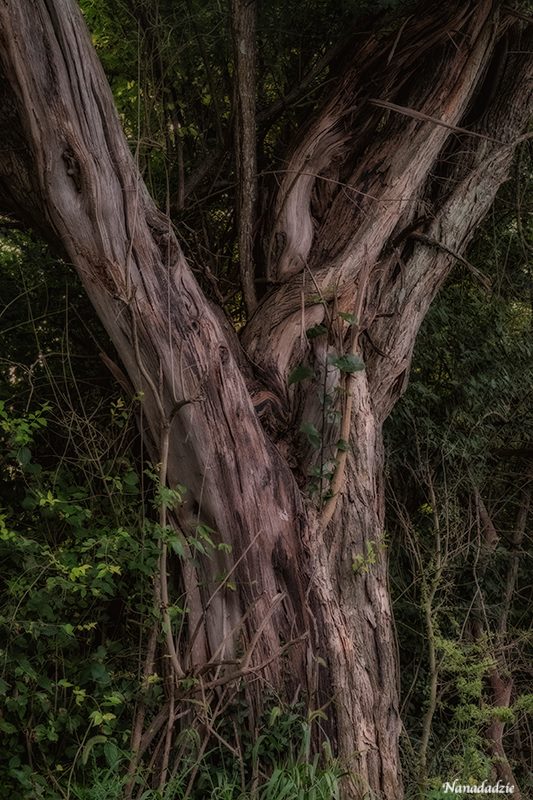
The Day the Dogwood Blossomed

That Spring morning,
When she returned from her run,
She saw the Dogwood had blossomed.
White petals sprinkled among the green,
An explosion of life and beauty.

She marched into the house,
Ready the news to share,
But the look on his face,
Said all was not well.
His announcement sunk her heart,
Froze her in place as he walked out.

Thus whenever Spring rolls around,
With the songs of birds and the butterflies;
With the white petals of the Dogwood
Sprinkled among the green,
She feels not the beauty of new life
Nor the pulse of a fresh start,
Then all she can really think of
Is the day love walked out.

© Nana Dadzie Ghansah 2018