They call it Purity, I call it Hypocrisy

On the night of Monday, April 2 2012, the men’s basketball team of the University of Kentucky, the Wildcats, won the 2011-12 NCAA championship. It was the culmination of a season where we saw a team of freshmen, sophomores and a senior, play together as a team to dominate their opponents and win the ultimate prize in college basketball. Since their win, their fans have been ecstatic – it’s been 14 years since the Wildcats won their last basketball trophy. In a state that passionate about basketball, it felt like a century.

in the National Championship Game of the 2012 NCAA Division I Men's Basketball Tournament at the Mercedes-Benz Superdome on April 2, 2012 in New Orleans, Louisiana.
in the National Championship Game of the 2012 NCAA Division I Men’s Basketball Tournament at the Mercedes-Benz Superdome on April 2, 2012 in New Orleans, Louisiana.

Amidst the glee, I hear some voices that speak of the win in disdain. These voices gripe about the fact that John Calipari, the Wildcats coach, is exploiting the “one-and-done” rule set by the NBA.

A little background here. In previous years, kids could go straight from high school to the NBA, totally bypassing college. Examples include Lebron James, Kobe Bryant, Kevin Garnett and Dwight Howard. These are the successful examples. There were some busts too (Kwame Brown). To prevent these kids without much experience from destroying the quality of the product the NBA offered, it was agreed to stipulate a year’s wait between high school and entry into the NBA. So these kids go to college for one year and bolt for the NBA. Academicians argue that these “one-and-doners” are using colleges as a mere stepping stone for getting to the riches of the NBA and neglecting getting an education.  So-called basketball purists point out that even if these kids are talented enough, they are not mature enough for the professional league. They argue that a true college basketball team should be riddled with experienced juniors and seniors.They feel that irrespective of how good one may be, a college player should stay in college till graduation.

The reality of the situation though is that there are kids who are that good and want to enter the NBA straight from high school. They risk loosing a lot of money if their college career is ended by an injury or they do not perform well in their subsequent years in college. The “one-and-done” rule however prevents them from going from high school into the NBA. So, what is the best way out?

That is where John Calipari comes in. This past season, he probably recruited the two best high school players in the country in Anthony Davies and Michael Kidd-Gilchrist. He combined them with another freshman, Marquis Teague, two sophomores in Jones and Lamb, and a senior, Miller,  to create a powerful basketball team. In the process, he taught them teamwork, discipline, patience and working towards a goal. He taught them the principle of the sum of the parts being greater than the individual. He got them to pay defense and share the ball. In less than a year, he sold them a dream and helped them achieve it. He got them to play some amazing basketball.

Now I don’t know about you but I find that to be an amazing feat. I also find it really great that these young men got to be taught these life principles. Who can argue that what they learned in the last seven months will not be beneficial for their professional careers or even life?

We send kids to college to get a degree so they can join the workforce and earn a living. However, does college really prepare our children for life, real life? I dare to say NO! Qualities such as discipline, teamwork and patience are things you are supposed to have learned at home or in high school or somewhere in-between. Colleges spew out men and women who are ill-prepared for the journey called life, irrespective of how many degrees they may hold. Isn’t it then commendable that a coach seeks to imbibe great life qualities in these young men in the little time he has with them?

The “one-and-done” rule is neither good for for the teams which get these kids nor the kids themselves. A two to three year stint in college may be the way to go, and in that I see the frustration of the academicians. Instead of just railing against the situation, maybe colleges should have one year programs for these kids that are geared towards their life as professional basketball players and could include courses on money and time management, public speaking and leadership, the business of sports, ethics, to mention a few. To the so-called purists, note that all we have  is the “one-and-done” rule and I think coaches should do their best to help these kids. Instead of hiding behind the veil of the “purity of the sport”, coaches should think about how best to use the little time they have with these kids to groom them for life. I find it hypocritical to blame Coach  Calipari for making the most out of a bad rule. Instead of seeing it as an exploitation, maybe these purist need to admire what he tries to do for these kids. Maybe they should appreciate the fact that these young men are going into the real world with qualities that may help them deal with their professional careers and life.

I really wonder if any of these purists would complain if Coach Calipari was doing this at their institution and getting them far into the tournament each year.  I wonder if they would complain if their son, who was a possible “one-and-doner” had the chance to be on this Kentucky team. I sincerely doubt it!

Whitney

“All the world’s a stage, and all the men and women merely players….”                                              Shakespeare in “As You Like it”.

whitney_slider2_0_0

If life is but a play, or to be post-modern, a movie, in which we all are nothing but actors and actresses, then Whitney Houston gave me the soundtrack to my movie. Like a maestro, she was able to match the highs and the lows with her amazing octaves and seemed to mirror the emotions I was going through. Whitney once said that when she listened to Aretha Franklin, she could clearly feel her emotional delivery and that she could feel it coming from deep within. She (Whitney) wanted to emulate that and did she!

My love affair with Whitney started probably in 1985-86. Like the rest of the world, I listened to her croon on her first album “Whitney Houston”. Even now I can hear her sultry voice “…So I’m saving all my love, Yes I’m saving all my love , Yes I’m saving all my love for you…”…I can hear Tom Scott on the sax. It was a heady time. I was head over heels in love and knew what I was going to do with the rest of my life. Like Whitney, I felt the sky was the limit.

Then came 1987. In August of that year, I headed out to Germany to study – all alone. I was 21. I left behind a girl I was crazy about, my parents, my siblings, friends….In my suitcase were several cassettes. One was the newly released album “Whitney”. Even as I heard her sing “You’re still my man”, it matched the words I had heard during a last conversation. I cannot recount how listening to those songs in my room in Radebeul, Germany reminded me of what I had left behind and as always, Whitney manged to draw out that emotion in song, in the timbre of her voice, in her lyrics.

The years went by. She dropped “I’m your Baby Tonight”. It brings memories of Moritzbastei in good old Leipzig, rain in October, the chill in the air but so was love…I thought. It was a time of deep loss and regrets and what-ifs. And the soundtrack she provided was perfect.

Even as she got married, I also got involved in a relationship that would change the trajectory of my life. Even then, she always provided the soundtrack. Even as things spiraled down for me, I could always count on her. In times of deep thought, I’ll pop in a Whitney CD, turn down the light, relax in the armchair and just float on her voice. Her voice was that love that I couldn’t lose. It was always there. Be it on “the Bodyguard” soundtrack or on “Waiting to Exhale” – reassuring, sultry, sorrowful, powerful, emotional.

Slowly, the songs stopped coming. I missed them at first but then I could always turn to her old tunes. Then were the stories and misadventures. I could feel the love for her slipping. Soon, I stopped caring and she became just another girl. However, I knew deep in there was something, something for her. Anytime I heard anything positive about her life, I perked up.

Then she died.

I cannot describe the sorrow I felt. I never knew her and she probably didn’t even know I existed but I was devastated. If our lives are just movies, then the music we love is the soundtrack to our lives. Whitney matched my movie in ways only she could. I felt like I had lost a part of me. I also felt sad because she couldn’t deal with this ordeal called life. She provided a lot of joy to a lot of people but couldn’t take care of herself. Life, like they say, is a bitch and she succumbed to it. I felt sad for the choices she may have made that destroyed her. I empathized because this thing called life scares me too.

Last week was her funeral. The service was powerful. In life, she gave me hours of her beautiful voice. With her death, she helped me put my finger on why I don’t have faith. True, I lack faith and have always wondered why. OK, let me explain. As I watched the service, I was struck by the words of Pastor Marvin Winans. He preached about the importance of prioritizing things in out lives. Then he said not to worry because God says “I got you!” That got me thinking about my lack of faith. I know God watches out for me but being human, my weaknesses and the uncertainty of life sometimes make his power seem insufficient. No matter how great God is, I am human and can totally mess it up. It is this fear that prevents me from having faith. It is not lack of faith in God, but fear of my own foolishness. If anything illustrates my point, it was Whitney’s life. By all accounts, she always spoke of her love of God. In spite of all that, her demons go the better of her. No amount of God’s grace could save her from herself.

So she is gone. Gone with her voice, her grace, her beauty. Like Shakespeare said, “The evil that men do lives after them. The good is oft interred with their bones.’ For me, the joy she brought me is going to live forever, because that is what I want to remember. Everything else pales in comparison.

Miss Whitney, even now you may be singing “Greatest Love of All” to adoring fans in another realm. Lucky them. Don’t forget to Rest in peace!

Heart Surgery in Ghana

Ever since I found out that Kwabena Frimpong-Boateng, a German-trained Cardiothoracic surgeon had returned to Ghana and founded a cardiothoracic center at Korle-Bu in the 90’s, I have been intrigued. You see, I am what some people describe as a Cardiothoracic Anesthesiologist – I put patients who need heart surgery to sleep so people like Dr Frimpong-Boateng can operate on them.

Frimpong-Boateng

Intrigued because it takes a lot to set up such a center and the upkeep is rather expensive. My dear Ghana is not exactly wealthy and the country has other pressing problems. Even though sub-Saharan Africa has it’s share of heart diseases, especially congenital, I didn’t see the leadership in Ghana backing him.

Intrigued because knowing how Korle-Bu Teaching Hospital is, I doubted if anyone could set up something of that caliber and keep it going.

Intrigued because if I ever decided to go back to Ghana, I may actually have somewhere to practice my craft.

Myself and most Ghanaians looked on unbelievably as Prof Frimpong-Boateng was removed as head of the Center last year by the government, in what most see as retaliation for him showing support for the opposition NPP party. The reason the government gave was his age. The retirement age for public servants in Ghana is 60. He was 61. I would understand if Ghana was crawling with heart surgeons and the dear professor was incapable of operating. Like we all know, there are less than 10 active heart surgeons in Ghana and the professor is NOT senile, demented or has the shakes. He is neither on drugs nor is he an alcoholic. In other words, HE CAN STILL OPERATE!

Anyway, I had always wanted to visit the center and meet the man. Imagine my excitement when a good friend put me in touch me with one of the surgeons who works at the center, Dr Frank Edwin. We talked on the phone and planned to meet when I next visited Ghana.

I was in Ghana these last two weeks and  took Dr Frank Edwin on his offer. I walked into the center one morning not knowing what to expect. I trained in Germany and the US and now work in the US. My active practice involves working with cardiothoracic surgeons more than half the time since 2000. I think I am in the position to say that what Prof Frimpong-Boateng built, without any help from the Ghanaian government is nothing short of amazing.

My plan was to spend only about an hour with Dr Edwin.
We were going to look at possible collaborations.
I ended up staying close to 4 hours.
I spoke with the the other surgeons, cardiologists and anesthesiologists.
There is a dedication that is palpable, contagious and refreshing.
I didn’t get to meet Prof Frimpong-Boateng but I witnessed his work and I was impressed.

The center is no gleaming edifice of glass and steel.
It is rather a bland-looking concrete structure with the bare necessities, run efficiently by men and women with dedication and vision.
There are two operating rooms with all one needs for cardiac, thoracic and vascular procedures.
There is a 6-bed intensive care unit where an anesthesiologist or surgeon is available round the clock.
It is a 17-man team of surgeons, cardiologists and anesthesiologist who care for the patient first and everything else later.
They use old, I mean old, echocardiography machines to capture images.
They take the little they get and MAXIMIZE it – note: MAXIMIZE!
These are highly trained men and women who could earn six-figure salaries in the US making about $2000 a month.

If one man with a vision could get this done without any help for the government in Ghana, what excuse do we have as a nation?
The rooms are clean and organized.
There is not a feeling of apathy and despondence that is pervasive in Korle-Bu.
The doctors order their own supplies, cutting out the bureaucracy and middlemen that is the hallmark of business in Ghana.
The therefore get their supplies when they need them and at much lower prices than the rest of Korle-Bu.
They take care of their equipment and keep them working.
They have a budget they stick to.
They plan for the future.
They are proactive.

To help out patients financially, Prof Frimpong-Boateng started a foundation.
Some patients are brought in, fed for 2 weeks to get them strong enough for surgery, operated on, taken care of postoperatively and even given money for the trip home!
Kidney failure needing dialysis is a possible complication after some heart operations.
When he realized the Renal Unit at Korle-Bu couldn’t help him out, he got his own dialysis unit!

Tetralogy of Fallot, lung cancer, coronary artery disease,  carotid disease, valve diseases? No problem! Bring them over. Chest trauma? One patient in the intensive care unit had survived gun shot wounds to the chest thanks to the center!

All this is due to the vision of one man – Kwabena Frimpong-Boateng.
Did he overreach by wading into politics? – maybe.
However, can you blame him if in his heart he thought he could do more for the nation than the clowns otherwise known as leaders who are riding around in SUVs? – NO!
Was the way he was treated fair?
To answer that, I’ll let every Ghanaian spend a day at the Cardio Center, hear it’s history and let them answer that.
I have my answer.

As I left, I was filled with mixed emotions.
Happy that it is possible.
That as a nation, we can do it.
Sad that when we see someone do it, we don’t even recognize it, appreciate it, emulate it.
Sad that a man could sacrifice so much for his nation and still be cast aside like an old shoe without a word of thanks.

May God bless Ghana with visionaries like him and the ability to appreciate them.

A Thanksgiving Story

It is the day before Thanksgiving. Manuel, a painter is finishing some work in our home. He told me a story that made this holiday and what it stands for more poignant.

I’ve known him for about 2 years and I know he came into the US illegally about almost 20 years ago. He is here legally now. On the few occassons he’s done some work in our home, he has hinted at how he got into the US. Today, he talks to me about his family, about his kids. He is worried he is making life too easy for them. He worries they’ll grow up “soft”. Then he opens up.

“I ran away from home when I was 12 years old” Manuel said.

I was blown away when Manuel told me that. At 12, I was trying to convince my mum to send me to the best and coolest boarding school in Ghana. Running away from home was the last thing on my mind.

“My dad worked as a farm hand for a wealthy farmer in the small town of Yorito in Honduras. I helped my dad after school and on weekends”, Manuel went on.

Manuel’s dad had 19 children so life was hard at home. Manuel made a few bucks doing the chores of the kids of the wealthy farmer. He also got paid by them to carry their bags to school and to fight for them if they got into trouble. According to him, “those kids never lifted a finger!”

Money was always tight and when it was time for high school, his dad could not afford it. Manuel had heard all these stories about the USA, where one could become someone. He asked his dad if he could move to the US. His dad said “NO!” So he ran away.

Before he did that though, he did his homework. He asked around about how to get to the US. Flying wasn’t an option. He had to hitchhike. He came up with a plan. He would hitchhike to an uncle who lived at the El Salvador border, go through El Salvador to Guatemala to Mexico. Once in Mexico, he’ll find a way to get into the US.

One Friday, while supposedly playing with friends, he took of on his journey. For 2 weeks he walked and begged for rides on trucks. He ate what he could find or steal. He slept in old sheds, under bridges in trees. Finally he got to Mexico, which wasn’t as welcoming as he had thought. He was arrested at the border, strip-searched and dumped back on the Guatemalan side.

“Those Mexican border officials are mean”, recounts Manuel. “They are nothing compared to their American counterparts.”

Not to be deterred, he tried again and made it into Mexico one night. He stayed in Mexico for nine months working and saving $300 in that time. With that money, he was able to pay someone to smuggle him across the border into the US. On the night that was supposed to happen, this smuggler never showed up so Manuel stayed another year working and saving. He decided to do it himself the next time. He found out that if he swam across the Rio Grande river, Texas was at the other side. As long as he stayed away from large groups of other illegals and border posts, he would be fine. So one night, that’s what he did. He swam across the river and crawled out onto land in Texas. Back in Mexico, he found out that he had to walk across the Texas desert to reach the nearest town. He was advised to “follow the towers” to get into a town.

About an hour after getting on land, he was sighted by a border patrol agent who asked him to stop and then gave chase. “I’ve never ran so fast my whole life! When I looked back after a while, he (the agent) was just a speck!” For two weeks, he walked across the Texas desert. He had two water jugs that he filled whenever he found a windmill. He had to drop one as both got heavy to carry as he got more tired. He fed on rabbits and rats he caught.  He had a box of matches with him and cooked them over fire he made with twigs he could collect. “Most times, they were half-cooked!” When he ran out of water, he drank his urine.

A week into his hike on US soil, he came across the dead bodies of a man and a little girl.

“She lay beside him in his arms. She had long brown hair. The birds had eaten their eyes. I wasn’t scared. I just thought about how mean the birds were.”

About 2 weeks after getting into the US, he came into a small town, whose name he cannot remember. He stumbled into a gas station for some water. The owner was really kind. Days later he hitched a ride on a truck to Corpus Christi, Texas.

Four  years after he ran away, he sent his dad $200 with a message that he was alive and well. A month later, he got a letter from his dad. It talked about how worried they had been and feared the worst. It talked about how grandma still cries every night. At the end, the letter read: “I’m glad you are fine now but if I get my hands on you, I’ll kill you!”

Then came Hurricane Mitch in 1998. It devastated Honduras and most of Central America.The US government granted amnesty to Hondurans in the US as a way of helping the country. The thought was the Hondurans here would works and support he rebuilding of their country. Manuel was finally not an illegal immigrant.

Manuel has made a lot of his time here. I got to know him through a builder friend when I needed our deck painted. You see, he is self-employed now as a painter and is doing rather well for himself. He met and married a woman from Mexico who decided a few years ago to move back to Mexico with their 2 children. In 2004, he went back home to Honduras and bought the farm that he and his dad used to work on. “Those kids of the rich farmer never learned the value of work and could not manage the farm!”, Manuel explained. It is for that reason he is worried about his kids.He wants them to learn the value of work. He wishes he could teach them that everyday. He misses them.

“I am really grateful for all I have now looking at what I went through”, he added.

Those words stuck with me. I guess the season made him reflective. Whatever the reason, I thought of my life, what I had gone through to be where I am now and the sacrifices I made and they pale compared to what Manuel and thousands of other illegal immigrants go through to make it to the promised land.The trip from Honduras to Mexico is about 1500 miles and that from the Rio Grande River at the US-Mexico border to Corpus Christi Texas is about 150 miles.

I think of the old Persian saying: “I wept because I had no shoes, until I saw a man who had no feet.”

I think of millions who live in areas torn by war, famine, disease, I think of the sick, of orphans, of those jailed for crimes they never committed, of the oppressed, the abused and I truly count my blessings.

Count your blessings!

Happy Thanksgiving!

The Dolphin Tale – My Take

I saw the “Dolphin Tale” with the family today.

To be honest, the only reason I went to see it was because my daughter wanted to.

What a touching story!

Charles Martin Smith took a “touchy-feely” story and made it even “touchier-feelier”.

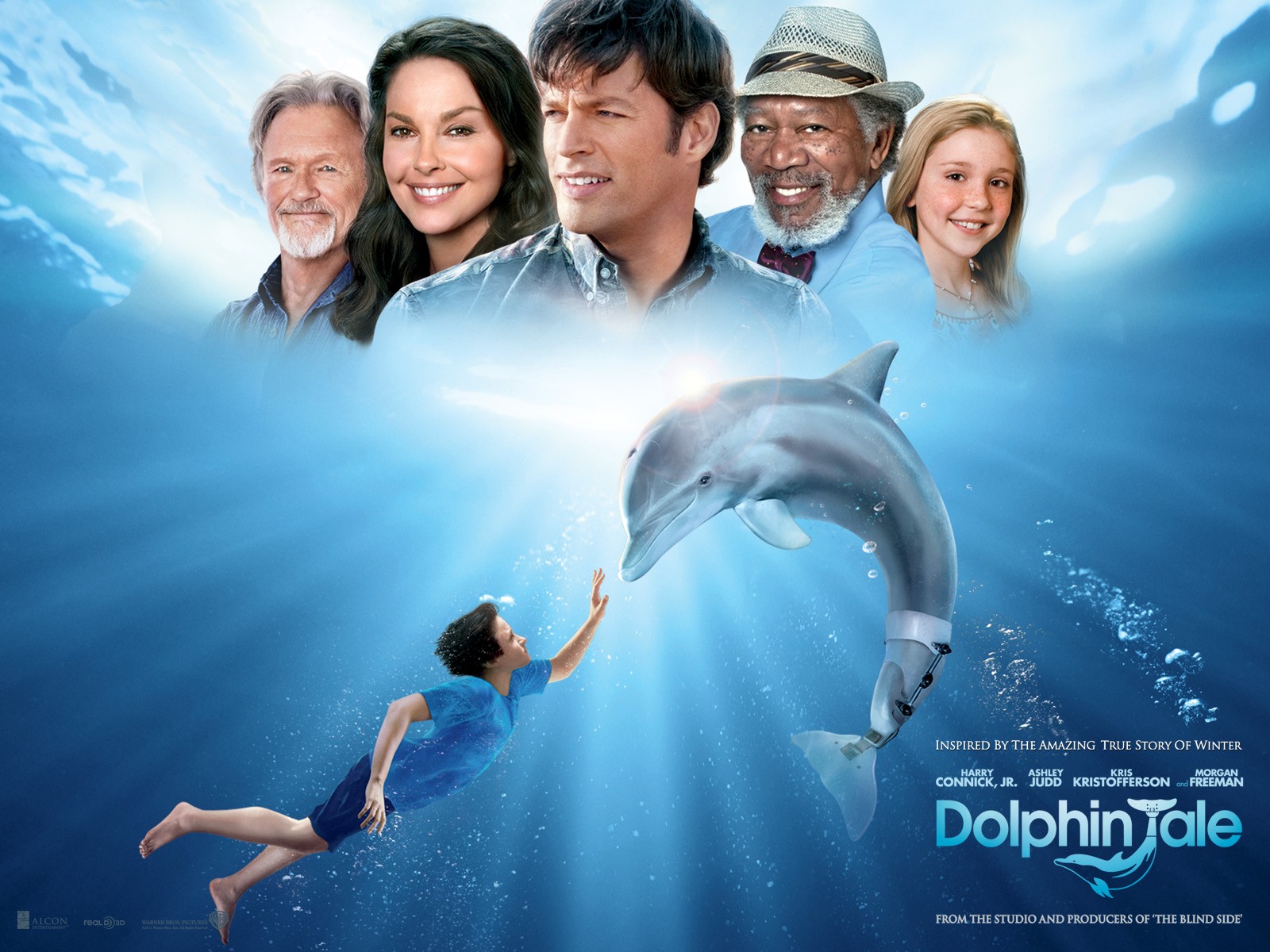
dolphin-tale

So, this is the storyline: A lonely and friendless boy, Sawyer, finds and untangles a hurt dolphin that is caught in a crab trap. He becomes very attached to the dolphin. Unfortunately, the dolphin’s must be taken off to save the dolphin’s life. Sawyer believes the dolphin would be able to swim normally if it was given a prosthetic tail.

The most touching scene for me was when the little girl, an amputee, in a wheel chair touched the glass as Winter swam by in it’s aquarium with a stump for a tail and she said: “Mum, she’s just like me!”

How true…and she’s just like a lot of other Americans!

I thought of the country as a I watched the movie. I thought of all the people who could use a helping hand, who could use a “Sawyer” in their lives.

You see, a nation’s worth is not really in how many millionaires it churns out annually. No!

It is about how it takes care of it’s “Winters”. Those caught in “crab traps”, unable to free themselves. Those who’ve lost limbs, the will to go on, the purpose. Those who cannot face this fight called life alone.

We are at a time when care for the poor and needy is seen as “spending that needs to be cut. Medicare, Medicaid, Social Security, Food Stamps…nothing is safe.

I am guilty of it like most in finding this the right thing to do to save the economy.

We see the single mother with five kids on drugs drawing welfare and we think all needy people don’t deserve our support.

We see that able-bodied man on welfare because of a phantom illness and our desire to help wanes.

Goodbye, Mr Steve Jobs

“We don’t get a chance to do that many things, and every one should be really excellent. Because this is our life. Life is brief, and then you die, you know? And we’ve all chosen to do this with our lives. So it better be damn good. It better be worth it.” – Steve Jobs

jobs


When I sit at my desk, I stare at an Apple Display, hooked to a 2008 Mac Pro.

The phone rings. I pull out the iphone…I have to make an appointment.

My son walks into my office listening to HipLife on his ipod touch…singing along.

I yell at him to be quiet. I hang up and go to iTunes to check out a cool new app and download “The Nutcracker Suite” for my daughter’s music class.

Then I create a home movie I made with iMovie and scan some negatives I developed.

The files are huge but with 16 Gb of RAM in my MacPro, it’s a breeze.

The kids want to watch a movie. I turn on the Apple TV…oh, peace and quiet.

I lie down, whip out my Ipad…have to catch up on the news – WSJ, NYT, Washington Post, Facebook – right there..

My medical literature – right there…

My pictures…right there…

The Vision, the Beauty, the Sleekness, the Style How much can one man achieve in 56 years?

What could have been?

Steve Jobs, we owe you a lot – not just for the devices, but for a life that teaches

That teaches that one should seize the moment and follow the call of the heart.

You will be missed!

Rest in Peace

In iHeaven!

Demand or Supply


The graph below was so unintelligible to me that  I fled Economics after the first class in high school. I never looked back.

Supply-and-Demand-Graph

Not until I read “Basic Economics” by Thomas Sowell. It made all the difference.

Anyway, I digress…

The demand of goods and services and their supply decide the price that is charged for by the providers and paid for by consumers.

In any economy, supply has to increase to keep pace with the high demand for goods and services.

For providers of such goods and services, this is a good thing – it hopefully means more revenue (as long as they are operating at a profit).

Increased supply means owners of companies that produce these goods and services have to increase output. This can be done by automating processes and/or hiring more workers.

So, increased demand can lead to more work for the population.

What can lead to an increase in demand? Affluence and population growth are two things that come to mind.

Which brings me to the question – can either supply or demand be influenced selectively to affect an an economy?

The “Supply-siders” want to make it easier for business to produce goods and services with lower taxes and less regulation. They hope that  these measures will spur businesses to expand production which can lead increased hiring. The increase in the number of working people will only increase the number of people with demands for goods and services.

The “Demand-siders” want to leave more cash in the hands of consumers to increase demand. The belief is that an increase in demand will force businesses to produce more. This will hopefully necessitate hiring more workers. The increase in the number of working people will only increase the number of people with demands for more goods and services.

Ronald Reagan is famous for believing in the “Supply-Siders”. He cut taxes which were in the 60-70% range and created a rather friendly business environment. Many credit the turn-around to those “supply-side” policies.

Many contend that the policies of this present administration are on the demand side. The Stimulus package, unemployment benefits, payroll tax-cuts – these are all geared to stimulate more spending i.e. increase demand. The theory is the increased demand will in turn stimulate the supply side and with that the jobs will come.

For some reason, the theory does not seem to be panning out. Was the stimulus too little? Do we need more on the demand side or do we now switch over to the supply side? Is it one or the other?

Remember, I am not an economist…just someone with a lot of questions and very few answers.

Going back to the demand versus supply question, two thing skew the attempts of the “Demand-Siders”. Sure an increased demand leads to increased supply.

The problem is that the supply of goods especially is coming from outside the US – most manufacturers have moved jobs offshore. So that boost in hiring is seen outside the US.

Then is the issue of increased and improved productivity due to technology. A few workers can do a lot more.

Can we manipulate the supply side to improve the employment picture?

Well, we could create conditions in the US that attract manufacturing jobs back. Good Luck with that. Foxconn is the Chinese company that manufactures Apple’s iPad. The monthly wage there is between $168 to $176!

Beside, most corporations are very profitable even in these tough times – American corporations are sitting on some trillions of cash!

So, the answer may not be either on the supply side or the demand side.

Maybe the answer is in the creation of a whole new industry. An industry with jobs that cannot go offshore. An industry whose product or service can really revolutionize our lives.

Dreams need Plans too

The start of any plan, product, movement or innovation is a dream.

Then comes the ability to express that dream in terms that is clear to everyone.

People either gravitate to the the ideas in that dream or they just walk away.

The tenacious ones don’t give up but hang on to that dream.

Sometimes the dream is bold, sometimes it’s realistic, other times one wonders what the dreamer is smoking.

More importantly, the ability of the dreamer to draw others into his world plays an enormous role.

He or she can be so eloquent that his hearers are more enthralled by his words than the substance of it.

Now let’s take a further step and say the dream catches on.

We are now at the point where we need to turn words into deeds.

It’s at this crossroad that the successful ones move on and a majority of dreams die.

Can you elaborate the distinct steps you need to get us from Dream to Reality?

Many are the times in life where words have earned people a chance without any proof of the ability to deliver.

Some have delivered – through learning on the job.

Others have failed.

It is great to give dreamers a chance.

Some opportunities though are too costly to chance on dreamers without a plan.

Tell them About The Dream, Martin

“Mother Dear, one day I’m going to turn this world upside down.”                                                   Christine King Farris

mlk

The date is August 28, 1963.

Venue: the Lincoln Memorial, Washington DC.

It is late in the afternoon and finally he steps up to speak:

“I am happy to join with you today in what will go down in history as the greatest demonstration for freedom in the history of our nation.”

For the next 12 minutes or so, he laments about the lot of colored people in America – injustices, police brutality, inequalities, segregation…In his words they (the people of color) had come “to cash this check, a check that will give us upon demand the riches of freedom and the security of justice.”

It must have sounded like a speech any civil rights leader in that era would give.

At least one person was hungry for more.

So it was that shortly after the statement:

“Let us not wallow in the valley of despair, I say to you today, my friends”,

someone yelled out:

“Tell ’em about the dream Martin, tell ’em about the dream!”

It was Mahalia Jackson. She needed uplifting words and so did the whole nation.

He must have heard for he obliged her.

His next line was:

“And so even though we face the difficulties of today and tomorrow, I still have a dream…”

He departed from a prepared speech in that instant…

He went to church. He made history. He winged. He brought hope to a nation.

Dare to dream!

It ain’t over till the fat lady sings

The last part Richard Wagner’s “Der Ring des Nibelungen” is titled “Götterdämmerung”. In it, the Valkyrie Brünnhilde, a rather voluptuous lady, sings her aria to end the opera.

Hence the saying “It ain’t over ‘til the fat lady sings”.

The German word “Götterdämmerung” is a translation of “Ragnarök” (old Norse), which in Scandinavian mythology refers to the destruction of the gods in a battle with evil, resulting in apocalypse!

For all Ghanaians, yesterday felt like the end of the world! It felt like we battled evil and lost.

Wait! I am getting ahead of myself. Let’s rewind to February 8, 2008. Superbowl XLII. The undefeated New England Patriots are playing the 12-pont underdog New York Giants. It’s the 4th quarter and the Patriots are up by 4 with 75 seconds to go. The Giants have the ball on their 40-yard line for a third-and-five. Eli Manning, the Giants quarterback, avoids a sack and floats the ball to Tyree who makes an improbable catch against his helmet for the first down. The Giants go on to win. An improbable upset! Just before the ball was snapped by the Giants on the third-and-five, the Patriots players (who already thought they had the game won) were talking smack to the Giants players on the field. They were so sure of their win they even invited the Giants to their after-game party! They had forgotten one important lesson in sports:

It ain’t over ‘til the fat lady sings!

Since Uruguay beat Ghana yesterday, the talk has only been about Suarez’s “hand of the devil”. Well, I contend that the Black Stars rather than Suarez committed a cardinal sport’s sin yesterday – they forgot that the fat lady had not sang yet!

The Black Stars are a young team. One thing youth brings is confidence and sense of invincibility. These traits can lead to a false sense of security.  Young teams are also impatient and have mental lapses. They forget to wait for the fat lady to sing.

Watching the stars play, one noticed a certain swagger and an attitude that projected the sentiment “We belong! Deal with it!” Maybe it was from winning the Under-20 tournament. Maybe it was because they were playing on the African continent or came so close to winning the African Cup.

Then was their inability to score. It was not so much as an inability as a lack of patience to develop the goal. They were trying to score from 100 miles out! It was almost like a guy who gets the chance to be with the woman of his dreams and comes even before he can get his boxers off!
 They needed to calm down.

Lastly were the mental lapses, which ultimately led to their demise.

After their first goal against Uruguay, they played as if they had already won the game. They should have been prepared for that Forlan free kick! Towards the end of the game, they recovered their game and pushed till finally Suarez had to punch the ball to prevent a goal against Uruguay. From that point till then end of the game, one saw what happens when you don’t wait for the fat lady.

When athletes, who thought they had the game won, realize they haven’t, there is often not enough time to recover mentally. At that point, the game is lost. That is what happened to the Stars. When Suarez was red-carded and the Stars awarded a penalty, they assumed they had already won the game! But the fat lady hadn’t sung yet!

Gyan’s kick was taken in haste. It was almost like “Let me get this over so we can party!” Well guess what? It hit the bar and an unlikely opportunity had been squandered.

Anyone who watches enough competitive sports could predict what was going to happen during the penalty shoot-out.  As young a team as the Stars were, they didn’t have the mettle and time to recover mentally.

The Uruguayans on the other hand battled till the very end. They made no assumptions and prevailed. I totally hate Suarez too, but harbor a certain admiration for the risk he took. After all it paid off.  We may curse Suarez all we want. We may criticize FIFA for not instituting goal-tending all we want. At the end of the day, the Uruguayans played to win and the Stars didn’t.

As we Ghanaians lick our wounds, lament our loss and curse Suarez, let us also appreciate what the Stars did. They brought much honor to their name and to Ghana.  Let us also hope that individually the players learnt a lesson from this debacle. Let us hope that in 2014, we have a team which will wait till the fat lady sings.