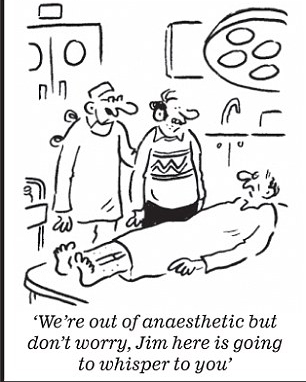
Barbados, A Good Example

I am in love with the island of Barbados.
Forget the beaches, forget the weather, forget the food.
I love the people. That Blacks are running a country they call their own and doing the most with the little they have.
Look around the World and Blacks are not know for good governance – period.
On this little island, they are perfect but they are trying their best.
I observed something today that really impressed me.
My home country of Ghana could learn a thing or two from this island.
I was so struck by the experience that I sent this mail to my friend Ace Anan Ankomah in Ghana.
Ace is an attorney, activist, governance Guru and part of the group that founded OccupyGhana.
That he loves Ghana is an understatement.
Below is the mail I sent him:

We first visited the island a year ago and liked it so much we came back again this year.
Background – I researched the English-speaking islands in the Carribean and liked what I read about Barbados.
Just like last year, we didn’t stay at a high-end resort. We found a home along the beach and rented it so we live among locals.
So much reminds one of Ghana (it’s not even funny!). I think one reason is that Barbados was an English colony too.
The people are friendly, carry themselves with dignity and take very good care of the little they have.
They eat well (McDonalds folded after a year here), stay active and take things easy.
The last point is rather typical of the West Indies.
With it’s proximity to the US, it is becoming a surrogate for Ghana.
Decades ago, they realized that tourism was the bane of their existence and so they all pitch in to make it work. The island does not have a tenth of the resources we (in Ghana) have, it is also much less populated but the way they run stuff could serve as a blueprint for how Accra is run.
We rented a home near the beach and the road that runs in front of it, though narrow and curvy, is also quite busy. Yesterday, a driver going rather fast in his Toyota, missed one of those curves and careened into 2 utility poles, hit a water meter and finally came to rest against my neighbour’s wall. There was water, wires and debris all over. This happend around 12:30 pm. By 4:30 pm, the car was gone, the 2 poles were back up and water supply restored! The street was totally clean! 4 hrs!
I watched as cops showed up, redirected traffic allowing the utility people to come and fix it all! No Kwasi Broni! All as dark as me and you. Getting it done and with equipment that doesn’t look anywhere as nice as I see in the States.
Ace, it is possible! Maybe not in our lifetime but someday, we’ll get there.

Nanadadzie

A Touch of Humanity

I try to see each patient before they come back for surgery. It is not easy in the kind of fast-paced medical practice of today.
Each time I walk to a patient, the reception is different.
Some patients are friendly, others indifferent and resigned.
Every now and then, some think I am an orderly coming to roll them back for surgery. Can you blame them? – after all I’m black and speak with a funny accent.
Then is the occasional “Have you even finished Medical School yet?” Well, I cannot help my boyish, good looks. Hey, don’t hate!
Then are the really difficult patients who come in with their own treatment plan and expect every doctor and nurse to follow this treatment plan they pulled off the internet.
“I don’t want the IV till I am asleep!”
“I am leaving my dentures in!”
Then are those who won’t stop talking. God help you if you are pressed for time and you get a garrulous one.
“So, have you had any problems during an anesthetic?”
“Doc, You wouldn’t believe what happened in 1963, just after I came back from the war. Have you heard of Vietnam. Kate, how old was Emily then?”
My favorite ones are those with a sense of humor, the older patients with very interesting lives and the old ladies who think I’m cute as a button. Again – don’t hate!
I love to ask the older couples how long they’ve been married. Some of the answers are impressive. The record so far is 69 years. Is amazing how these old couples dote on each. So so heart warming.

Scared
Then are the frankly scared-out-of their-minds patients. The interesting bit is how each of them expresses their fear – flat affect, weepy, hostile, demanding, talkative, direct, unfriendly. Whatever the form of expression of this fear, you cannot but see it in their eyes. It has that get-me-out of-here look. it is really easy to chalk it to the patient being a horrible person. In my case, I could always pull out the race card. However, I think it’s in those instances that one should stop being a doctor and be a fellow human being. It is in those moments that one should lose the impersonal tone and warm up to the patient. Break the ice.
I am rather direct and go “You look worried. What is bothering you?” or “You look totally scared. Want to ran away?” The reactions are interesting. I always get a torrent – of tears or words. The men are tougher to crack. You know us. We need to be tough and all.
Once the torrent starts, I just listen or wait with a box of tissues ready till they finish crying and then listen.
Listen to their fears. Listen. As you do, don’t be disdainful, even if their fears sound silly to you. Call up all the empathy you have. When they are done, try to explain in lay terms why each fear is realistic or not and if realistic, what the surgical and anesthesia teams do to prevent any such misfortune(s) from happening. The little expression of humanity is way better than any anxiolytic you can order for the patient, believe me.
A surgical procedure is very scary for most patients. It is a time in one’s life where one is totally at the mercy of other people (air travel offers s similar situation). These am-at-their-mercy people are supposed to be experts but how good are they really? Are they rested enough? How many of these procedures have they done? A patient is supposed to have asked all these questions at the surgeon’s office but for some, their fears were not allayed enough. There is that element of chance. What if something goes wrong?
Then there are those facing terminal illness or the possibility of a terminal diagnosis.
Is it a surprise that some patients are scared out of their wits?
We are doctors, highly trained in the art of healing. That is our job. We are pressed for time. We have to leave emotion out of it. Beyond all that we are also humans. So are the patients. Sometimes, these patients want to see that human. Show it to them.

A Touch of Humanity

I try to see each patient before they come back for surgery. It is not easy in the kind of fast-paced medical practice of today.
Each time I walk to a patient, the reception is different.
Some patients are friendly, others indifferent and resigned.
Every now and then, some think I am an orderly coming to roll them back for surgery. Can you blame them? – after all I’m black and speak with a funny accent.
Then is the occasional “Have you even finished Medical School yet?” Well, I cannot help my boyish, good looks. Hey, don’t hate!
Then are the really difficult patients who come in with their own treatment plan and expect every doctor and nurse to follow this treatment plan they pulled off the internet.
“I don’t want the IV till I am asleep!”
“I am leaving my dentures in!”
Then are those who won’t stop talking. God help you if you are pressed for time and you get a garrulous one.
“So, have you had any problems during an anesthetic?”
“Doc, You wouldn’t believe what happened in 1963, just after I came back from the war. Have you heard of Vietnam. Kate, how old was Emily then?”
My favorite ones are those with a sense of humor, the older patients with very interesting lives and the old ladies who think I’m cute as a button. Again – don’t hate!
I love to ask the older couples how long they’ve been married. Some of the answers are impressive. The record so far is 69 years. Is amazing how these old couples dote on each. So so heart warming.

Scared
Then are the frankly scared-out-of their-minds patients. The interesting bit is how each of them expresses their fear – flat affect, weepy, hostile, demanding, talkative, direct, unfriendly. Whatever the form of expression of this fear, you cannot but see it in their eyes. It has that get-me-out of-here look. it is really easy to chalk it to the patient being a horrible person. In my case, I could always pull out the race card. However, I think it’s in those instances that one should stop being a doctor and be a fellow human being. It is in those moments that one should lose the impersonal tone and warm up to the patient. Break the ice.
I am rather direct and go “You look worried. What is bothering you?” or “You look totally scared. Want to ran away?” The reactions are interesting. I always get a torrent – of tears or words. The men are tougher to crack. You know us. We need to be tough and all.
Once the torrent starts, I just listen or wait with a box of tissues ready till they finish crying and then listen.
Listen to their fears. Listen. As you do, don’t be disdainful, even if their fears sound silly to you. Call up all the empathy you have. When they are done, try to explain in lay terms why each fear is realistic or not and if realistic, what the surgical and anesthesia teams do to prevent any such misfortune(s) from happening. The little expression of humanity is way better than any anxiolytic you can order for the patient, believe me.
A surgical procedure is very scary for most patients. It is a time in one’s life where one is totally at the mercy of other people (air travel offers s similar situation). These am-at-their-mercy people are supposed to be experts but how good are they really? Are they rested enough? How many of these procedures have they done? A patient is supposed to have asked all these questions at the surgeon’s office but for some, their fears were not allayed enough. There is that element of chance. What if something goes wrong?
Then there are those facing terminal illness or the possibility of a terminal diagnosis.
Is it a surprise that some patients are scared out of their wits?
We are doctors, highly trained in the art of healing. That is our job. We are pressed for time. We have to leave emotion out of it. Beyond all that we are also humans. So are the patients. Sometimes, these patients want to see that human. Show it to them.

A Virtual World

A few weeks ago, two of my friends lamented about the fact that their kids seem to spend all their time playing video games and on Instagram and Facebook. They remembered how we grew up – spending time with friends, discovering the world around us and getting into trouble.

It made me think of the world that has been created by the internet. Yes, a world. A Virtual World. Very different from the brick-and-mortar world in which we live. It is in this Virtual Wolrd that a lot of teenagers and young adults live and spend their time. It may sound exciting, full of new and challenging possibilities but it is still virtual.

A lot of people have gotten extremely wealthy building this world. It has greatly enhanced our lives to a degree but it carries with it it’s own risks and perils too. I don’t want to dwell on the security risks inherent and which have been made apparent lately by the myriad data breaches. Rather, I want to touch on the issue of the psyche of a teenager or young adult who’s spends most of his time in this virtual world.

Back in the day, when there was no internet, children went OUT to play with other children. You talked to other children face-to-face. Friendships were created that could last a lifetime. You observed the environment you lived in. You saw how people spoke, carried themselves and dealt with challenges. If there was a fight on the playground, you saw the real violent interaction. No one could really make false claims because they had to back it up. You grew up in reality and you learnt to deal with it. That ultimately prepared you for the real world out there, which can be rather unforgiving.

Fast forward to today. Children, teenagers and some young adults have retreated to a world where one “friends” people they have never ever met. All they have to go by is profile they cannot verify and a picture that might not even of the real person. They hear claims that may be unfounded and are forced to compare themselves to people and situations that could be trumped up and non-existent. Chou and Edge published a study 2012 that looked at this issue. At Utah Valley State, they looked at about 425 frequent users of Facebook. Below is a quote from the study:                                                                                                                                         “The multivariate analysis indicated that those who have used Facebook longer agreed more that others were happier, and agreed less that life is fair, and those spending more time on Facebook each week agreed more that others were happier and had better lives. Furthermore, those that included more people whom they did not personally know as their Facebook “friends” agreed more that others had better lives.”                                                                                       In other words, one is measuring the quality of their lives against claims made by people they’ve never seen or met or even spoken to. They are accepting the virtual as reality!

These hours are not only spent on social network sites but also playing video games which have been linked to violence. Craig Anderson has some fact on that here.

Then is the little issue of lack of movement and it’s links to obesity, a condition that has reached epidemic proportions in the US.

Which begs the questions – are these kids, teenagers and young adults going to be ready for the real world? Maybe. Maybe not. Maybe they are going to convert the real world into a likeness of the virtual one. Then, I guess all those hours would have paid off. For my part though, I don’t want someone to just “like” me in a virtual world. I prefer my “likes” to be real and come with hugs, a listening ear and the occasional shoulder.

References:

1. Chou HT, Edge N. “They are happier and having better lives than I am”: the impact of using Facebook on perceptions of others’ lives. Cyberpsychol Behav Soc Netw Feb 2102

2. Craig Anderson. Violent Video Games: Myths, Facts, and Unanswered Questions. www.apa.org/science/about/psa/2003/10/anderson.aspx

A Virtual World

A few weeks ago, two of my friends lamented about the fact that their kids seem to spend all their time playing video games and on Instagram and Facebook. They remembered how we grew up – spending time with friends, discovering the world around us and getting into trouble.

It made me think of the world that has been created by the internet. Yes, a world. A Virtual World. Very different from the brick-and-mortar world in which we live. It is in this Virtual Wolrd that a lot of teenagers and young adults live and spend their time. It may sound exciting, full of new and challenging possibilities but it is still virtual.

A lot of people have gotten extremely wealthy building this world. It has greatly enhanced our lives to a degree but it carries with it it’s own risks and perils too. I don’t want to dwell on the security risks inherent and which have been made apparent lately by the myriad data breaches. Rather, I want to touch on the issue of the psyche of a teenager or young adult who’s spends most of his time in this virtual world.

Back in the day, when there was no internet, children went OUT to play with other children. You talked to other children face-to-face. Friendships were created that could last a lifetime. You observed the environment you lived in. You saw how people spoke, carried themselves and dealt with challenges. If there was a fight on the playground, you saw the real violent interaction. No one could really make false claims because they had to back it up. You grew up in reality and you learnt to deal with it. That ultimately prepared you for the real world out there, which can be rather unforgiving.

Fast forward to today. Children, teenagers and some young adults have retreated to a world where one “friends” people they have never ever met. All they have to go by is profile they cannot verify and a picture that might not even of the real person. They hear claims that may be unfounded and are forced to compare themselves to people and situations that could be trumped up and non-existent. Chou and Edge published a study 2012 that looked at this issue. At Utah Valley State, they looked at about 425 frequent users of Facebook. Below is a quote from the study:                                                                                                                                         “The multivariate analysis indicated that those who have used Facebook longer agreed more that others were happier, and agreed less that life is fair, and those spending more time on Facebook each week agreed more that others were happier and had better lives. Furthermore, those that included more people whom they did not personally know as their Facebook “friends” agreed more that others had better lives.”                                                                                       In other words, one is measuring the quality of their lives against claims made by people they’ve never seen or met or even spoken to. They are accepting the virtual as reality!

These hours are not only spent on social network sites but also playing video games which have been linked to violence. Craig Anderson has some fact on that here.

Then is the little issue of lack of movement and it’s links to obesity, a condition that has reached epidemic proportions in the US.

Which begs the questions – are these kids, teenagers and young adults going to be ready for the real world? Maybe. Maybe not. Maybe they are going to convert the real world into a likeness of the virtual one. Then, I guess all those hours would have paid off. For my part though, I don’t want someone to just “like” me in a virtual world. I prefer my “likes” to be real and come with hugs, a listening ear and the occasional shoulder.

References:

1. Chou HT, Edge N. “They are happier and having better lives than I am”: the impact of using Facebook on perceptions of others’ lives. Cyberpsychol Behav Soc Netw Feb 2102

2. Craig Anderson. Violent Video Games: Myths, Facts, and Unanswered Questions. www.apa.org/science/about/psa/2003/10/anderson.aspx
Role of Disease in Sub-Saharan Africa (SSA) – Another Take

SSA seems to be the crucible of disease. Most of our modern day epidemics seem to emanate form this area – HIV, Ebola – to mention just two that have had significant mortality.
Disease in SSA is however nothing new. The region has always had numerous infectious and vector-borne diseases.
I seek to argue that the prevalence of disease in SSA might actually have saved the lives of most people in the region.
Now how can I say that when I consider the levels of, say, infant mortality? Or even the loss of life from the Trans-Atlantic Slave Trade?
Lets go back several hundred years to about 1490. This is the period when Columbus landed in what is now Central America. He was wowed by what he saw. He returned to Spain resolved to come back to the Americas. This time around however, he was coming back with a rather sinister plan. He was going to kill off the indigenous population and claim the land for Crown and Church. This was sanctioned by both the Church and the Queen. After all those native Americans were nothing but heathens.
The plan went without a glitch and the Spanish and Portuguese took over most of Central and South America and in the process literally exterminated millions of Native Americans.
A similar process took place in North America with the English being the primary perpetrators. At the end stood the indomitable USA among the ashes of millions of Native Americans.

Now, SSA was been “found” around this same time period. It ultimately became a the source of manual labor for the cotton and sugar cane plantations in the so-called New World.
So why didn’t the Europeans exterminate most Africans like they did in the Americas and take over the land?
One argument is that once black Africans were seen as an optimal manual labor force, the wish was not to exterminate them bit to transfer as many of them as possible to the Americas. The transfer process itself was close to being an extermination but the numbers were so great that they got enough people over to the the cotton and sugarcane fields of the Americas.
The other argument, which I tend to favor, is the role of disease and specifically malaria. Malaria, a disease to which most indigenous Africans develop some form of immunity to over time, is devastating for anyone contracting it for the first time. It killed quite a number of European settlers. This dampened any desire for an exploration of the continent. A total extermination of the people of SSA was therefore indirectly prevented. Now the loss of African lives in the form of the slave trade still went on.
However most of these lives were transplanted into live misery to the other side of the Atlantic.
A glimpse of what could have been is seen in South African, a region with a climate and disease profile much kinder to the Europeans settlers.
A true exploration of the continent started in the mid-1800s and this was shortly after quinine was discovered to be a cure for malaria.
And then you saw the true face of European colonization.

For Native Americans and Africans from the sub-saharan region, the discovery of their respective continents by the European explorers of the 15th century has spelled nothing but misery. For most, the misery still continues.
Unlike the Native Americans, most Africans still have control of their lands, even if they are still massively exploited by richer nations and their own corrupt leaders.
Even as disease continues to be a major factor in the lives of most people in SSA, let’s not forget that malaria might have been the one thing that saved us from Columbus-like extermination.

References

1. American Holocaust – the Conquest of the New World – Stannard 1993

2. Encyclopedia of Africa – Appiah & Gates 2010

3. http://www.cdc.gov/malaria/about/history/

No Soup

From the collection of thoughts around the premise that a leader without a vision is like fufu without soup.

And when the people realized that they were eating their fufu with no soup, he scrambled to give them anything that looked like soup.
“But that us Milo”, they yelled.
“Ew, that tastes like bitters!”
“Is that Fanta?”
His eyes darted back and forth.
“God”, he prayed, “what is this soup they speak of?”
There was silence. It was filled with incredulity. The people were aghast.
He didn’t not only have soup. He didn’t even know what it was. Why was he serving fufu then?

A Life Well Led

“A great man is different from an eminent one in that he is ready to be the servant of the society.” – B.R. Ambedkar

mandela

Madiba, goodbye! You go to a well-deserved rest. Rest In Peace

Madiba, you didn’t have to but you did. 27 years! 27 years of a man’s life. Spent confined within  four narrow walls to stand for what one believed in. 27 years!

Many years ago, I heard my dad play this very haunting a cappella song. It made me cry. He told me it was from South Africa. I asked him why the song was so sad. Then he told me about you. He told me about Steve Biko. He told me about apartheid. I was 10. I never forgot. How could I? How could anyone with a heart?

When you were arrested in 1962, you were 44 years old. In your prime. Two years later you started a journey that was to have a great impact on you, your family, your beloved country and the whole world down the line. Back then, you may have hoped but how long can a man hope? How long can a man believe in what is not seen and seems so hopeless? But you did.

What is amazing is that even though it seems like your life was taken from you, in the process, you lived it better than most. You did, because your life had an impact on so many. And at the end of the day, isn’t that what matters most? You sacrificed so much for your fellow man.

Being ready to die for what one believes in and hope are not the only lessons you leave behind.  You also epitomized forgiveness. In spite of all the decades of apartheid, you rose above the fray and reconciled. What strength and fortitude that must have taken. Were you ever bitter? Madiba, were you ever mad?

A friend once was in crowd that met you in Berlin and described an aura that you emanated. I believed her because one didn’t have to be in a crowd around you to feel that aura. It sprang from you words, your stature, your eyes, your life. It sprang from a life well led.

Madiba, the World will miss you but you have done enough.

Thank you and Good Bye!


Senselessly Senseless

A Tribute to all the victims of the Sandy Hook Elementary School massacre on December 14, 2012 in Newtown, CT.

nf-sandy-hook-victims-1217

Who kills children? 20 children? At school?
Senseless!
On the afternoon of the Sandy Hook massacre, I drove to go pick up my kids from school. Tears fell down my face as I drove. I imagined having my kids in Sandy Hook and not knowing…
Senseless!
When I finally drove up and saw their smiling and impish faces, more tears welled up. I had to hide them.
I hugged them when we got home. Really tight. It didn’t matter what trouble my son had caused that day, I hugged him extra long and covered my daughter’s faces with kisses. I had them back. Up in Newtown, CT, some parents were not so lucky.
Senseless!
The teachers who rushed to protect their wards. The principal. Families broken, forever.
Senseless!
As a physician, I know minds can be sick. Mental illness is a a scourge that seems to lurk, poking it’s ugly head out in ways that can be rather heartbreaking. Great strides have been made in treating them but first, they have to be diagnosed. The patients and their families have to be willing and compliant. There must be an awareness. However, when the mentally ill have easy access to guns, because of a permissive culture, isn’t that senseless?
Senselessly Senseless?
My heart breaks for all this families starring at Christmas trees that cry to be decorated and yearn for voices that shriek with delight as presents are unwrapped.
My heart breaks for mothers who aren’t home anymore, husbands sleeping alone, daughters who won’t hug one more time.
That didn’t need to happen, but life being what it is allows the good, the bad and the ugly.
It allows the senseless!
And for that, there usually aren’t any answers.
May their souls find eternal rest.

Facebook versus Google – an Analogy

You must be living under a rock if you haven’t heard that Facebook went public last Friday. That is all most media outlets have been reporting for the last week.

Like most retail investors, I thought about getting some Facebook shares but that is all I did – think of it.

It opened at $38 a share. On the surface, that does not look like much but then consider how the share price of a company is reached. The price reflects how much an investor is willing to pay for the share based on the company’s earnings. Take Apple as an example. If Apple distributed all it’s earnings to all it’s shareholders from the last 4 quarters, each shareholder would get approximately $34 per share. Based on this number, investors decide how much they want to pay for Apple’s shares. Someone will say, I want to pay 5 times it’s earnings because I believe the company is growing. Another would say 10x and yet another 15x. This known as the Price-to-Earnings (P/E) ratio. In reality, Apple trades at about 15x earnings giving it a share price in the $500 range. Google also made about $33/share and trades at a PE ratio of about 16. In the world of investing, a P/E ratio of 15 is seen as cheap, making a company like Apple or Google worth a look.

Now let’s look at Facebook. It’s earnings per share for the last 4 quarters came to about $0.43 a share. At a price of $38, you are giving Facebook a P/E of about 89! Are you prepared to buy Facebook for 89x how it is earnings? Do you believe in the growth of the company that much?

This made me think of Google, a company seen as a direct competitor of Facebook. No one can deny that Google is making money hand over fist. They developed a good concept to make money out of search and it’s working great. Can Facebook do the same?

Which brings me to my story:

Somewhere in Middle America is a city called Net City. Net City is a booming metropolis with jobs, lots of good schools, great restaurants and growing industries. What it lacked 10 years ago was a way to find where anything or anybody was. The libraries were antiquated and the information centers badly staffed. Two young men, Larry and Sarge, decided to open a library/information/search center in Net City. They called it “Findle”. Soon, Findle was where everyone went to find stuff. All the out-ot-towners stopped there first. It was booming. They had devised a way to charge users of Findle for using the services. Since there was nowhere else to go for information, they held a virtual monopoly. Since most of the businesses realized customers could find them through Findle, they bought advertisement space at Findle. Life was good for Larry and Sarge.

Time went by. Net City grew some more. A young man called Mark opened a club where friends could meet, chat, shoot the breeze, gossip, whatever. He called it “The Hook”. It was unlike anything anyone had opened in Net City. The best thing was that it was free to become a member. Soon, everyone in Net City was a member of the Hook. For all it’s popularity and number of members, unlike Findle, it basically made very little money. As the operations grew, Mark got a smart lady called Cheryl to run the show. She convinced a few businesses to start advertising at the Hook. The problem is, most of the members went there to unwind and had very little interest in the commercials. And when they needed to find something, they went to Findle. If they needed to connect with someone, they went to the Hook.

In the mean time, Larry and Sarge opened a club of their own and called it Findle Plus. They wanted Findle to be not only a place you found things but also a place you could connect with others. It looked like they were going to put the Hook out of business but Mark and Cheryl hung on. The membership increased even more. However Mark and Cheryl realized that unless they could find a way to make money off all those members, the business was not going to grow like Findle. They wondered if they could advertise as aggressively to the Hook members as Findle did to it’s users. They wondered if they shouldn’t charge for membership. they wondered if making any dramatic changes would drive members away.

So how does the story end?

Unless Facebook finds a way to monetize the net experience of it’s 900 million users, I don’t see how the company merits the valuation it has.  Can it do that? I have no clue but then who thought social networking will be such a tour de force these days. Growing the company to 900 million members is no small feat. Monetizing their web experience might be an even bigger feat. If you bet on team Zuckerberg and Sandberg to do it, then $38 is a small price to pay.