The World needs a Conscience

“There comes a time when one must take a position that is neither safe, nor politic, nor popular, but he must take it because conscience tells him it is right.”
– Martin Luther King

I was raised a Catholic but the years have seen me become a not so devout one.I have my reasons. My attention was piqued when the former Cardinal Jorge Bergoglio of Buenos Aires, Argentina was elected as the 266th Pope of the Catholic Church in 2013. First of all, he is a Jesuit. You see, Jesuits are just not supposed to be office holders in the Church. They are the intellectuals, the men who evangelize, take care of the poor and the needy. The men who run schools and colleges. Then he choose the name Francis, after St Francis of Assisi, the Patron Saint of the Poor. I was intrigued. I wondered if this Pope would be different.

O, how different he is!

Pope Francis salutes the crowd during his weekly general audience in St. Peter's square at the Vatican on May 22, 2013. AFP PHOTO / FILIPPO MONTEFORTE (Photo credit should read FILIPPO MONTEFORTE/AFP/Getty Images)

From his humility, his love and care for the poor and needy, the sick and hungry, his openness, his willingness to reach out and dialogue, his inclusive attitude and outreach to those the Church had long forgotten, he has reignited my interest in what the Church is supposed to stand for. And with that, I guess I am not alone. The whole world has taken notice.

Through his actions, he also has won himself a certain moral authority. And with that moral authority, he can speak about issues that pertain to social justice and even the environment. He has won himself the right to be the World’s Conscience, because the World always needs a conscience.

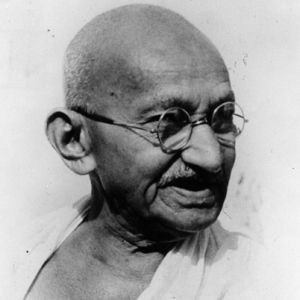
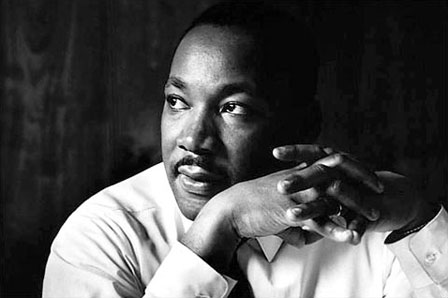
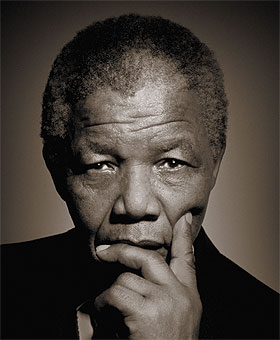
In the last few decades, we have had men like Mahatma Gandhi, Martin Luther King and Nelson Mandela. These men, in fighting inequality and oppression, used peaceful means and with that won the admiration of the World. (It must be said that Mandela started off as militant).

GandhiGandhiMLK-02

Martin Luther King

Nelson-Mandela-Photo

Nelson Mandela

Their strength of resolve and dreams of better lives for all as well as the overarching wish to achieve all through peaceful means awarded them moral authority and with that the ability to be a conscience for their respective countries and the World at large. Since Mandela died, there has been a vacuum and I think Pope Francis fills this vacuum really well. His position as a Man of God lends a hand. More importantly though are his actions – that of a powerful but humble man who cares about the poor and has this wish to achieve peace and understanding in our tumultuous times.

And the world need a conscience. The world needs men and women whose very lives are an example to all. The world needs men and women who have not been corrupted by this world and can speak the truth that needs to be heard.The world needs men and women whose words and deeds are like a moral compass. Political leaders are compromised because politics by it’s very nature demands a give-and-take that can lead to concessions that infringe on one’s beliefs. Moral Authorities do not have that problem. Not unless they decide to wade into the world of politics. However, Gandhi, King and Mandela were all politically active but managed to keep the air of authority the world needs.
The World needs a conscience because of income inequality; because about 795 million people do not have enough to eat; because millions have been displaced by war and strife; because the planet is tethering on a climatic disaster; because preventable diseases still kill children in underdeveloped countries; because things are falling apart.

So even as he speaks, I hope the World listens and recognizes him for what he has become – the Conscience the World sorely needs.

Old Car City

They call it Old Car City. It’s in White, Georgia.
In Georgia, where the shimmering heat makes the mosquito glow.
They call it Old Car City, but it is not only the cars that are old.

OldCars001a

The memories are too.
Over 34 acres, vegetation lives in symbiosis with metal, a slow dance that blurs the ends.

OldCars110

4500 hundred cars in various stages of industrial decay mix with trees and shrubs, that wonder what these foreigners want.
And they won’t leave either.

OldCars255

Whatever hope the greenery had of total domination was forgotten long ago. Then through the chlorophyll shines a hint of rust-brown at every step.
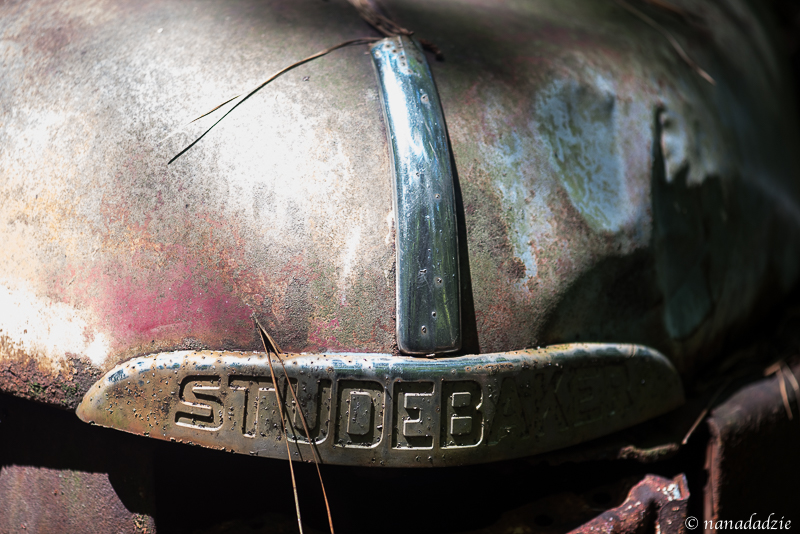
Oldsmobiles, Ford Model Ts, a Studebaker, with the “-aker” gone leaving just a “Studeb”.

OldCars372

Plymouths, a Hudson – wheels from times gone by.
I thought of the families who filled those seats.
The hoodlum who made a getaway.
The young lovers fogging windows on a hot night.
The dreams, worries, aspirations, and hopes – rusting away in the summer heat in Georgia.

OldCars222

Walking through, on these miles of trails, it’s almost poetic.
Death and life all at once. History in the present.
Even as the new makes it’s way up, it has to reckon with what was. A constant reminder.
Most time, the old gives way. It buckles.
Not this time.

OldCars118

It’s hanging on, giving us glimpses of what the present always makes us leave behind.
Yeah,…in Old Car City.

Who will watch Anas?

Anas Aremeyaw Anas is a Ghanaian investigative journalist and attorney who’s work has garnered him a lot of praise and acclaim. Recently, his investigative work ,has exposed massive corruption in the Ghanaian Judicial system. His modus operandi is however what worries me.
His way of doing business brings to mind a very powerful man from another country and another era – J. Edgar Hoover.

IMG_1487

J Edgar Hover ran the FBI for 48 years – from 1924 till he died in 1972. He built the Bureau into a world-class law enforcement organization.
In his formative years, before he ascended to the leadership of the FBI, he had come to believe that communists were trying to subvert the US. In the ‘30s, he was instrumental in the Red Raids where about 6000 people, mostly foreigners, were arrested on suspicion of being Communists. The majority were later released. The experience made him decide to conduct such investigations secretly and thus began his collection of information on anyone or any organization he found or thought was subversive. Soon, this ballooned into the collection of information on most public and influential figures. He kept secret files on more than 20000 people! Using the information in these files, he was able to control presidents, senators and the very influential.
One of his targets was the Civil Rights movement and Martin Luther King (MLK). He bugged MLK bedroom, hotel rooms and offices. Among other things, he found out about MLK’s infidelity. He tried to use the tapes to discredit him and knock him down as a moral authority. He sent the tapes to friends and colleagues of MLK. He sent one with a poison pen letter to MLK’s home where his wife opened it. The letter read:
“King, look into your heart,” the letter read. The American people soon would “know you for what you are—an evil, abnormal beast…There is only one way out for you. You better take it before your filthy, abnormal fraudulent self is bared to the nation.”
He was trying to get MLK to commit suicide.

He found out JFK was having an affair with a divorcee who was also having affair with a mob boss in Chicago. He had a file on Robert Kennedy. He even had the band the Kingsmen investigated for their song “Louie Louie”, because he thought the lyrics were obscene. Recently, those files have been made public and the information in them is astonishing. No wonder he survived 8 presidents!

This was a man who used his office to amass embarrassing information about this fellow countrymen and used this information to control them.

So again if Anas may be watching you, who is watching Anas?

I am not saying Anas is going to be a Hoover but the opportunity is there. What stops him from amassing information on all public figures? What stops him from using this information, if embarrassing enough, to blackmail or even control these men and women? If these figures are in government, what stops him from influencing policy? What stops those who work with and for him to do the same? Who controls what Anas ultimately sees as right and wrong? How do we know if his moral compass changes? At the moment, he is amassing power and influence. How do we know if that won’t corrupt him? And if it does, WHO IS WATCHING ANAS?

Remember what the British historian, Lord Acton once said “Power corrupts and absolute power corrupts absolutely.”

There are many things wrong with Ghana. Corruption ranks up there. A corrupt Judiciary is rather demoralizing for a country and makes a mockery of the Rule of Law. In our bid to rid our dear nation of this cancer, let us be careful what we sacrifice. The willingness to accept the taping of private conversation without the consent of those involved is a very slippery slope that the nation does not want to get on. It is a civil liberty that should be near and dear to everyone’s heart. Imagine a country where what you say and do in private is not scared anymore. Anyone can record it and make it public, without your consent. Imagine a government that is able to do that to it’s people. After all, Anas does it and it’s fine. Do we want a 1984?

To end, I’ll leave you with a quote form Nietzche:
“Whoever fights monsters should see to it that in the process he does not become a monster. And if you gaze long enough into an abyss, the abyss will gaze back into you.”

My Personality in Pictures

For those of us who like photography, it becomes evident with time that a common theme runs through one’s work. This theme may say a lot about the photographer. It could hint at a purpose that is being worked out. It could even be a message one wants to share with the world. It may be as simple as a sign of admiration for the subject matter.
For instance, I like doing figure work because I admire the human body.
Beside that, I find myself often capturing the mundane around the house or even on a walk. A doorknob, bristles of a brush, a faucet. Sometimes the lens and light work together to produce something beautiful.

Faucet

I was in the bathroom when this faucet caught my eye. It was almost lonely in it’s silvery glow, smoothness and curves.

Bristles

The disorganization in the bristles reminded me of the chaos of life. Each going his or her own way but still bound together by something greater that propels us toward s a common destiny.

Bars

The bars were reminiscent of order. Even those that were out of focus were in order. Can order in one’s life be so strong as to be subconscious?

I don’t know what I am trying to say when I capture the really mundane? Could it be that I’m trying to find a meaning in every instance of life. Or maybe I need to get a life?

Mimento Mori

In old Rome, when victorious generals returned from battle, they had parades held in their honor. Even as a general rode in these processions, at a time when most would feel a great sense of achievement and maybe even some hubris, the Romans had a way to keep these generals grounded. In the chariot with a victorious general was a slave. His job was to continuously whisper the words “Mimento Mori” to the general. This Latin phrase means, “Remember you must die”. This reminded the general that in spite of his recent victories, death was always just another battle away. It was reminder of their mortality and forced them to consider humility.

RestingPlaces-01

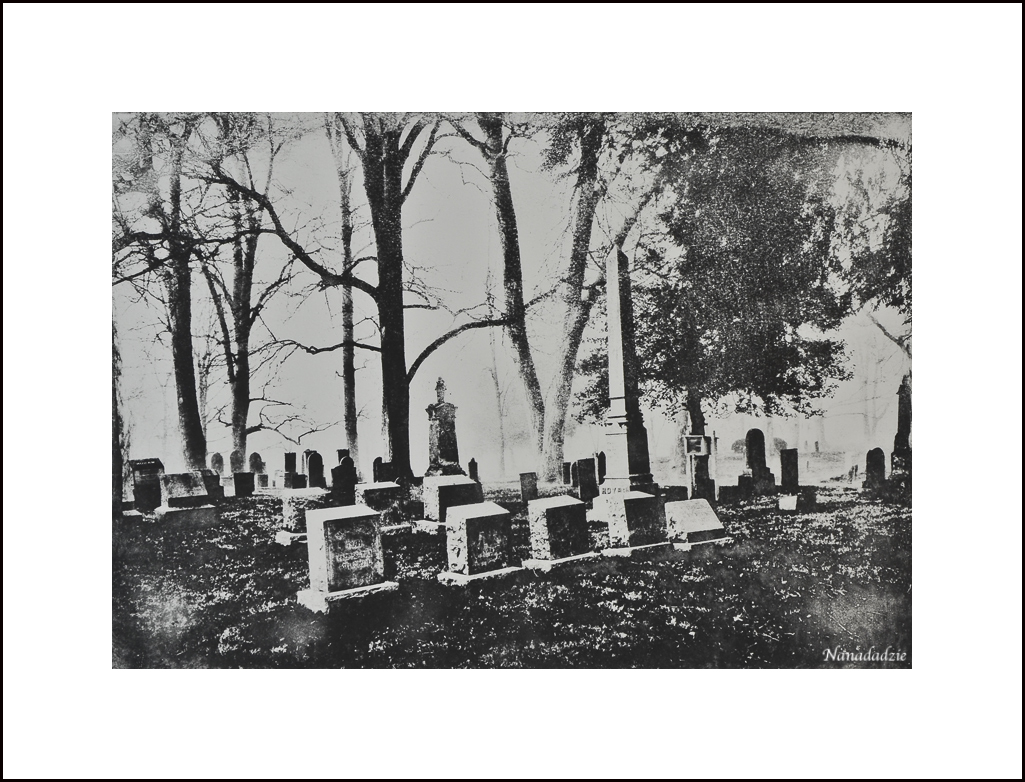
Rome fell centuries ago but this concept of reminding ourselves of our mortality has lived throughout the years. For some, it is the Skull & Cross Bones. For me, it is the cemetery.
I love cemeteries. They are my Mimento Mori symbols. Even though I love to go cemeteries for the peace and serenity and to make great pictures, they function more as a constant reminder of mortality. I am always reminded about how short life is. I almost hear a clock tick.
The main purpose of my  Mimento Mori symbol is to remind me of the lack of Time. Time. That the years are passing by. Time. That every minute in this temporary life is precious and that one has to seize each moment. Time.
As one wanders around and reads the epitaphs, pictures come to mind of lives lived, of dreams realized and shattered, of love, sorrow, pain and joy. Overwhelmingly though, one realizes that irrespective of what these souls went through, it all ended one day. Their lives were finite. My life is finite. Yours too.
I always leave resolved to do more, worry less and fill every hour but alas, once the symbol of temporariness recedes, I slide back into the delusion that I have all the time in the world. Like a victorious Roman general, I need a voice in my ear whispering Mimento Mori. I still have so many battles to fight.

Life as a Sisyphean Task

Sisyphus In Greek mythology, Sisyphus has been punished for his sins to roll a huge boulder up a hill in the Afterlife, only to have the boulder roll back down to the bottom of the hill once he gets to the summit.
Sisyphus is believed to have been the founder and king of Corinth who was smart, cunning and ruthless. He had no regard for Gods or men and ruled with an iron fist.
Of all the escapades of Sisyphus, the two that stand out the most and probably drew the most ire from the Gods was when he imprisoned Hades, the God of Death and when he conned his way out of the Underworld.
He was so cunning that at his appointed time, Hades himself came for him. Well, Hades showed up with handcuffs and Sisyphus asked him to demonstrate them. You can imagine what happened. Hades handcuffed himself onto the wall and Sisyphus had the key! The God of Death in handcuffs! So, for a while, no one could die. Ares, the God of war, pissed off that wars were no fun anymore (no one died), went over to Casa de Sisyphus and freed Hades. After telling Sisyphus to report immediately to the Underworld, Hades promptly scurried away.
So Sisyphus had no choice but die. Before he did that though, he asked his wife not to bury him but to throw his body into the Town Square. She was also not to put a coin under his tongue. One uses the coin to pay the ferryman on the River Styx, so he can get you to the other side. Nothing is free, you see. Not even when you are dead.
The dear wife did that so when he showed up before Hades’ wife, the Queen Persephone in the Underworld, he was totally not ready. He claimed he wasn’t buried properly and had no coin. So he sweet-talked Persephone to let him back to alleviate all the mistakes his wife made! The nerve! Persephone obliged!
He returned to life where he promptly forgot about death and partied like it was 1999! For years!
Finally Zeus had it. Sisyphus had to go. Hades wasn’t risking another trip to Casa de Sisyphus. So this time, Hermes, the God of Transitions, more cunning than Sisyphus himself went to get him. Hermes hauled his behind down to Hades where he was sentenced to hard labor, rolling the boulder.

Which finally brings me to my point. Is there a moral to this story. Well, several. Don’t piss off the Gods, would be one. Another might be that all good things must come to an end.
I can imagine that, if the Gods punished a man, a King at that, they would give him a punishment that not only probably sought to break his spirit but also was unlike anything he was used to. So hard labor for a King would be a good punishment. But then, how do you break the spirit of someone so cunning? Someone so full of spirit? Someone who apparently is goal-oriented and a visionary? Well, you take the purpose out of their lives. You put them in a situation where their very existence has no meaning. Like rolling a boulder up a hill for it to come crashing back down once you reached the summit. For you to do it endlessly – no end in sight, ever!
For us mere mortals, isn’t that our very existence? Rolling boulders up the hill of life only to have then come down just when we hit the summit? Isn’t life a series of these fruitless trips?
The little victories in life are when we get to a ledge somewhere along the hill and rest. We look back at the distance we have traveled and pat ourselves on the back. Unlike Sisyphus, we do not know yet that the boulder is going to roll back down. We kid ourselves that once we get to the top, it’ll stay. So we labor to get this boulder up there. Sometimes we get to a summit and think we’ve made it. We look up and see another peak and keep rolling. That is our curse.
Maybe, the point of life should not be in where you get the boulder to. It should be in the experience. In the day to day. In the relationships and contacts one creates. In finding some joy in this endless task. In knowing that you can roll the boulder up.
Sisyphus has been doing it all these years. Something beside the curse must keep him going. Maybe, the knowledge that even if the boulder rolls down, he still can get it up there. That no matter how many time he has to do it, he can summon the strength of spirit to move it. Maybe he has discovered that as he rolls this boulder up there, the experience is much more rewarding, the very process more fulfilling than the goal.
The very few are those who live life like Sisyphus the King. For most of us, it’s the life of Sisyphus, the boulder-roller. Find your joy in your labor. If you do, let me know how you did it.
I can’t.

Life as a Sisyphean Task

Sisyphus In Greek mythology, Sisyphus has been punished for his sins to roll a huge boulder up a hill in the Afterlife, only to have the boulder roll back down to the bottom of the hill once he gets to the summit.
Sisyphus is believed to have been the founder and king of Corinth who was smart, cunning and ruthless. He had no regard for Gods or men and ruled with an iron fist.
Of all the escapades of Sisyphus, the two that stand out the most and probably drew the most ire from the Gods was when he imprisoned Hades, the God of Death and when he conned his way out of the Underworld.
He was so cunning that at his appointed time, Hades himself came for him. Well, Hades showed up with handcuffs and Sisyphus asked him to demonstrate them. You can imagine what happened. Hades handcuffed himself onto the wall and Sisyphus had the key! The God of Death in handcuffs! So, for a while, no one could die. Ares, the God of war, pissed off that wars were no fun anymore (no one died), went over to Casa de Sisyphus and freed Hades. After telling Sisyphus to report immediately to the Underworld, Hades promptly scurried away.
So Sisyphus had no choice but die. Before he did that though, he asked his wife not to bury him but to throw his body into the Town Square. She was also not to put a coin under his tongue. One uses the coin to pay the ferryman on the River Styx, so he can get you to the other side. Nothing is free, you see. Not even when you are dead.
The dear wife did that so when he showed up before Hades’ wife, the Queen Persephone in the Underworld, he was totally not ready. He claimed he wasn’t buried properly and had no coin. So he sweet-talked Persephone to let him back to alleviate all the mistakes his wife made! The nerve! Persephone obliged!
He returned to life where he promptly forgot about death and partied like it was 1999! For years!
Finally Zeus had it. Sisyphus had to go. Hades wasn’t risking another trip to Casa de Sisyphus. So this time, Hermes, the God of Transitions, more cunning than Sisyphus himself went to get him. Hermes hauled his behind down to Hades where he was sentenced to hard labor, rolling the boulder.

Which finally brings me to my point. Is there a moral to this story. Well, several. Don’t piss off the Gods, would be one. Another might be that all good things must come to an end.
I can imagine that, if the Gods punished a man, a King at that, they would give him a punishment that not only probably sought to break his spirit but also was unlike anything he was used to. So hard labor for a King would be a good punishment. But then, how do you break the spirit of someone so cunning? Someone so full of spirit? Someone who apparently is goal-oriented and a visionary? Well, you take the purpose out of their lives. You put them in a situation where their very existence has no meaning. Like rolling a boulder up a hill for it to come crashing back down once you reached the summit. For you to do it endlessly – no end in sight, ever!
For us mere mortals, isn’t that our very existence? Rolling boulders up the hill of life only to have then come down just when we hit the summit? Isn’t life a series of these fruitless trips?
The little victories in life are when we get to a ledge somewhere along the hill and rest. We look back at the distance we have traveled and pat ourselves on the back. Unlike Sisyphus, we do not know yet that the boulder is going to roll back down. We kid ourselves that once we get to the top, it’ll stay. So we labor to get this boulder up there. Sometimes we get to a summit and think we’ve made it. We look up and see another peak and keep rolling. That is our curse.
Maybe, the point of life should not be in where you get the boulder to. It should be in the experience. In the day to day. In the relationships and contacts one creates. In finding some joy in this endless task. In knowing that you can roll the boulder up.
Sisyphus has been doing it all these years. Something beside the curse must keep him going. Maybe, the knowledge that even if the boulder rolls down, he still can get it up there. That no matter how many time he has to do it, he can summon the strength of spirit to move it. Maybe he has discovered that as he rolls this boulder up there, the experience is much more rewarding, the very process more fulfilling than the goal.
The very few are those who live life like Sisyphus the King. For most of us, it’s the life of Sisyphus, the boulder-roller. Find your joy in your labor. If you do, let me know how you did it.
I can’t.

We forgive you

“I forgive you. You took something very precious from me. I will never talk to her again. I will never, ever hold her again. But I forgive you. And have mercy on your soul.”
Nadine Collier, the daughter of 70-year-old Ethel Lance to the man who murdered her mother and eight others in Mother Emmanuel on June 17, 2015.

How could they do it? Forgive a man who gunned down their loves ones in cold blood? I probably couldn’t.
The amazing effect of this act of forgiveness has been felt all over. It has melted the hearts of even die-hard confederate flag lovers. That is all good, but how could they do it?

One can surely ascribe it to their faith. Faith is a powerful thing.
Faith and spirituality is what has sustained most African-Americans through 400 years of untold misery. What you saw during that bond hearing is a product of this strong faith. It allows families of the victims to forgive a most heinous crime that reminds them of very dark times past. Yes, that is what this faith does. Then these families know that the minute they let bitterness in, they are not going to be able to deal with what awaits them when they step outside into that Charleston sunshine after the dust of solidarity has settled. They need that faith to deal with the world as is for a black person in South Carolina, in the USA.
Those words of forgiveness were also significant in that they sounded like a whole race telling another that they forgave them. Forgave them for years of slavery, lynching, raping, mass incarceration, Jim Crow and exploitation. Years of being treated like their lives didn’t matter.

Forgiveness is a powerful thing. More powerful than revenge. It frees the soul and melts hearts.
The families of the Charleston Nine have forgiven the killer. I hope this will be a teaching moment for the whole nation.

Nine Lives

A Tribute to the those massacred on the evening of June 17, 2017 in The Emmanuel AME Church in Charleston, SC.

victims

Nine lives!
Nine beautiful lives.
Cut short while seeking solace in a place of worship.
Nine extraordinary lives, then every life is extraordinary.
Lives full of hope.
Lives chasing dreams.
Lives, not blobs of color that can be erased.
Lives that nurtured families and loved ones.
Lives that looked forward to tomorrow, a tomorrow that never came.
Lives that loved, cried and shared.
Shared a dream that all humans were created equal.
Lives that believed that you were more than the color of your skin.
Lives that didn’t see hate but prayed for redemption.
Nine lives.
Nine lives that should make us all look into ourselves and ask if there is not a better way.
Nine lives that stood at the intersection as racism and an out-of-control gun culture collided.
A culture that does not even respect the boundaries of faith and worship.
That left blood flowing like a river in place where peace should engulf your soul.
Nine lives!
Today we mourn and soon the sun will set and bring in a new day called Tomorrow.
Tomorrow erases memory.
It makes the heart ache less.
The terrible pictures of yesterday seem to fade.
Chances are we will forget.
Forget those lives.
The nine precious lives.
I implore you not to forget.
Then if you do, their death would have been in vain.
Hatred would have won and next time who knows how many lives it will be.
Whose son,daughter or mother?
Whose father or uncle?
It might even be you – your life.
So as you lay down tonight, say a prayer for those nine wonderful people.
Nine prayers
Nine Lives
May the next life be kinder to them.

Nanadadzie

Cracked

My mum’s gave us a beautiful wooden bowl on one visit. The bowl was designed beautifully with adinkra symbols. One of them was the “Gye Nyame” symbol.


The symbol means “No one lives who saw its beginning and no one will live to see it’s end, except God”, popularly translated “Except God.”
Anytime I looked at it, I thought of the gift of life. I saw the bowl as a crucible that held life, the soul, the spirit. Like the gift mum brought us, life is gifted to us too. When we are given this gift of life, it comes with a reminder – Gye Nyame. That we are supposed to take care of this gift and the dear Lord, being omnipresent, is there to help.

A few months after we got the bowl, it fell and got a crack right through the “Gye Nyame” symbol! We were devastated. As I starred at the cracked bowl, it made think of what happens when we did not take care of the gift – it broke. I thought, life is a gift just like the bowl and if we don’t take care of it, we break it. We destroy it.
As life gets destroyed, the reminder, “Gye Nyame” is not enough anymore. It is just another symbol.
I took a picture of the bowl with a 150-year-old lens and printed it with a 150+ year-old technique. Sort of saying some truths are ancient..