What if…?

Like life, the practice of medicine is filled with the highs and lows, the moments of heartbreak and euphoria of success, times of hair-pulling (if one has any) frustration and uplifting encouragement.
Loosing a patient unexpectedly is very traumatic. It happens to every doctor and it is a pipe dream to think it would never happen to you. It is a fact that some specialties are less prone to experience it than others. However, when it does happen, most physicians have no one to talk to.
Fellow physicians are the worst group of people to seek solace from. The majority have their own professional and personal issues. Then is the judgmental bit – “If you had done A instead of B, maybe…” Which leaves our significant others, the majority of whom have already been overburdened with medical talk to the point where they are insensitive and frankly do not care anymore. And then is the small issue of “..anything you say can be used against you when the family sues you!’
Would it not be great it there was a ‘listening ear’ for physicians in those times? I am thinking a 1-800 number one could call and be able to unload the disappointment and pain. Say 1-800-i-LISTEN.
A physician could call and talk anonymously to a listening ear about the death one had in the operating room (or emergency room or cardiac cath lab or floor).
About the fact that the team did all it could? About the fact that the patient had undiagnosed SAM or carcinoid or an unknown tight left main? About the fact that you were in the operating room for 15 hours? About the fact that you bonded with the patient and his wife gave you a hug and his kids shook your hand? About the fact that the malignancy was inoperable? About all those things we are supposed to keep inside because we are supermen but really aren’t?
What if you could just open up without fear of judgement or medico-legal action?
What if…?

scream

“The Scream” by Edvard Munch, 1910

Then are those times where one out of pure frustration wishes to yell or scream or throw something. My surgical colleagues, can I get an Amen? Yet you cannot yell or swear or throw anything. It is unprofessional and creates a hostile work environment. It is absolutely disrespectful to the team busting their chops to make it happen. You may have done it in the good old days but we are in 2016 and that kind of behavior will get you in trouble quickly. However, every doctor has had a day where frustration rolled down like waters and impediments like a mighty stream. Where that surgeon didn’t understand that blocks sometimes don’t work, where that anesthesiologist cancelled that case even though the best cardiologist in town “cleared the patient”, where that cardiologist wants you to do that CABG today and not on Monday, where you are stuck in the OR because the PACU is full, where you find out that some administrator decided to pull your favorite suture or antibiotic because it’s too expensive, wherw you have to work with the scrub tech you cannot stand….. the list goes on.

You want to scream and yell and call someone names that would make Tony Montana wince, don’t you? You want to do that because long before you became a doctor, you were a human with emotions and long after you cannot practice anymore, you will still be that human!… And humans get frustrated and sometimes, just sometimes, want to yell and scream and hop up and down on one leg and then the other.
So won’t it be great if there was a Scream Room?
“Scream Room?”, you wonder. “What is a Scream Room?”
The Scream Room would be a soundproof room somewhere in the hospital where one could go and scream and throw things of one’s choice for as long as one wanted to let out pent-up frustration. One could use as many four-letter words as one wanted and jump up and down like Rumpelstiltskin if one wished to.
The room would also have a 100-lb punching bag hanging from the ceiling. There would be boxing gloves available. One only has to pin a picture of the cause of one’s ire on the bag, don appropriate size boxing gloves and punch away.
What if there was such a room?
What if…?
Like I wrote earlier, before we become doctors, we were humans. Humans are strong but can also be weak. They can be wise but sometimes folly reigns supreme. They can be patient and understanding but occasionally brash and irritable. It’s only in accepting our strengths and weaknesses that we become whole. Whole humans. Whole doctors.

What Lies Beyond

Cannot do this anymore
Think I hit the ground floor
This thing called life
Is too full of strife
I think I’ll take a swing
On yonder piece of string
At what lies unknown and beyond
The other side of this dark pond

Lumumba

It would be very remiss of me if I had forgotten…
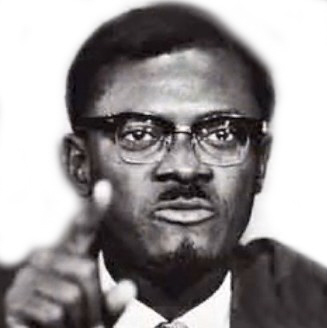
Lumumba-1
Patrice, you illustriuos African son! 55 years ago, you were assassinated while the World watched. The consequences are still felt today. Your words ring so true, even more today:
“Third World is a state of the mind and until we change our attitude as Africans, if there is a fourth, fifth and even sixth world, we will be in it.”
― Patrice Lumumba

I miss you, Whitney

Dear Whitney,

whitney_slider2_0_0
Four years ago, the demons that haunted you got the best of you. You left us. I miss you!
For a while, you wrote the soundtrack to my life – your highs, my summits, your lows mirrored the downs.
Your voice drooled with passion, love and emotion. Your life couldn’t capture that. I miss you.
Hope you have found peace where you are. Hope you found the greatest love of all! RIP

Love,
Nana-logo-01a


Nanadadzie

The Fork in the Road

Somewhere along the walk, I came to a point with forks in the trail. There was one that was clearly marked “To the Abbey”. Then, there were 2 other trails that were unmarked and not even on the map. The first of the two was to my right and seemed to vanish into thick brush. The other looked like it went up a hill to my left. I made a decision to go up the hill.

three-paths
I started on the trail and it kept going up. Tall trees lined the trail and the ground was covered by a thick carpet of leaves. The wind blew moderately through the trees, swaying them in a synchronized dance that rhymed with the song of the wind. It felt beautiful. Soon, I could see into a valley and bounding down was a big deer. It was so graceful. I kept moving, thinking I had made the greatest decision and totally enjoying the trail. It kept going up. Even higher, I saw another deer bound up and race towards a line of trees that seemed to crest the summit of another hill. The trees undulated gently, like they were opening up to accept the grace of the big animal. It vanished into them in a motion so fluid and graceful, it made me gasp. At this point, the trail had leveled out and I seemed to be at a summit. I was looking down into a beautiful valley. The trees and leaves reflected the midday sun into the most beautiful colors. I went around a bend and suddenly the trail came to a dead end. Just like that. It didn’t go any further. I looked all around to see if perchance there was a fork I had missed – nothing! There seemed to be no path through the thick brush and trees. The trail had ended.
I headed back and as I did, I thought about my decision to come up the trail. It made me think about the paths we sometime take that end nowhere. I thought of the pain and sadness they sometimes bring. However, I also thought of the experience. Then I realized that even though I had taken the path that lead to a dead-end, I had absolutely enjoyed the experience. That if I had to do it all over again, I would come up the trail without a second thought. That even though it had been a detour that lead nowhere, it had been most enriching and fun detour.
So on the journey of life, can one sometime just do a detour for the rich experience it might provide? Definitely! I think the whole journey is more about the experience than the destination. The whole journey is about taking chances and realizing that even if it leads nowhere, the experience might be enriching and fun. That one may get the chance to enjoy and appreciate some of all that life has to offer. To all that is a caveat – just make sure that you can find your way back to the path or a path that leads to where you ultimately are headed and that I think is where most get lost.

The 3 Crises that gave us the FDA

The FDA regulates food safety, tobacco products drugs vaccines and medical devices among other things. The agency as we know it today came to be due largely to 3 health crises in the 20th century – the Diphtheria Antitoxin crisis of 1901, the Elixir Sulfanilamide crisis of 1937 and the Thalidomide crisis of 1961.

Prior to 1901, the only federal body that looked out for food and drug safety in the US was the Department of Agriculture’s (USDA) Bureau of Chemistry ran by Harvey Wiley. Wiley’s advocacy was aided by a crisis in 1901. At the beginning of the 20th century, there was no cure for diphtheria. In the US, there were about 200,000 cases per year with a death toll of about 15 000. With the introduction of the diphtheria antitoxin, attempts were made to vaccinate all children. On October 26 , 1901, a five-year-old girl died in St Louis, MO after receiving the vaccine. The cause of death was tetanus. Over the next weeks, other children died after receiving the antitoxin, which came from the St Louis City Health Department.

diphtheria

Now the antitoxin was made by injecting horses with the diphtheria bacterium and collecting the horse serum. Investigations after these deaths revealed that a horse named Jim, which had been used to produce the serum, had tetanus. It also revealed several other shortcomings at the City Health Department including mislabeled bottles, no testing of sera and continued use of the horse Jim even though the officials knew that it had contracted tetanus. In all 13 children died. Around the same time, a similar tragedy was occurring in New Jersey. Almost 100 cases of post-vaccination tetanus was recorded after administration of the small pox vaccine. In all 9 children died.
The public outrage after these events lead o the passing of the Biologics Act in 1902. In 1906, the Food and drug Act was passed.The Act prohibited, under penalty of seizure of goods, the interstate transport of food that had been “adulterated”. Wiley’s Bureau of Chemistry became the enforcer of this law. In 1927, his Bureau was renamed the Food, Drug, and Insecticide organization and shortened to the Food and Drug Administration (FDA) a few years later.

Sulfanilamide_FDA

In the mid-1930s the antibiotic sulfanilamide came to the US market form Europe. It soon became the first line of treatment for streptococcal infections. It came in tablet and powder forms. Due to it’s taste, consumers, especially in the South, wanted a liquid version which would be easier to administer to children. In 1937, Harold Cole Watkins, the chief chemist at S.E. Massengill Company of Bristol, TN introduced the drug in it’s liquid form. Mr Watkins realized that sulfanilamide was soluble in diethylene glycol. The solvent that gave the mixture a sweet raspberry-like taste. He added extra raspberry flavor and coloring. Though he tested the mixture for taste, appearance and fragrance, he never bothered to test it for toxicity in humans or animals. Diethylene glycol, otherwise known as antifreeze, is rather poisonous.
In September 1937, the Massengill Co shipped 600 cases (about 268 gallons) all over the country. It was named the Elixir Sulfanilamide-Massengill.
On October 11, 1937, AMA officials in Chicago were informed of 6 deaths form a liquid sulfanilamide formulation in Tulsa, OK.There were also reports of deaths form Kansas City. On Oct 14, a NY physician tipped off the FDA about deaths from the Elixir Sulfanilamide. Meanwhile the deaths mounted. By Oct 17, it was apparent to the Masengill Co, the AMA as well as the FDA that the Sulfanilamide Elixir was causing deaths and that they had a crisis on their hands. Massengill Co, having been notified of the deaths was trying to recall the drug. The FDA urged the Massengill Company to send a follow-up telegram containing the caution “Product may be dangerous to life” to it’s salesmen.
Realizing the catastrophe at hand, the FDA dispatched all it’s 238 agents to round up all the bottles of the elixir on the market. The tales of how most of the bottles were rounded up in an era of relatively low level of mass communication can be the plot of a major Hollywood blockbuster.
Of the 268 gallons shipped, 267 gallons are confiscated. A gallon of the elixir was consumed in various parts of the country leading to 105 dead, including 34 children.
FDA and AMA had in the interim asked Dr Geiling, Head of the Department of Pharmacology at the University of Chicago to examine the elixir. Working on this project was one Frances Oldham Kersey, who almost 30 years later played a key role in the thalidomide crisis. The Geiling team analyzed the ingredients of the Elixir and found it to contain sulfanilamide, diethylene glycol, color and flavoring. They synthesized an elixir according to the same proportions and using rats, administered one of four solutions – the Massengil Elixir, their synthetic elixir, just sulfanilamide or just water. The rats who received the elixirs,as noted by Frances Kelsey Oldham, “shriveled up and died.”
It is worth noting how these victims died:
Victims of Elixir Sulfanilamide poisoning–many of them children being treated for sore throats–were ill about 7 to 21 days. All exhibited similar symptoms, characteristic of kidney failure: stoppage of urine, severe abdominal pain, nausea, vomiting, stupor, and convulsions. They suffered intense and unrelenting pain. At the time there was no known antidote or treatment for diethylene glycol poisoning, no dialysis machines or the ability to do renal transplants.
At the end, S.E. Massengill ended up paying over $500,000 (about $8.45 million today) in wrongful death suits. The company’s owner was also fined $26000 (today about $430,00) for mislabeling and misbranding; by technical definition, an elixir contains alcohol. The chemist, Harold Cole Watkins sadly committed suicide.
Most importantly, Congress passed the Federal Food, Drug and Cosmetic Act of 1938, a law that expanded federal regulatory oversight over drugs and mandated drug safety testing before marketing.

thalidomide_-_no2

Dr Frances Kelsey Oldham started working at the FDA in August of 1960. She was responsible for the approval of new drugs coming to the market. Back then, the approval process was rather routine. The drug maker had to show that a few patients had take the drug without any ill effects. In September of 1960, the application for the approval of a new drug came across her desk. The drug, thalidomide, was being marketed under the name Kevadon by William S Merrell Co of Cincinnati. It was already on the market since 1957 in Europe, Britain, Canada and the Middle East, where it was used to treat nausea in pregnant women as well as a sedative.
Dr Oldham, working with a chemist, Lee Geismar, and a pharmacologist, Oyam Jiro, initially rejected the application for being incomplete. Early in 1961 came case reports about painful neuropathy in patients on Thalidomide in the British Journal of Medicine. She asked Merrell for more information. Merrell in the interim was mounting it’s own counter offensive, labeling Oldham as an obstructive petty bureaucrat and complaining to the higher-ups in the FDA. Dr Oldham however held her ground.
Dr Oldham had during the WWII also worked on new anti-malarial therapies. At that time, she became aware of the ability of certain drugs to cross the placenta into a fetus with negative consequences. With this in mind, she also asked Merrell to furnish her with any data on fetal effects of the drug. After all, it was being administered to pregnant women. This was in May of 1961. In November 1961, reports began to emerge in Germany and the United Kingdom that mothers who had taken thalidomide during pregnancy were now having babies with severe birth defects – phocomelia. The occurrence of this malformation in an individual results in various abnormalities to the face, limbs, ears, nose, vessels and many other underdevelopments. Although operations can be done to fix the abnormality it is difficult due to the lack of nerves, bones, and other related structures. In all about 4000 babies were affected worldwide. Thalidomide samples given to American doctors were traced, but not all were recovered. Seventeen births of babies with phocomelia were reported in the US.
Merrell pulled it’s application in face of all this evidence.
The efforts of Dr Oldham would have gone unnoticed were it not for coverage in the Washington Post of all her efforts to keep thalidomide off the US market. In August 1962, President John F. Kennedy awarded Frances Kelsey the highest honor given to a civilian in the United States, the President’s Award for Distinguished Federal Civilian Service. Also, Congress passed the Kefauver Harris Amendment or “Drug Efficacy Amendment” in 1962 amendment to the Federal Food, Drug & Cosmetic Act. This amendment required drug manufacturers to provide proof of the effectiveness and safety of their drugs before approval. It provided a proof of efficacy requirement that was not there before. It also required them to provide information of side effects when advertising and stopped cheap generic drugs being marketed as expensive drugs under new trade names as new “breakthrough” medications. It effectively gave us the FDA we have today.

What lies behind

What lies behind the door

Our patients are not just a mass of symptoms, vital signs and diagnoses. They are more than that. They are humans with real life stories and if one bores just a little bit, the accounts are funny, uplifting or sad.
Anesthesiology is not known for promoting contact with the awake patient. My patients are mostly asleep or really sleepy and forget me once they wake up. I am a victim of the very drugs I administer. Yet, one can still capture a lot during a preoperative visit. The time for “preops” is not infinite, but there is always a few times in a day where things slow down and a visit lends itself to learn more about a patient’s life. It gets even more interesting when there is family present.
I was visiting with a patient, C.H., with advanced colon cancer who was presenting for a colectomy. She was in her mid forties. In her room were her 2 older sisters and their mum. Her dad had died few years earlier and she had no brothers. My interview suffered from constant interruptions by all of them. Every answer C.H. gave elicited a comment from a sister or the mum. Sometimes they answered even before she had the chance to open her mouth. It prolonged the interview but I was enthralled by the family dynamic. One sensed a certain degree of affection that was expressed rather caustically.
Things came to a head when I asked C.H. whether she smoked or had ever smoked. Her response was that she didn’t and had never smoked.
That is when her oldest sister piped up, “You liar! Remember when you were 15 and got a pack of cigarettes?”
Their mum went, “What?”
The oldest sister continued, “She hid in the crawl space and smoked.”
C.H “No, I didn’t”
“Yes, you did!”, the sister insisted.
At this point, my eyes are darting from C.H, to oldest sister to mum.
The mum had an incredulous look on her face. She went, “You idiot, you could have burned the house down!”
C.H., “But I didn’t” – I guess she did smoke under the house in the crawl space after all.
The mum went on, “If you were not sick, I’ll lay you in my lap and give you a good spanking!”
They must have seen the smile on my face because they all burst out laughing. I laughed right with them.
At that moment, the fear, pain and anxiety vanished from the room.
A mother and her daughters shared a laugh.
For a while, they held on to something very fragile that was at the risk of being lost for ever. A bond between sisters. A bond between a mother and her daughter.
As I walked out, I couldn’t but admire the love that one felt in that room. I knew her prognosis was poor and that broke my heart. However in that instant, it wasn’t about sickness at all. It was about a family being a family, irrespective of the circumstance and I was glad to have shared in that.

Moral versus Political Leadership

“It is curious that physical courage should be so common in the world and moral courage so rare.”
– Mark Twain

Moral versus Political Leadership – is there a difference? Should there be a difference? I argue that there is.
Every political leader needs a hefty dose of morals and ethics, but it might not be enough to effect the kind of social upheaval that moral leaders can bring about.

My definition of a moral leader or authority is a person who recognizes a social problem, brought on by political, religious, financial or even climatic reasons and through an idealistic stand effects change. Often such people are respected for their work and character. They tend to have lots of empathy and understand the human condition. A political leader on the other hand is a person who is able to lead a community or nation, successfully navigating the web of human intrigue with vision and foresight. To me, they are two distinct roles. They may overlap but I think historically, moral leaders have made ineffective political leaders whereas political leaders often do not have the moral authority to pull off a massive social upheaval like the end of Apartheid.

In Stephen Covey’s book “7 Habits of Effective People”, he has a story that illustrates the difference between a leader and a manager. I am going to borrow that story and remix it to show the difference between political and moral leadership. Imagine a group of men who are supposed to cut a path through a thick jungle to reach a river. There is one guy who climbs up the tallest tree, looks ahead and screams, “That way!” He is the one who envisions the path to the river – the leader. Beneath him, are the men with machetes cutting through the foliage, some with saws, felling trees and branches. There are men preparing food, providing water, sharpening the machetes, oiling the saw blades and so on. Overseeing each group of men is a manger who makes sure each group is doing what it’s supposed to do. (Now to the meat of the remix). One of the workers is Mr M. He is very hardworking, warm and kind. He is the one the men go to with problems. He is the one who always has the good advice and a listening ear. Mr M notices that the men are not getting enough breaks, food or even water. Their machetes are old and blunt. The saws aren’t working. Injuries are neglected and overall morale is low. He has had to share his food several times with some of his co-workers and had personally taken care of injuries. Mr M mentions his concerns to a manager. He is blown off. He mentions it to a second manager. No reaction. He tries to climb up to talk to the leader. He is pulled down. He calls a meeting of all the workers. He tells them they are going to sit and do nothing until management listens to them. Due to his hard work and the respect the men have for him, they listen. The managers try to coerce the men to work. They do not budge. Soon the leader notices that work has ground to a halt. He climbs down to find out what is going on. He realizes the men are striking and that he has to deal with Mr M. They talk. The leader agrees to ensure better working conditions. Once most conditions are met, Mr M asks the men to go back to work. The leader has a chat with the managers and climbs back up to lead.
In this story, the man up high in the trees looking ahead to chart the way is the political leader. Mr M is the moral leader.

History has given us several moral leaders – Gandhi, Martin Luther King and Mandela are a few of the famous ones. From Nigeria, I think of Ken Saro-Wiwa who tried to fight for a clean environment in the Delta and got killed for it in 1995. I think of Vaclav Havel, who stood against the Communists in the then Czechoslovakia or even Aung San Suu Kyi in Burma. These are all people who recognized a social need and through a force of character and the respect they had through their deeds and words, effected peaceful change. Compare that to the change effected by Lincoln – the end of Slavery in the US. It came through a bitter Civil War that claimed 620 000 lives! By all accounts, Lincoln was a good political leader.

Moral leaders have a hard time transitioning to political leaders. I even argue that moral leaders should not transition to political leaders because they do not make very good political leaders. In another post, I pointed out that political leaders are compromised because politics by it’s very nature demands a give-and-take that can lead to concessions that infringe on one’s beliefs. Moral Authorities do not have that problem. Political leaders often do not deal in absolutes but have to weigh the relative merits of a situation. A superpower might have to prop up a dictator to ensure stability in a region of the world where there might otherwise be chaos. Such a decision goes against all ideals and might be difficult for a moral leader to make but will not be for a political leader.
Every society needs one of each. A strong political leader to lead a country onwards and a moral authority, who appeals constantly to the better version of men and women. I think the relative strengths of both should be respected and the desire to make a political leader out of a moral authority avoided. At the same time, a political leader should recognize his shortcomings and enlist the help of a moral leader for effecting important social changes.

Whatever the case, lack of any kind of leadership in any organization or society leads to chaos. Blessed is the society that has both a strong political leader and a moral authority whose words call for peace, justice, fairness and love for the fellow man or woman.