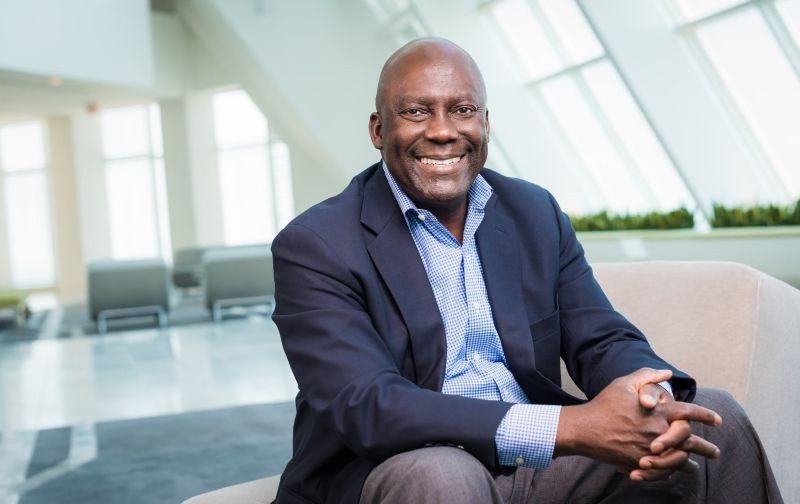
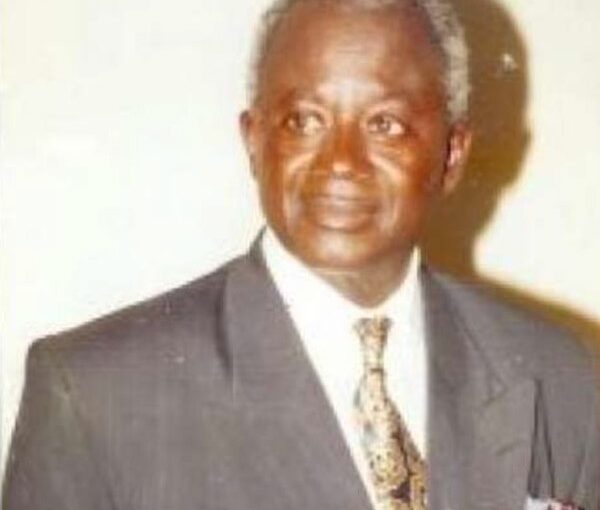
Some are born to lead, and Kodwo Ghartey-Tagoe is one of them. Kodwo entered Mfantsipim in 1975 and graduated in 1982. Even then, his character, demeanor, smarts, and ability to relate to everyone made him stand out. It was no wonder he was named the 55th Headboy in 1981 when he was in 6th Form. Most of us who were in the school in those years remember him as one of the best Headboys of that era.
After Mfantsipim, he earned a BA in Economics and Finance from McGill University in Canada. Initially aiming to attend business school, the challenges many immigrant students face led him to reconsider his plans. The chance to study law at Duke University came up, and he seized it. In 1988, he graduated with a JD in Law from Duke.
For the next 10+ years, he worked in private practice, handling regulatory and commercial litigation. In 2002, he joined Duke Energy as a part of the legal department.
For those who don’t know, Duke Energy is one of the largest energy holding companies in the US. It supplies electricity to 8.6 million customers in the Southeast and Midwest and natural gas to 5 states. Its market cap is $96 billion.
Over the years, Kodwo will rise to become the Chief Legal Counsel, thus serving as the primary legal advisor to Duke Energy’s board of directors and senior management. Soon, his responsibilities went beyond the legal realm when he was asked in 2017 to run Duke Energy’s utility operations in South Carolina. After his stint in South Carolina, he was pulled back to Charlotte, NC, in 2019 to become the Executive Vice President, Chief Legal Officer, and Corporate Secretary.
Then, this past July, he was named Executive Vice President and Chief Executive Officer of Duke Energy Carolinas and Head of the Natural Gas Business Unit.
Besides his work with Duke Energy, he sits on various boards, including the board of directors of Energy Insurance Mutual, Ltd., the board of visitors of Duke University Law School, and the President’s Advisory Board of Clemson University. Savoy Magazine named him one of the Most Influential Executives in Corporate America in 2024.
Talking to Kodwo, I was struck by his calm yet confident demeanor—a presence he carried even back then in school. He remarked how each stage in his life seemed to prepare him for the next. He reminisced about his time as Headboy at Mfantsipim and the leadership lessons he learnt from it. He mentioned how degrees in Economics and Finance really inform his work running a Utilities company.
He shared lessons he had learnt in leadership, including putting a premium on actionable advice and treating people well. Like he stated once in an interview, one of his favorite quotes is from Maya Angelou: “I’ve learned that people will forget what you said, people will forget what you did, but people will never forget how you made them feel.”
Kodwo Ghartey-Tagoe, an epitome of excellence, is an illustrious son of Mfantsipim, a Botwe boy.
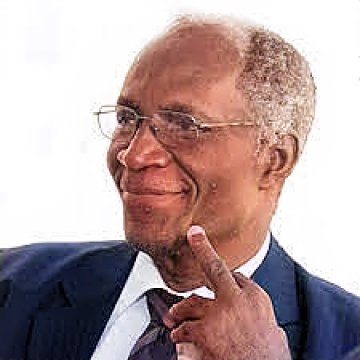
Of all the sons of Kwabotwe I have written about so far, the significant contributions of the late Prof Daniel Afedzi Akyeampong to the field of Mathematics are achievements my puny brain cannot grasp.
A Google search lists them as follows:
– Applications of higher symmetry groups (1966; his doctoral thesis),
– SU(3) transformations (1972),
– Charged vector meson theory (1965), and
– Tensor harmonics (1979).
Born in 1938 in Senya Beraku in the then Gold Coast, he entered Mfantsipim in 1954 and was in Balmer-Acquaah House. Even then, his intellect dazzled.
After Botwe, he went to Legon, graduating in 1963 with a BSc in Mathematics.
He left for the UK in 1963 to do his PhD in Mathematics. Before he started on his doctoral work, he had to get a foundational diploma in mathematical Physics at Imperial College. He brilliance must have been very noticeable because after completing the coursework in Group Theory in 1964, the professor who taught the course called him to his office and made him an offer.
This professor was Abdus Salaam, a Pakistani theoretical physicist who would go on to win the 1979 Nobel Prize in Physics for his contributions to the electroweak unification theory.
Back in 1964, Prof Salaam was starting a new international center for theoretical physics in Trieste, Italy. He invited the young Daniel Akyeampong to join him as one of the first five fellows of the Institute that is now known as “the Abdus Salam International Center for Theoretical Physics (ICTP)”.
Those years in Italy saw him publishing high-quality papers like “The scalar behavior of charged vector meson theory at high energy (1965)”, and “The quark model and elastic baryon-baryon scattering (1967)”.
In 1966, he got his PhD in Mathematical Physics from the University of London. His thesis was titled “Applications of higher symmetry groups to particle physics”. He also got a Diploma in Mathematical Physics from Imperial College.
Now, the aim of Salaam in establishing the ICTP was to foster the growth of the physical and mathematical sciences in developing countries. In that, Daniel Akyeampong was a firm believer. In 1966, he returned to Ghana as one of the first two Ghanaians to obtain a PhD in Mathematics (the other being Francis Allotey).
Back at home, he became a pioneer of Ghanaian Mathematics. Moreover, he turned out to be a great academic leader. He became a full professor of Mathematics at the age of 44. He would also serve multiple terms as the Head of the Department of Mathematics and as the Pro-Vice Chancellor of the University of Ghana.
He not only championed mathematics in Ghana but also on the African continent. He served as an assistant editor of the journal, “Afrika Matematica”. He was on the editorial board of a journal of the African Academy of Sciences, “Discovery and Innovation”.
He also lectured at the ICTP in Italy and was a member of the World Academy of Sciences.
The onus of his work was probably expressed best in the J.B. Danquah Memorial Lecture he gave in 1993. Titled “The Two Cultures Revisited: Interactions of Science and Culture”. Building on the lecture given by the British novelist and scientist C.P. Snow in 1959, Prof Akyeampong “advocated for integrating African indigenous knowledge and cultural values into scientific processes to bridge the historical divide between science and culture.”
Prof Akyeampong passed on March 7, 2015, following complications after surgery for a femur fracture, leaving behind a legacy of pioneering in Mathematics in Ghana and academic leadership.
Professor Daniel Afedzi Akyeampong was an illustrious son of Mfantsipim, a Botwe boy.
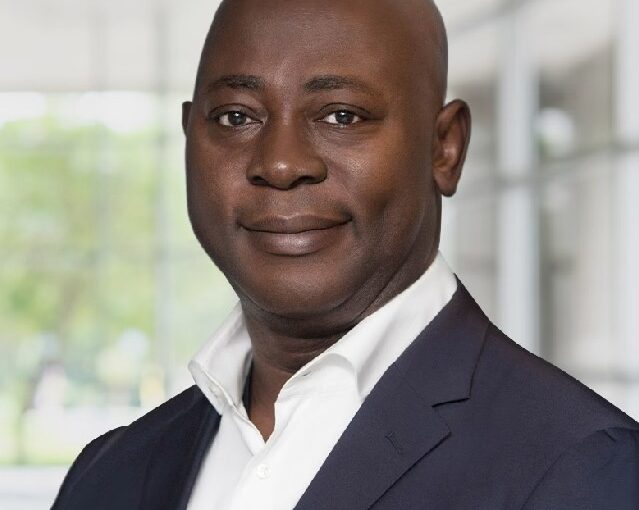
He grew up watching his entrepreneur father create one successful business after another. He witnessed firsthand the work it took to create value and learned the laws of money. Above all, his father did not allow him to develop that feeling of entitlement that kills the hunger to dream and achieve.
Another contribution to his growth as a future entrepreneur was his athleticism. It has been proven that athletes develop qualities like resilience and perseverance, a strong work ethic, focus, teamwork, and collaboration, among many others.
In secondary school, besides his academic work, Moses explored his athletic abilities. By age 17, he was the Ghana National Martial Arts champion. (His fight with a group of men who attacked him one evening while outside the school’s campus is still the stuff of legend). He also did track and field and was the goalkeeper for the soccer team.
A further attribute of people who create is a thirst for knowledge. However, it is not just any knowledge. In all they read, hear and observe, be it by reading “Othello” or listening to a powerful speech, they pick lessons that feed into their purpose, passions and values. Listen to Moses speak, and one picks up on this thrist for knowledge,
And so, though he would go on to study law, it was only a matter of time before that spirit of entrepreneurship would take hold and dominate. He started his first business while working as a teaching assistant at the Ghana Law School at age 23. A love for computers drew him to technology. Due to entry costs, he decided to concentrate on consumables. With a loan of $100 and a team of classmates, he founded a lamination, binding, and consumables supply business in 1990 and named it Margins Supplies Company Limited.
Why Margins? Because in life and business, isn’t it all about the margins?
By 1995, Margins had over 2000 clients and made about $1000 per client per year.
However, that success did not dim his hunger. Driven by purpose, passion, and a desire to acquire knowledge that solves Ghanaian and African problems, he looked into the future of digitalization and saw the importance of identity on the horizon. He decided to learn all he could about bringing Margins into the business of identity. Margins ID systems was born. Undaunted by the lack of financial support in Ghana, he looked abroad and found backers in Denmark, and as they say, the rest is history.
Today, Moses Baiden Jr.’s dream is a multi-million dollar conglomeration of companies called “The Margins Group” with a presence in seven countries.
It is made up of five subsidiaries in two groups: the Margins ID Group and the Margins Supply Group. He won the bid to design and manufacture the Ghana ID card called the “Ghana Card.”
He has built the first and largest full-service certified card and secure document manufacturing facility in sub-Saharan Africa. The facility, Intelligent Card Production Systems (ICPS), is one of the subs of the Margins ID group.
He loves to say that he did it all in Ghana by finding solutions to Ghanaian problems.
He has received myriad awards. He has won “CEO of the Year” several times, Entrepreneur of the Year, and Man of the Year.
He also gives back through groups like the Margins Youth Empowerment Initiative or by constructing a lecture hall for the Law School.
Of all the honors he has received, I would wager $100 that the one he most appreciates is being named “Ebusapayin” (President) of the Mfantsipim Old Boys Association (MOBA) in 2023—the youngest Ebusuapayin to date.
You see, Moses Kwesi Baiden Junior is an illustrious son of Mfantsipim, a Botwe boy.
The son of Mfantsipim I present in this piece works in a field that is not easy to understand. I did not trust myself to do justice to his efforts but hoped to do my best, so here we go.
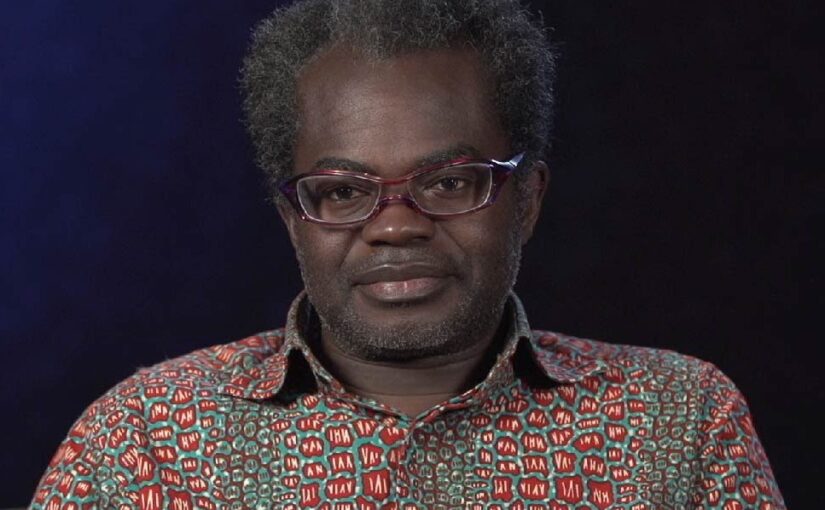
Kwabena Boahen was born on Sept 22, 1964. Affectionately called “Buster,” a nickname he got from a nanny, he was the second child of the late great historian Prof Albert Adu Boahen. He entered Mfantsipim in 1976, so he was a “centenary greenhorn”.
Ever the tinkerer, he invented a corn planting machine while in Form 3, together with a classmate, Michael Banson. The machine would win the National Science Fair and be later presented at the West African one in Lagos.
At age 16, he got his first personal computer – a BBC Micro. After reading about how it was put together and worked, he took it apart and was not awed by its simplicity. That experience might have planted the seed for his life’s direction – an elegant and more efficient way of computing.
At age 21, he won a scholarship to study Electrical Engineering at Johns Hopkins. During his time there, he heard a lecture by the computational neuroscientist, Terry Sejnowski. It was about using a neural network to turn text into speech. That experience lit a bulb. There could be a more elegant way to build computers!
Around that time, a computer scientist named Carver Meade at Caltech was working on building computer chips that were structured like neurons in the human brain. He believed that the most efficient computers should combine both analog and digital processing like the brain. The new field would come to be known as “Neuromorphic Computing.”
Not too long after hearing Sejnowski’s speech, Kwabena’s TA challenged him and a classmate to replicate the work Carver Meade was doing at Caltech. The work they did resulted in two successful papers, and brought him to Carver Meade’s attention.
After finishing his bachelor’s and master’s at Johns Hopkins, he worked for a year and then started his PhD at Caltech under Carver Meade in 1990, graduating in 1997. His interest in building chips based on the brain’s architecture meant he had to do some neurobiology coursework. The organ he picked for his research was the retina of the eye. His thesis would be the creation of a silicon retina.
After completing his PhD, he moved to the University of Pennsylvania, where he was the first occupant of the Skirkanich Term Junior Chair. He was there until 2005. He published further work on the silicon retina and a silicon tectum, several papers, gave many talks, and even graced the cover of Scientific America.
In 2005, he moved to Stanford, where he founded the Brains in Silicon Lab. His aim was to create a team that would work towards linking “neuronal biophysics to cognitive behavior through computational modeling”. He sought to “emulate the brain with silicon chips through neuromorphic engineering.” In that regard, he has been quite successful.
His team has created the “Neurogrid.” This is an iPad-size platform that emulates the cerebral cortex of the brain. It was built using neuromorphic chips, which allow it to be a supercomputer. In 2022, he and a colleague, Philip Wong, created a dendrite-like structure using chips. Kwabena has also published even more papers.
So, what are the advantages of neuromorphic chips? Structured like the neurons of the brain, they are more efficient. As Kwabena says, “the brain computes analogically and communicates digitally.” This, among other things, allows it to use much less energy than computers. So, using neuromorphic chips, AI processes will not need as many chips and as much energy.
If Carver Meade is the father of neuromorphic computing, Kwabena may be the preeminent disciple. His output and awards are impressive. I counted 144 papers on Google Scholar. His honors include a Packard Fellowship for Science and Engineering (1999) and a National Institutes of Health Director’s Pioneer Award (2006). He was elected a fellow of the American Institute for Medical and Biological Engineering (2016) and of the Institute of Electrical and Electronic Engineers (2016) in recognition of his lab’s work on “Neurogrid.”
Presently, Kwabena Boahen, aka Buster, is a Professor of Bioengineering and Electrical Engineering at Stanford University, with a courtesy appointment in Computer Science. He is also an investigator in the Bio-X Institute, the System X Alliance, and the Wu Tsai Neurosciences Institute. Further, he founded and runs the Brains in Silicon Lab at Stanford.
Kwabena is an illustrious son of Mfantsipim, a Botwe boy.
The late Albert Kwadwo Adu Boahen was born on May 24, 1932 in Oseim in then Gold Coast. He entered Mfantsipim in 1947, graduating in 1950. He would later study history at the University of Ghana, where he got his BA, and then at the University of London, where he got his PhD in African history in 1959.
An illustrious career in teaching and scholarship would follow. Besides becoming a professor emeritus in history at the University of Ghana, a department he headed for many years, he was also a visiting professor at several universities around the world. He also had a publishing career that spanned over 40 years with books that became authoritative texts on African history like:
– Topics in West African History (1966),
– African Perspectives on Colonialism (1987),
– Mfantsipim and the Making of Ghana : A Centenary History, 1876–1976 (1996), and
– Yaa Asantewaa and the Asante–British War of 1900–1 (2003).
He was president and consultant of the UNESCO committee that the published of the multi-volume “General History of Africa” between 1983 and 1999.
As impressive as his scholarship was his political activism that was built on courage and fearlessness. Even as a student at Mfantsipim, he participated in a students’ protest in 1948 against the detention of the “Big Six”. In the 1970s, he fought against Kutu Acheampong’s UNIGOV.
This courage would shine brightest in 1987-88, during Rawlings and the PNDC’s reign of terror. At a time when no one dared to criticize Rawlings, he did. At a time when critics just vanished, fled the country or were jailed, he spoke up.
The events that led to the professor speaking out started with a column by Rawlings. After 6 years of brutalities, Rawlings suddenly noticed that there were no critics anymore, and Ghanaians seemed apathetic. In the Daily Graphic of April 6, 1987, the then ‘Chairman Rawlings’ lamented a ‘Culture of Silence’ that he saw pervading the country. He wrote that “.. people at various levels of authority are using the chain of command to subjugate and demand a subservient state of interrelationships with subordinates….. that this situation was leading to the return of the ‘Culture of Silence’….. between high government officials and the public, District Secretaries and the people; chiefs and their subjects; bishops, priests and church members; managers and workers.”
No one responded then. How could they? Everyone was terrified. However, one man soon found his voice. About a year later, Professor Adu Boahen, spoke up. The dear professor gave three lectures as part of the Danquah Memorial Lectures organized by the Ghana Academy of Arts and Sciences at the British Council in February, 1988. His lectures were titled “The Ghanaian Sphinx: Reflections on the Contemporary History of Ghana, 1972 – 1987”.
During one of those lectures he had this to say to the then Chairman Rawlings:
“I am afraid that I do not agree with Rawlings’ explanation of the sedulity of Ghanaians. We have not protested or staged riots because we cannot but because we fear the PNDC. We are afraid of being defamed, liquidated or dragged before the CVC or NIC or being subjected to all kinds of molestations. And in this case have Ghanaians not been protesting at all as the Head of State thinks? They have been but in a very subtle and great way – hence the Culture of Silence.”
He would go on to be the flag bearer for the NPP in the 1992 elections. He unfortunately lost to Rawlings’ NDC. He would lose the NPP flagbearer position to Kuffour for the subsequent elections 1996 and 2000 but stayed active in the party.
On the evening of his 74th birthday, May 24, 2006, he died at the 37 Military Hospital after suffering strokes in 2001 and 2002.
Albert Kwadwo Adu Boahen is an illustrious and courageous son of Mfantsipim, a Botwe boy.
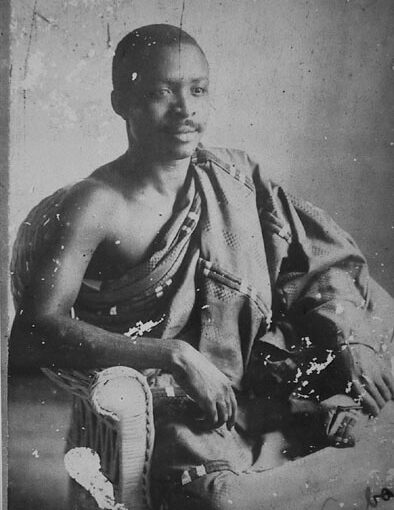
Kobina Sekyi was born on Nov 1, 1892 in Cape Coast. He attended Mfantsipim School and became not only a lawyer, but also a philosopher, sociologist, political activist, and writer.
Growing up in the then Gold Coast, he witnessed how the people of the Gold Coast were shunning indigenous culture and traditions for European ones. Names were being europeanized (Danso became Dawson, Andah turned into Anderson), the cloth was giving way to suits, and even diets were changing.
His years studying philosophy and law in England confirmed in him the deep conviction that what is African is worth maintaining and there was no need to drop those values, traditions and culture for European ones.
He went to write and direct the play “The Blinkards” in 1916 in Cape Coast.
The play satirized this tendency to see all things African as backward and savage and embrace all that was European as good. It also ridiculed some Euro-Christina beliefs and colonial laws. The play has stood the test of time and expertly captures how colonialism also stole who we really are, and his role as a playwright has never been celebrated enough.
This desire to be as African as can be led him to insist on wearing out traditional cloth to court.
This paragraph from a piece he wrote in 1920 captures his beliefs expertly:
“I would submit that the individual who, in spite of the many burdens which he must bear in the matter of assisting relatives under the Akan-Fanti social system, nevertheless thrives, becomes a better man, and is better fitted to look after other human beings: my point is that the person who goes through the Akan-Fanti system of growing up becomes a fuller man, and has all that is good in him brought out, and all that is bad restrained or suppressed by the discipline which in a well-set-up family is exerted on the thriftless individual through the disapproval of the family.”
– Kobina Sekyi, Cape Coast Observer, 1920
He was also very active in the Aborigines Rights Protection Society and a member of the Coussey Committee, that drafted a constitution for the Gold Coast in 1949. It is sad that he died in 1956, a year before Ghana attained independence
Kobina Sekyi is an illustrious son of Mfantsipim, a Botwe boy and one of the Faithful Eight..
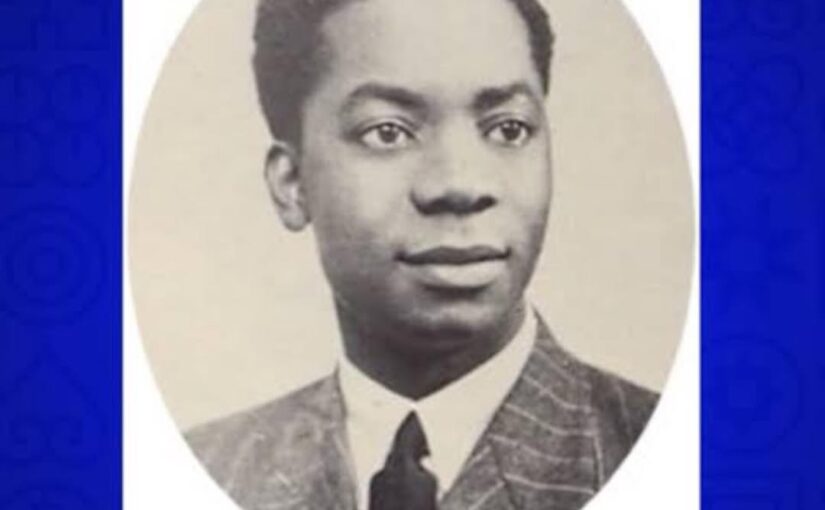
Over the decades, Mfantsipim School has produced some illustrious men. One of my all time favorites and someone I really, really admire is Dr. Ralph Armattoe. Following is but a brief synopsis of his impressive life.
An anthropologist, physician, scientist, poet, and Nobel Prize nominee, he was born in Denu on August 12, 1913. He studied at Mfantsipim from 1925-29.
Already fluent in French, German, and English, he would leave for Germany in 1930 to study but had to flee the country because of the Nazis. So he finished his studies in anthropology and medicine in France, and Scotland. He later settled in Ireland, where he had a medical practice.
Beside his practice in Ireland, he also spent time in Ghana, then the Gold Coast, doing medical research and running a clinic in Kumasi. Armattoe’s research led him to create a drug called “Abochi” that was based on herbs and was a potent treatment for water-borne diseases along the Volta. He would be nominated for the Nobel Prize for Peace and Physiology in 1949 but did not win.
He was also politically active, fighting for the unification all Ewes under an “Ewe Nation”. He even addressed the UN in 1953 regarding Togoland and the “Eweland Question”.
He rubbed shoulders with Nkrumah and though both agreed on independence for African countries, Armattoe favored a federalist approach whereas Nkrumah was centrist. He was also very good friends with W.E.B. DuBois.
He became best friends with the Nobelist and physicist, Erwin Schrödinger. He accompanied Schrödinger to the Nobel ceremony in 1947. The latter would later write the foreword to Armattoe’s book, “The Golden Age of West African Civilization”.
Interestingly, in his poem titled “The Way I Want To Die”, he expressed the wish to die young so as to avoid the scourges of old age, and sadly, he would die at the young age of 40 in Hamburg, Germany. It is believed he was poisoned. On his gravestone are the words “Africa’s Greatest Nationalist”.
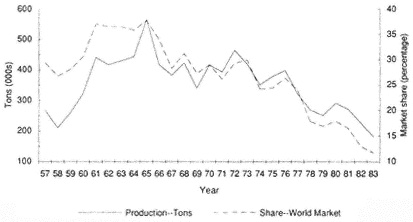
Cocoa Production, 1957–1983 Sources: K. Ewusi, Statistical Tables on the Economy of Ghana, 1986
It was already evident towards the end of the Nkrumah government that the Ghanaian economy was struggling. The World Bank recommended a devaluation of the Cedi. If Nkrumah planned to, he never got the chance. He was overthrown in 1966. Busia was finally the one who got to order it in 1971. This 44% devaluing of the Cedi was his undoing. It was one of the reasons Kutu Acheampong gave for usurping the government of the 2nd Republic.
The Ghanaian economy continued its nosedive through the NRC and SMC eras. The blowback from Acheampong’s “Yentua” policy, droughts in the 1970s, drop in prices of our exports, the oil crisis, and Kalabule all helped to take the economy lower and inflation higher. The ever-expanding role of the government in the economy did not help.
By the time shots rang out in Accra on June 4, 1979, things were economically dire. Rawlings continued with the military habit of regulating the economy in his short reign of terror from June till September. Even worse, he saw the private sector as the enemy. The razing down of the Mokola market epitomizes this perfectly.
If the economic situation President Hilla Limann inherited when he took office on September 24, 1979, was nothing short of dire, it managed to get even worse over the next two years. Among other things, due to overvalued exchange rates and low prices we paid our farmers for cocoa, our share of the international cocoa trade was less than 20%. Farmers were smuggling their cocoa outside to sell. State enterprises continued to make losses. The few remaining businessmen who Rawlings had not chased out or killed found it impossible to make any money. Foreign investments, which had started dwindling since Acheampong’s Yentua policy, kept getting smaller. According to World Bank data, by 1981, Ghana received only $13.3 per capita in net development assistance compared to an average of $26.3 for all sub-Saharan countries. Inflation skyrocketed to 120%.
Would the Limann government have instituted much-needed changes?Well, we’ll never know because on December 31, 1981, shots rang out again. Enter Rawlings 2.0 in the blockbuster, “PNDC Cometh! Run for your Life”.
As he killed, tortured, and imprisoned to prevent another vainglorious military officer from taking his place and removing detractors, he also pushed an economic plan straight out of the Marxist playbook. He sought to rule through “Defence Councils” made up of those who bought into his populism – students, workers, soldiers, and the disgruntled. He forced traders and controlled prices. Not realizing it, he was expanding the government’s role in the economy and making the bad situation even worse.
Another issue he had to grapple with was the lack of support from Russia and the other eastern bloc nations that he had expected. You see, the world in those days was split between the superpowers – USSR and the USA. Those Third World leaders who espoused socialist philosophy looked to Russia and Eastern Europe for help. Those who believed in free-market economics looked to the west. A lot of developing countries straddled the middle. Rawlings came out like a Castro-Gaddafi wannabe. They were his idols. He hoped they would support Ghana’s recovery. Libya did what it could to help, but it was not enough. Russia could not because they were embroiled in their economic problems that would ultimately lead to the USSR’s implosion.
To make things worse, a brutal drought hit Ghana in 1982-83, leading to famine. Fires also erupted due to the drought. Into this cauldron of killings and brutality, economic ruin, drought, and famine returned one million Ghanaians expelled from Nigeria. A change in economic policy was needed, and in 1983, Rawlings and Kwesi Botchwey, with the help of the IMF and World Bank, made that change.
Unlike the government of Hilla Limann that he overthrew, Rawlings had the luxury of having the opportunity to change. Limann never got the chance to explore another way of getting Ghana ahead. As a matter of fact, Rawlings rid the country of the opportunity to change peacefully twice. The overthrow of the Liman government was the second time. The first time was in June of 1979. The country was preparing for elections when Rawlings burst onto the scene then. Ghana was already on her way to a peaceful change of direction when he ushered in those four months of terror. The PNDC under Rawlings was able to push much-needed Economic Recovery Programs (ERPs) through. The policies he instituted in 1983, including price hikes on goods and the selling of state corporations, were policies supported by the IMF and World Bank. So this led to the return of foreign investments and loans. It would only follow that Rawlings would try to polish up his act by reducing the acts of terror, allowing the return of a free press and free and fair elections. It was also self-serving on his part to get an Indemnity Clause inserted in the constitution of the 4th Republic and morph into a democratically elected first president of said Republic.
In the eyes of some, the economic improvements he ushered in should make up for all the human rights abuses perpetrated under his watch. They argue further that only Rawling’s force of will and the power of the gun allowed him to push through those policies. And that no civilian government would have been able to achieve that without the people rioting.
In other words, Exitus acta probat!
Now that is an argument I refuse to agree with. In the first place, we never got the chance to find out. Ghana has been through economic upheavals since 1992, and we have not needed bloodshed to solve those problems. We have had disagreements over election results that have been settled amicably through the courts. We are capable of peaceful change but were denied that opportunity by coup plotters like Rawlings, Acheampong, and the rest who always felt they were the only ones with the answers.
Could Ghana have had this economic recovery without all the bloodshed? Was all that loss of life necessary? Or was the blood that was spilled the prerequisite for the improvements? A necessary offering? Did Ghana then enjoy an economic recovery steeped in the blood of others? Much like blood diamonds from Liberia back then, did we, thanks to Rawlings, enjoy a ‘blood’ economic recovery? I believe we did, and in the process, we also sacrificed the belief and desire to uphold and protect human rights.
If the 1967 Supreme Court ruling in the case Pierson vs Ray birthed the doctrine of “Qualified Immunity”, the 1982 decision Harlow vs Fitzgerald cemented the concept.
Background
In 1965, Lockheed was awarded the contract to build the C-5A Galaxy cargo plane for the Air Force. Even though Boeing had the best overall design, Lockheed had the lowest bid and thus won. Their bid was for $16 million per plane for a project total of $1.9 billion. In a few years, the cost of a plane amount would balloon to $40 million.
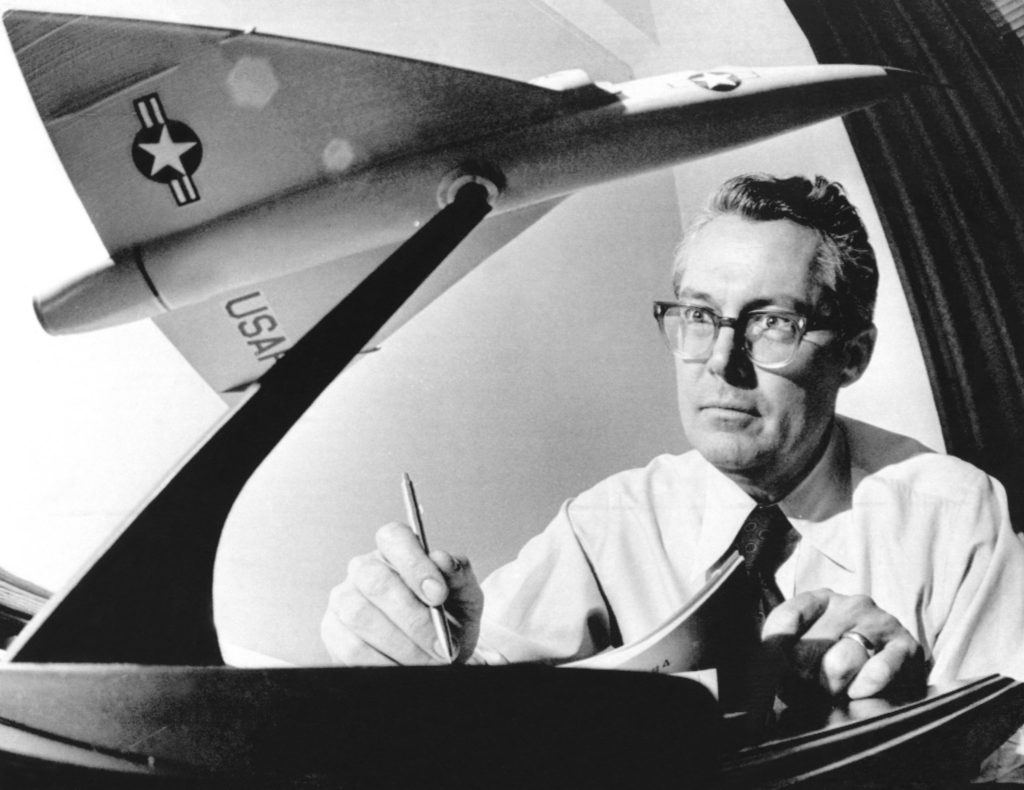
The project was plagued by technical difficulties and significant cost overruns which both Lockheed and the Pentagon hid from Congress. There was however an engineer and management analyst in the Department of the Air Force who knew how much more the project was costing taxpayers. He first discovered the cost overruns on a routine visit to the Lockheed complex in Marietta, GA in January 1966. He kept up with the overruns even though Lockheed tried to hide them. His name was Ernest Fitzgerald.
With time, Congress got wind of how expensive the C-5A project had gotten. On November 13, 1968, with the unexpected costs standing at $2.3 billion dollars over budget, Fitzgerald was invited to testify before Congress regarding these cost overruns.
Even though he was asked by the Air Force to not divulge any information about the cost overruns and problems at Lockheed, Fitzgerald did not heed that directive. His testimony was stunning. The Air Force brass was livid.
The initial congressional hearing occurred at the tail end of the Johnson presidency. The investigations and Fitzgerald’s appearances continued into 1969 with Nixon in office. In late May and early June of 1969, Fitzgerald testified four times before the House Armed Services Committee and the Joint Economic Committee at their request.
Now Fitzgerald’s testimonies were not only annoying the Air Force brass but also reportedly, President Nixon and three of his aides, Bryce Harlow, H.R. Haldeman, and Alexander Butterfield. They thought he was not a team player and needed to be removed from the Air Force.
Even before the president got involved, Fitzgerald was socially and professionally ostracized at the Pentagon after his initial testimony before Congress. Many of his assignments, especially those involving the C-5a were pulled and he did not get any new responsibilities. Led probably by the Air Force Secretary Robert C. Seamans and working together with the White House, he was secretly investigated, suffered a smear campaign, and was accused of divulging classified information. Finally, it was decided that the best way to get rid of him was to abolish his position in the Air Force. On November 4, 1969, Fitzgerald was notified that his job had been abolished in a reduction in force, and economic reorganization. His termination became effective on January 5, 1970.
He appealed his termination to the Civil Service Commission (CSC). He won his appeal and was reinstated to his Pentagon job with back pay in December 1973. However, he was not assigned to any more jobs that involved weapon systems. It was also during these CSC hearings that the role of the Nixon White House in Fitzgerald’s firing came to light.
In January of 1974, Fitzgerald filed a suit for damages in the United States District Court in Washington DC. The defendants were 8 officials of the Defense Department, White House aide Alexander Butterfield, and “one or more” unnamed “White House Aides” styled only as “John Does.” He alleged the defendants conspired “…to deprive him of constitutional and statutory rights resulting in permanent injury to his career and personal injury to his dignity, privacy, and reputation, as well as mental anguish.”
The district court dismissed the lawsuit under the statute of limitations. The Court of Appeals affirmed the lower court decision but reasoned that the defendant Alexander Butterfield, one of Nixon’s aides, might not be covered by the statute of limitations due to a memo he had written in 1970 and that had come to light during the Watergate hearings. The memo was written around the time Fitzgerald was fired. In the memo, Butterfield stated, “Fitzgerald is no doubt a top-notch cost expert, but he must be given very low marks in loyalty; and after all, loyalty is the name of the game. Butterfield went on to recommend that Fitzgerald should at least be made to “bleed for a while” before being offered another job in the administration. The Court of Appeals thus remanded the action against Butterfield for further proceedings in the District Court.
Following that and extensive discovery, Fitzgerald filed a second amended lawsuit in DC district court in July 1978. As defendants, he named the former President Nixon, White House aide Bryce Harlow and other officials of the Nixon administration. By March 1980, only three defendants remained: Richard Nixon and White House aides Harlow and Butterfield. Nixon and the other defendants claimed protection from qualified immunity. Moreover, Nixon claimed absolute immunity as he was president when the actions were taken. The district court ruled that the case could go to trial and that Nixon could not claim absolute Presidential immunity. He could only claim qualified immunity. Nixon and the other defendants appealed the ruling of the district court but the Court of Appeals upheld it.
Nixon vs Fitzgerald
On November 30, 1981, the lawsuit landed before the judges of the United States Supreme Court. By this time, the lawsuit against Nixon had been separated from that against Harlow and Butterfield. The question was, “Was the President immune from prosecution in a civil suit?”
On June 24, 1982, the judges decided in favor of Nixon. In a 5–4 decision, they ruled that the President “is entitled to absolute immunity from damages liability predicated on his official acts.” Justice Powell in writing the court’s opinion stated that absolute immunity was a function of the “President’s unique office, rooted in the constitutional tradition of separation of powers and supported by our history.” He also argued that “because of the singular importance of the president’s duties, diversion of his energies by concern with private lawsuits would raise unique risks to the effective functioning of government.” The court however also stated that the President is not immune from criminal charges stemming from his official (or unofficial) acts while in office.
Interestingly, in 1997, the SC in Clinton vs Jones would add that a President is subject to civil suits for actions committed before he assumes the presidency.
Harlow vs Fitzgerald
The other part of the lawsuit involving Harlow and Butterfield was heard separately by the judges in the same time span and became known as Harlow vs Fitzgerald. The question here was, “Are presidential aides entitled to immunity from civil suits?”
In an 8–1 majority, the judges held that government officials are entitled to qualified immunity but not absolute immunity. The court stated that “government officials performing discretionary functions, generally are shielded from liability for civil damages insofar as their conduct does not violate clearly established statutory or constitutional rights of which a reasonable person would have known.”
In ruling this way, the judges were hoping to protect state actors from frivolous lawsuits that would dampen the desire for government workers to exercise their duties in cases where the legality of their actions is uncertain.
However, this has led to the unintended consequences that have not always been good and have challenged the civil rights law Section 1983.
For several years after the ruling government officials and policemen who violated the civil rights of others in new and novel ways and got sued, mostly got off free as the illegality of their actions had not been established. However, subsequent offenders did not always. Judges dealing with such cases had to conduct a two-step inquiry.
First was the question if the alleged facts show that, say, an officer’s conduct violated a constitutional right of a victim. Then the judge had to determine if the illegality of the officer’s actions was or was not “clearly established. If there was a precedent, then the action had been clearly established as being illegal and the officer did not get qualified immunity and could be sued. If there was no precedent, then he got qualified immunity. Unfortunately in the 2008 case Pearson vs Callahan, the judge ruled that this 2-step framework was not mandatory. Since then, a lot of judges have forsaken the 2-step process and are not even examining if a plaintiff’s civil rights were violated. Also, in looking at the illegality of officers’ actions, judges are giving them more leeway.
The Supreme Court ruling also gives government officials and policemen another advantage. Qualified immunity is usually invoked before the case goes to trial before a jury. In all other lawsuits, if the challenge a defendant brings up to prevent a trial fail, he/she cannot appeal the case before the trial is over. Yet, in cases involving qualified immunity, the officer or government official can appeal the denial of qualified immunity before the trial. This increases the time and cost of civil rights lawsuits against state actors thus making such cases unpopular with civil rights attorneys.
And even if the plaintiff prevails in a lawsuit, most jurisdictions indemnify police officers against having to pay compensation to victims. Like UCLA law professor Joanna Schwartz found out in a survey she did in 2014 for her NYU Law Review article “Police Indemnification, 44 large police departments, as well as 37 small and mid-sized agencies totally exempted their officers from paying for the damages of their misconduct. She found out in the study period of 2006 -11 “…governments paid approximately 99.98% of the dollars that plaintiffs recovered in lawsuits alleging civil rights violations by law enforcement.”
The Supreme Court created the doctrine of “Qualified Immunity”. It was not a law passed by Congress. No matter its intent, the doctrine has morphed into an instrument that allows some state actors to violate the civil rights of some of the nation’s citizens and escape the consequences of their actions. It is time for Congress to do something about it.
In 1871, the Reconstruction-era Congress passed the Ku Klux Klan Act. Section 1 of that act would later become known at 42 U.S.C. § 1983 or “Section 1983” in 1874.
It was originally passed to help African-Americans enforce the new constitutional rights they won after the Civil War.
“Those amendments made slavery illegal, established the right to “due process of law” and equal protection of the laws, and guaranteed every male citizen the right to vote. Although these Amendments became law, white racist judges in the state courts refused to enforce these laws, especially when people had their rights violated by other state or local government officials. The U.S. Congress passed Section 1983 to allow people to sue in federal court when a state or local official violated their federal rights.” (Excerpt from “Jailhouse Lawyer’s Handbook, Chapter 1).
The law states that:
“Every person who, under color (under state authority) of any statute, ordinance, regulation, custom, or usage, of any State or Territory or the District of Columbia, subjects, or causes to be subjected, any citizen of the United States or other person within the jurisdiction thereof to the deprivation of any rights, privileges, or immunities secured by the Constitution and laws, shall be liable to the party injured in an action at law, suit in equity, or other proper proceeding for redress.”
This basically meant that if you believed that a state actor like a cop infringed on your civil rights during an interaction or a county clerk treated you differently because of your religious beliefs, you could sue them.
There are legal rules made by judges as they issue rulings on cases, as opposed to rules and laws made by the legislature. This is known as common law. From all indications, once Section 1983 became law, there is nothing in the common law from that era that gave state actors immunity from being sued.
This all would start to change in 1967.
In 1960 the Supreme Court ruled in the Boynton v. Virginia case that segregation of interstate transportation facilities, including bus terminals, was unconstitutional. Starting in May of 1961, a civil rights organization called Congress of Racial Equality (CORE) decided to test if the SC ruling was being adhered to in the Jim Crow South. It started organizing bus rides to the south called “Freedom Rides”. The “Freedom Riders” were a group of white and African-American civil rights activists. The aim was to have mixed racial groups ride into the southern states that still maintained Jim Crow laws and use the facilities there to challenge local laws or customs. The riders were confronted by the police as well by very violent white protesters in the southern states. However, it drew attention to the civil rights movement.
About a year before the SC ruling, three Episcopalian priests formed the Episcopal Society for Cultural and Racial Unity (ESCRU) to fight for racial equality and against segregation in the Episcopal Church and its institutions. It was headquartered in Atlanta, GA.
In the spirit of the Freedom Rides, the ESCRU organized a “Prayer Pilgrimage” from New Orleans, LA to the Episcopal Church Convention in Detroit, MI. The aim was not only to visit Episcopal Churches and schools along the route to preach de-segregation but also to challenge the Jim Crow laws by having a mixed racial group of pastors use transportation facilities in the states with these laws.
On September 11, 1961, an interracial group of 27 priests set off on this “prayer pilgrimage” on a chartered Trailways bus from New Orleans. On arrival in Jackson Mississippi on September 13, fifteen (12 whites and 3 backs) of the integrated group of priests entered the “Whites Only” lunchroom of the Trailways bus terminal. They were asked by 2 cops to “move on” but refused. The group was arrested and thrown in jail by a Captain JL Ray.
One of the priests in the group of 15 was one Father Robert L. Pierson. Incidentally, he was the son-in-law of the then Governor of New York State, Nelson Rockefeller. This led to the incident getting a lot of press coverage.
The priests faced a local judge named James Spencer on September 15. He found them guilty of Breach of Peace (using a now-repealed Mississippi law) and sentenced each of them to four months in jail and a $200 fine. After a few days in jail, they were released on bond.
Led by Fr. Pierson, the group appealed the case in county court. A judge at the county court dismissed the case against the clergymen.
The group subsequently brought a Section 1983 suit against the policemen and the judge for depriving them of their constitutional rights per Section 1983 of the 1871 law. At the district court in Jackson, the jury found in favor of the cops and the judge. On appeal, the Court of Appeals for the Fifth Circuit ruled that the local judge was immune from liability. They also ruled that even though the Mississippi law was unconstitutional, “Mississippi law does not require police officers to predict at their peril which state laws are constitutional and which are not.”
The case finally landed in the Supreme Court as Pierson vs Ray in January 1967. It was decided on April 11, 1967. Eight out of the nine judges agreed that “…Judge Spencer was immune from liability for damages, and that Section 1983 would not apply in a judge’s case”. Further, the stated that “Congress would have specifically so provided had it wished.”
Regarding the policemen, Chief Justice Earl Warren wrote:
“The common law has never granted police officers an absolute and unqualified immunity, and the officers in this case do not claim that they are entitled to one. Their claim is, rather, that they should not be liable if they acted in good faith and with probable cause in making an arrest under a statute that they believed to be valid. Under the prevailing view in this country, a peace officer who arrests someone with probable cause is not liable for false arrest simply because the innocence of the suspect is later proved.”
With that decision the court basically ushered in the legal concept of “Qualified Immunity”, thus diluting the whole spirit of Section 1983.
“Qualified Immunity” basically means that state actors like policemen can’t be sued unless the plaintiff can demonstrate to the court that they violated “clearly established law.” It further means that as long as the cop was believed to be acting in good faith in line with his work, he or she cannot be held liable for a bad outcome.
That ruling would create a police force that could not be held liable for infringing on the civil rights of the very people they had sworn to protect.